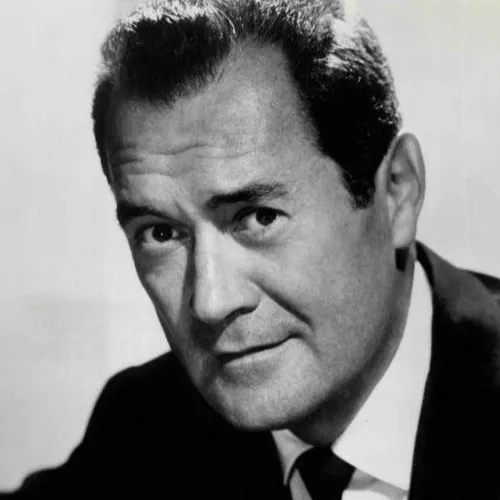
In the golden age of radio and early television, few performers captured the essence of dramatic storytelling quite like Frank Lovejoy. A versatile actor who seamlessly transitioned between radio, film, and television, Lovejoy became an iconic voice of mid-20th century entertainment, known for his compelling performances and distinctive vocal presence.
Early Life and Radio Beginnings
Born Frank Andrew Lovejoy Jr. on March 28, 1912, in the Bronx, New York, Lovejoy emerged from a working-class background. His father, Frank Andrew Lovejoy Sr., worked as a furniture salesman, while his mother Nora, born to immigrant parents, provided a supportive home environment that would nurture her son's future artistic ambitions. Lovejoy's entry into radio was marked by remarkable versatility. He quickly established himself as a sought-after radio actor, appearing in numerous popular programs of the era. His breakthrough came with roles in crime drama series and radio soap operas, where he demonstrated an extraordinary range of character portrayals.
Mastering the Airwaves: Radio Performances
Throughout the 1930s and 1940s, Lovejoy became a prominent figure in radio broadcasting. He played Broadway Harry in one series and was a narrator for another. His radio repertoire was impressively diverse, including roles in multiple soap operas such as Brave Tomorrow, where he portrayed Dr. Christopher Ellerbe, and This Day Is Ours as Sam Foster. Lovejoy's most notable radio achievement was perhaps his role as Randy Stone in the popular series Night Beat, where his nuanced performance captivated listeners. He also starred in numerous anthology series like Suspense, showcasing his ability to bring complex characters to life through voice alone.
Transition to Film and Television
As radio's prominence began to wane, Lovejoy successfully transitioned to film and television. He became particularly known for his roles in film noir and war movies. His performance in In a Lonely Place (1950) as Detective Sergeant Brub Nicolai and Try and Get Me (1950) as Howard Tyler demonstrated his capacity for portraying morally complex characters. In television, Lovejoy starred in short-run series and made memorable guest appearances. His final television performances included an episode of Dr. Kildare and an ABC series about a reporter's investigative efforts.
Personal Life and Legacy
In 1940, Lovejoy married actress Joan Banks, with whom he had two children, Judith and Stephen. Tragically, his promising career was cut short when he died of a heart attack on October 2, 1962, at the age of 50, while performing in a New Jersey theater production. Despite his relatively short career, Frank Lovejoy left an indelible mark on American entertainment. He represented a generation of performers who could captivate audiences across multiple media platforms, embodying the versatility and dynamism of mid-20th century broadcasting.
Works and Appearances
Radio
- Night Beat (1950-1952) - Randy Stone
- Suspense (Multiple episodes, various roles)
- Box 13 (1948) - Various support roles
- Brave Tomorrow - Dr. Christopher Ellerbe
- This Day Is Ours - Sam Foster
Film
- In a Lonely Place (1950) - Detective Sergeant Brub Nicolai
- Try and Get Me (1950) - Howard Tyler
- House of Wax (1953) - Lieutenant Thomas Brennan
- Strategic Air Command (1955) - General Ennis C. Hawkes
Television
- Meet McGraw (1957-1958) - McGraw (33 episodes)
- Dr. Kildare (1962) - Guest appearance
- Unnamed ABC series about investigative reporting
Theater
- The Best Man (1962) - Final stage production before his death