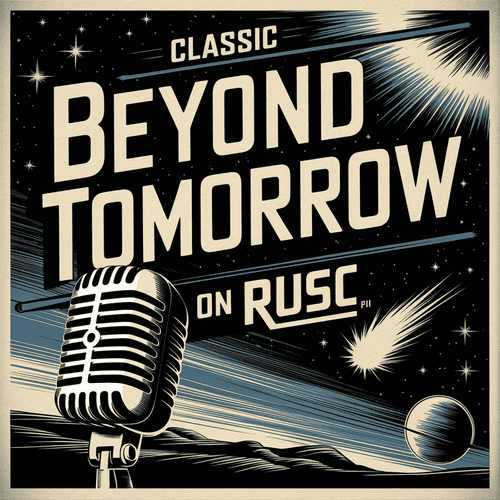
Beyond Tomorrow
Beyond Tomorrow was a short-lived but intriguing science fiction radio series that briefly graced the airwaves in the spring of 1950. This ambitious program sought to captivate listeners with tales of futuristic technology, space exploration, and the potential wonders and perils that awaited humanity in the coming decades and centuries. Despite its brief run, Beyond Tomorrow played a significant role in paving the way for more enduring science fiction radio dramas that would follow.
The series aimed to blend cutting-edge scientific concepts with imaginative storytelling, offering audiences a glimpse into possible futures and alternate realities. Each episode presented a self-contained story, exploring themes such as time travel, alien encounters, advanced robotics, and the ethical dilemmas that might arise from technological progress. The show’s creators strived to maintain a balance between entertainment and scientific plausibility, often consulting with experts to lend credibility to their fantastic scenarios.
While Beyond Tomorrow may not have achieved the longevity or widespread recognition of some of its contemporaries, it represented an important step in the evolution of science fiction radio. The series demonstrated the growing appetite for speculative fiction in the post-war era, as audiences grappled with rapid technological advancements and an uncertain future shaped by the atomic age.
The Stars
Given the short run of Beyond Tomorrow, the series did not have the opportunity to establish a regular cast of stars in the same way that longer-running programs did. Instead, the show likely relied on a pool of talented radio actors who were adept at bringing a variety of characters to life. These performers would have been tasked with portraying everything from intrepid space explorers and brilliant scientists to menacing aliens and sentient machines.
While specific cast information for Beyond Tomorrow is limited, it’s worth noting that the science fiction radio genre often attracted versatile voice actors who could convincingly portray multiple roles within a single episode. This approach allowed for a diverse range of characters and scenarios to be presented without the need for an extensive regular cast.
Key Dates
- February 23, 1950: The audition show for Beyond Tomorrow, titled “The Outer Limit,” was prepared. This episode served as a pilot to showcase the concept and potential of the series to network executives and potential sponsors.
- April 5, 1950: Beyond Tomorrow made its official debut on the airwaves, marking the beginning of its brief but notable run.
- April 18, 1950: The final episode of Beyond Tomorrow was broadcast, bringing the series to a close after just three episodes.
- April 1950: NBC, recognizing the potential of the science fiction genre but opting for a different approach, debuted Dimension X as a replacement for Beyond Tomorrow. This decision effectively marked the cancellation of Beyond Tomorrow after its short run.
Other Information
Pioneering Spirit: Despite its brief existence, Beyond Tomorrow played a crucial role in demonstrating the viability of science fiction as a radio drama genre. The show’s ambitious concepts and forward-thinking narratives helped pave the way for more enduring series like Dimension X and X Minus One, which would go on to become classics of radio science fiction.
Timing and Competition: The launch of Beyond Tomorrow coincided with a period of growing interest in science fiction across various media. The late 1940s and early 1950s saw an explosion of science fiction literature, pulp magazines, and the beginnings of the genre’s golden age in cinema. This zeitgeist likely contributed to NBC’s decision to experiment with the format, even if Beyond Tomorrow itself didn’t achieve long-term success.
Influence on Dimension X: While Beyond Tomorrow was short-lived, its concept and approach may have influenced the development of Dimension X. The latter series, which debuted shortly after Beyond Tomorrow’s cancellation, shared similar themes and storytelling techniques, suggesting that NBC saw value in the science fiction format even as they opted for a different production.
Preservation Challenges: Due to its limited run and the common practice of not preserving radio broadcasts at the time, recordings of Beyond Tomorrow episodes are extremely rare. This scarcity has made it challenging for modern old-time radio enthusiasts to experience the show firsthand, adding an air of mystery and intrigue to its legacy.
Scientific Consultants: Although specific details are limited, it was not uncommon for science fiction radio programs of the era to consult with scientific experts to lend authenticity to their stories. If Beyond Tomorrow followed this practice, it would have been part of a tradition that sought to blend entertainment with educational value, potentially exposing listeners to cutting-edge scientific concepts of the time.
Advertising and Sponsorship: While information on Beyond Tomorrow’s specific sponsors is scarce, radio dramas of the period typically relied on corporate sponsorship to fund their production. Science fiction shows often attracted sponsors associated with technology and innovation, as these companies saw value in aligning themselves with forward-thinking content.
Legacy and Impact: Although Beyond Tomorrow itself was short-lived, its existence speaks to the broader trend of science fiction’s growing popularity in post-war America. The show’s brief run can be seen as part of the genre’s evolution on radio, helping to set the stage for the more successful series that would follow.
Audience Reception: While detailed ratings information for Beyond Tomorrow is not readily available, the quick cancellation of the series suggests that it may not have immediately resonated with a wide audience. However, it’s important to note that the science fiction genre on radio was still finding its footing, and audience tastes were evolving.
Production Challenges: Creating convincing sound effects and atmospheres for futuristic and alien environments would have been a significant challenge for the Beyond Tomorrow production team. Radio sound engineers of the era often had to be incredibly creative in their use of everyday objects and innovative techniques to bring these otherworldly settings to life through audio alone.
Beyond Tomorrow may have been a fleeting presence in the landscape of old-time radio, its significance should not be underestimated. As one of the early attempts to bring serious science fiction to the airwaves, it helped to establish the genre’s potential for radio drama. There were only 3 episodes of the series and all are extant.
The series serves as a fascinating snapshot of a time when the medium was experimenting with new forms of storytelling, reflecting the rapidly changing world of the mid-20th century. For enthusiasts of old-time radio and science fiction alike, Beyond Tomorrow remains an intriguing footnote in the history of broadcast entertainment, representing the bold spirit of innovation that characterized the golden age of radio.
Cast & Crew



Ratings & reviews
Loading reviews…
Episodes

Now then. Enjoyed Beyond Tomorrow, did you? An old wireless hand reckons these are right up your street.