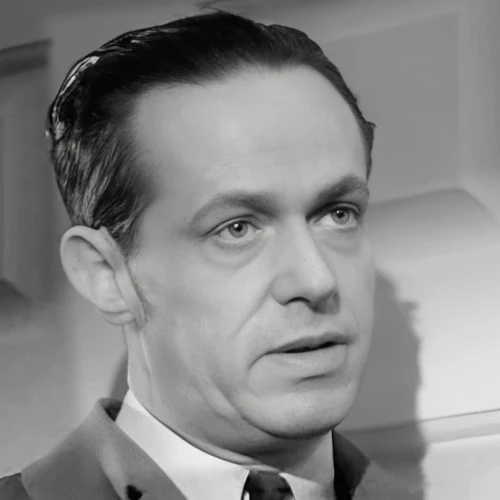
In the pantheon of early radio performers, few actors embodied the versatility and charm of Barton Yarborough, a prolific voice artist who became an integral part of America's radio landscape during the medium's most transformative decades. From dramatic serials to detective shows, Yarborough's distinctive voice and remarkable range made him a beloved figure in households across the nation.
Early Life and Theatrical Beginnings
Born William Barton Yarborough on October 2, 1900, in Goldthwaite, Texas, he was destined for a life of performance from an early age. As a youth, Yarborough was drawn to the allure of the stage, running away from home to pursue his theatrical dreams. His passion for performance led him to join touring musical comedy shows, where he gradually progressed from bit parts to leading roles across Oklahoma and Texas. Yarborough's formal education played a crucial role in his artistic development. He attended college, becoming a member of the Phi Sigma Kappa fraternity in 1925. During his university years, he was actively involved in dramatic productions, performing in plays ranging from Greek drama to comedic farces at the University of California. His early theatrical experiences, including a notable performance in a Rebekah and Odd Fellows lodges production in 1922, laid the groundwork for his future radio career.
Breaking into Radio and Iconic Roles
After graduating in 1925, Yarborough's acting career expanded rapidly. He performed in London, New York, and California, securing leading roles and becoming a member of the prestigious Eva Le Gallienne Civic Repertoire in New York City. His NBC radio debut in 1930 from San Francisco marked the beginning of a remarkable broadcasting journey. Yarborough became synonymous with several iconic radio characters. In 1932, he began his long-running role as Clifford Barbour in the radio serial One Man's Family, a character he would portray for 260 episodes throughout his life. He was perhaps best known for playing Doc Long in Carlton E. Morse's I Love a Mystery and Sergeant Ben Romero on Dragnet, Joe Friday's original partner.
Expanding into Film and Television
While radio remained his primary medium, Yarborough also made significant contributions to film. He appeared in three feature films based on I Love a Mystery, adopting a distinctive Southern accent for his Doc Long character. Interestingly, in his personal life, Yarborough spoke without any trace of an accent. In 1951, he began work on the Dragnet television series. Tragically, after filming only the second episode, he suffered a heart attack and passed away four days later at the age of 51. His death was poignantly incorporated into Dragnet, with his character Ben Romero dying of a heart attack in the episode "The Big Sorrow."
Legacy and Personal Life
Beyond his professional achievements, Yarborough led an intriguing personal life. He was married twice - first to radio actress Barbara Jo Allen (professionally known as Vera Vague), with whom he had a daughter, and later to Janet Warren in 1949. His sudden death in Burbank, California, cut short a promising career that had spanned radio, stage, and emerging television mediums. Barton Yarborough's legacy extends far beyond his individual performances. He represented a generation of versatile performers who helped shape radio's golden age, transitioning seamlessly between dramatic, comedic, and detective genres. His ability to bring characters to life through voice alone made him a quintessential radio personality.
Works and Appearances
Radio
- One Man's Family (Clifford Barbour, 1932-1951)
- I Love a Mystery (Doc Long)
- Dragnet (Sergeant Ben Romero)
- I Love Adventure
- Attorney for the Defense
Film
- I Love a Mystery (1945)
- Mystery Broadcast (1945)
- Dragnet (1952, final film role)
Television
- Dragnet (1951, incomplete due to his death)
Barton Yarborough's contributions to American entertainment remain a testament to the power of voice and storytelling during radio's most vibrant era.