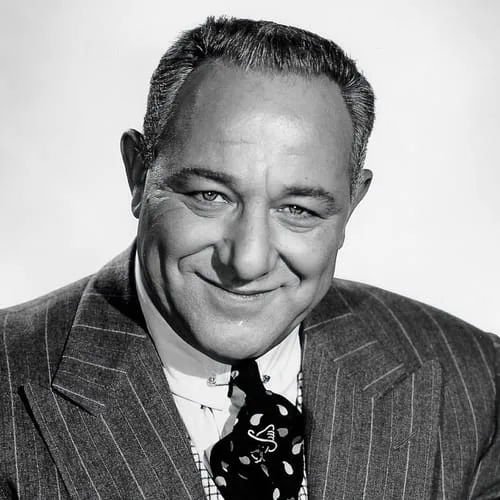
In the golden age of radio and early television, few performers could match the versatility and comedic talent of Alan Reed. Born Herbert Theodore Bergman, Reed would become a beloved voice actor, radio personality, and character actor who left an indelible mark on American entertainment. From radio comedy to voicing one of animation's most iconica characters, Reed's career spanned multiple decades and mediums.
Early Life and Theatrical Beginnings
Alan Reed was born on August 20, 1907, in New York City to Jewish parents with immigrant roots. His father was a Lithuanian-Jewish immigrant, and his mother was born in the United States to Ukrainian-Jewish parents. Growing up in a vibrant urban environment, Reed showed an early interest in performance. He attended George Washington High School and studied drama at the American Academy of Dramatic Arts before entering Columbia University.
During his early years, Reed wasn't just focused on acting. He demonstrated remarkable entrepreneurial spirit by operating a wholesale candy factory and working as a social director and entertainment producer at the Copake Country Club. These diverse experiences would later inform his comedic sensibilities and ability to connect with audiences.
Radio: The Crucible of Comedy
Reed's radio career began in 1930, where he was initially billed as Teddy Bergman. His early work included co-starring in Henry and George, a program featuring minute dramas and comedies. Throughout the 1930s and 1940s, Reed became a prolific radio performer, appearing in numerous shows that defined the era's comedy landscape. His radio repertoire was impressively diverse. He played Solomon Levy in Abie's Irish Rose, the resident poet Falstaff Openshaw on various shows, and Officer Clancey in Duffy's Tavern. Reed was a regular on programs like The Life of Riley, Life with Luigi, and Yours Truly, Johnny Dollar. His ability to create distinct, memorable characters made him a sought-after radio performer.
Transition to Television and Voice Acting
As television emerged, Reed seamlessly transitioned between mediums. However, his most iconic role came in animation. In 1960, he began voicing Fred Flintstone in The Flintstones, a role that would define his later career. Reed provided Fred's voice for the entire six-season run of the show, as well as in numerous spin-offs and specials. Beyond The Flintstones, Reed continued to be a versatile voice actor. He voiced Boris the Cat in Disney's Lady and the Tramp and appeared in various Hanna-Barbera productions. His distinctive voice and comedic timing made him a valuable asset in the emerging world of animated entertainment.
Personal Life and Legacy
In May 1932, Reed married Finette Walker, a Broadway actress. They had three sons, including actor Alan Reed Jr. Reed's personal life was marked by his dedication to his craft and his ability to bring humor and humanity to his characters. Tragically, Reed was diagnosed with cancer in 1967. Despite treatment, he passed away on June 14, 1977, in Los Angeles, just two months shy of his 70th birthday. His legacy, however, continues through his memorable performances and his iconic portrayal of Fred Flintstone.
Works and Appearances
Radio
- Henry and George (1930)
- Joe Palooka (1932)
- Abie's Irish Rose (1942)
- Duffy's Tavern (1944-1951)
- The Life of Riley (Various years)
- Life with Luigi (1948-1953)
Television
- The Flintstones (1960-1966) - Fred Flintstone
- Mr. Adams and Eve (1957-1958)
- Jonny Quest (1964-1965)
- Captain Caveman and the Teen Angels (1977-1980)
Film
- Lady and the Tramp (1955) - Boris (voice)
- The Man Called Flintstone (1966) - Fred Flintstone (voice)
- Breakfast at Tiffany's (1961) - Sally Tomato
Stage
- Double Dummy (1936)
- A House in the Country (1937)
- Love's Old Sweet Song (1940)
Alan Reed's remarkable journey from radio comedian to animated icon represents the dynamic evolution of American entertainment in the mid-20th century. His ability to create memorable characters and his infectious comedic style ensured his place in the pantheon of classic performers.