Orson Welles
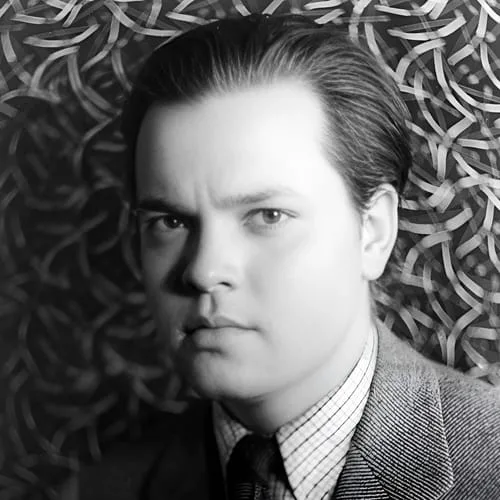
Orson Welles was a revolutionary force in media, a prodigy who transformed radio, theatre, and cinema with his extraordinary talent and innovative storytelling. His legendary War of the Worlds broadcast and groundbreaking film Citizen Kane would cement his place as one of the most influential artists of the 20th century.
The Extraordinary Early Years
Born George Orson Welles on May 6, 1915, in Kenosha, Wisconsin, he was a precocious child with remarkable talents. The younger of two sons, Welles showed early signs of brilliance, supported by parents who encouraged his intellectual development. His childhood was marked by both privilege and challenge, with a brother struggling with mental health issues and Welles himself prone to various childhood illnesses. By his early twenties, Welles had already established himself as a theatrical wunderkind. At 21, he directed high-profile stage productions in New York City, including a celebrated Voodoo Macbeth with an African-American cast. His theatrical company, the Mercury Theatre, would become legendary for its innovative and politically charged productions.
Conquering the Airwaves
Welles's radio career was nothing short of revolutionary. In 1938, his radio anthology series provided the platform for his most infamous moment: the War of the Worlds broadcast. The dramatization of H.G. Wells's novel caused widespread panic, with some listeners believing a Martian invasion was actually occurring. At just 23 years old, Welles rocketed to international notoriety. His innovative radio techniques were groundbreaking. Welles invented the use of narration in radio and created immersive storytelling experiences that captivated audiences. Between 1935 and 1937, he was earning up to $2,000 a week, shuttling between studios and becoming one of radio's most sought-after performers.
Political Activism and Social Engagement
Beyond entertainment, Welles was a passionate political activist. A lifelong Democrat, he was an outspoken critic of fascism and a strong supporter of progressive politics. He campaigned ardently for President Franklin D. Roosevelt in the 1944 election, traveling to nearly every state. Notably, Welles used his platform for social justice. In 1946, he took to the airwaves demanding justice for Isaac Woodard, a decorated black veteran who had been brutally beaten and blinded by white police officers. His radio broadcasts were credited with prompting the Justice Department to act on the case.
Transition to Film and Later Career
While radio made him famous, Welles would become equally renowned in cinema. His debut film Citizen Kane (1941) is consistently ranked as one of the greatest films ever made. His distinctive directorial style featured innovative techniques like dramatic lighting, unusual camera angles, and sound techniques borrowed from radio. Despite his genius, Welles was often an outsider in Hollywood, struggling for creative control. He continued to work across multiple media, taking acting roles, narrating documentaries, and creating experimental films throughout his career.
Legacy of a Multimedia Genius
Orson Welles died on October 10, 1985, leaving behind a legacy that transformed multiple entertainment mediums. He received numerous accolades, including an Honorary Academy Award, and was inducted into both the Theater Hall of Fame and the Radio Hall of Fame. His life was a testament to unbridled creativity, political courage, and artistic innovation. Welles wasn't just a performer; he was a storyteller who challenged and expanded the boundaries of media.
Works and Appearances
Radio
- The Mercury Theatre on the Air (1938)
- The Campbell Playhouse (1938-1940)
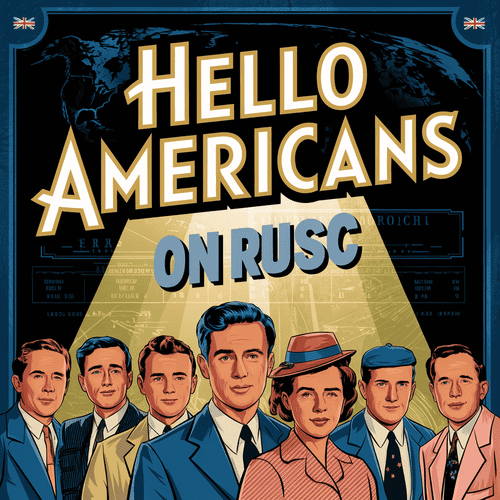
- Hello Americans (1942-1943)
- Orson Welles Commentaries (1946)
Film (as Director)
- Citizen Kane (1941)
- The Magnificent Ambersons (1942)
- Othello (1951)
- Touch of Evil (1958)
- Chimes at Midnight (1965)
Television
- Orson Welles Sketchbook (1955)
- Around the World with Orson Welles (1955)
- Magnum, P.I. (Voice of Robin Masters, early 1980s)
Notable Acting Roles
- The Third Man (1949) - Harry Lime
- Compulsion (1959)
- A Man for All Seasons (1966) - Cardinal Wolsey
Heard in