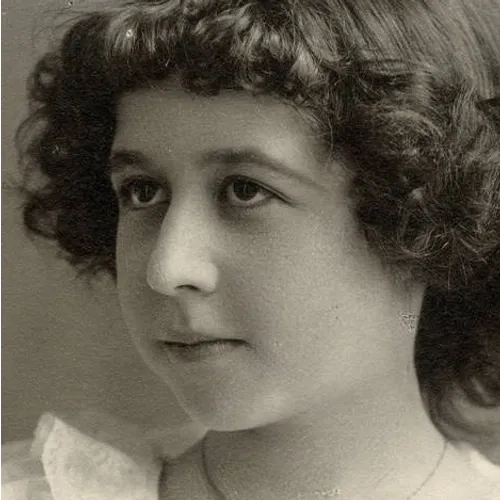
Verna Felton
Verna Arline Felton stands as one of broadcasting's most distinctive and prolific voice talents, a performer whose husky, warm tones became instantly recognizable across radio programs, animated films, and television throughout the mid-twentieth century. Born on July 20, 1890, Felton began her entertainment career as a child performer and evolved into a professional whose work spanned nearly seven decades. While many recognize her iconic Disney voice roles—particularly as the Fairy Godmother in Cinderella and the Queen of Hearts in Alice in Wonderland—her true foundation was built in radio, where she became a beloved fixture in American households long before her animated characters became household names. Her career trajectory from vaudeville stages to the recording booth represents a masterclass in professional longevity and adaptability during radio's transformative years.
From Child Wonder to Professional Performer
Verna Felton's show business journey began remarkably early, earning the designation "Little Verna Felton, the Child Wonder" in an August 19, 1900 newspaper advertisement for Fischer's Concert House in San Francisco. By 1903, she had transitioned from solo performances to working with the Allen Stock Company, a touring theatrical troupe that performed throughout the West Coast and in Vancouver, British Columbia. Her dedication to the craft was evident in her steady progression within the company; by 1907, she had advanced from child performer to leading lady status. The Allen company recognized her talents sufficiently to commission playwright Herbert Bashford to write The Defiance of Doris specifically for Felton, and the production became part of the company's regular repertoire by 1910. This extended stage training provided Felton with the vocal control, character development skills, and professional discipline that would serve her brilliantly in her later radio work. The vaudeville and theatrical circuits of the early 1900s demanded versatility and stamina—qualities that defined her entire career. Long before microphones became her primary tool, Felton had already mastered the art of theatrical projection, character differentiation, and audience connection that are essential to voice performance.
Radio's Most Reliable Character Voice
Felton's transition into radio during the 1930s and 1950s marked the beginning of her most celebrated period, establishing her as one of the medium's most sought-after character actresses. Her voice became synonymous with motherly and grandmotherly roles, characters that showcased her distinctive husky timbre combined with her no-nonsense attitude. She became a regular presence on some of radio's most popular programs, including the legendary The Jack Benny Program, where she played Mrs. Day, the mother of Dennis Day, in both the radio and subsequent television versions from 1939 to 1962. Her radio work demonstrated remarkable range and consistency. She portrayed Junior the Mean Widdle Kid's grandmother on Red Skelton's radio series, voiced Hattie Hirsch on Point Sublime, and played the children's mother on the serial The Cinnamon Bear. Beyond dramatic roles, Felton appeared on popular comedy programs including The Abbott and Costello Show and The Joan Davis Show, where she regularly delivered comedic reactions that became signature elements of those shows. Her ability to move seamlessly between comedy and drama, between supporting characters and prominent roles, made her a director's favorite and a reliable professional whom producers could depend upon for quality performances.
Defining Disney's Animated Legacy
While Felton's radio career flourished, her husband Lee had begun working with Walt Disney Studios in 1937, providing animal sounds for Mickey Mouse cartoons. This family connection would prove fortuitous when Felton herself entered Disney's orbit in the early 1940s. Though she initially auditioned unsuccessfully for the role of Mrs. Hare in Bambi, the studio quickly offered her the opportunity to voice both the Elephant Matriarch and Mrs. Jumbo in Dumbo (1941). Tragically, 1941 also marked the death of her husband Lee, but Felton channeled her energy into establishing what would become a decade-long relationship with Disney. Her Disney portfolio became remarkably impressive. She returned to voice the Fairy Godmother in Cinderella (1950)—a role so perfectly matched to her warm, gentle delivery that it became permanently associated with her name. The following year, she took on the imperious Queen of Hearts in Alice in Wonderland (1951), demonstrating her vocal range by portraying a character with entirely different emotional qualities. She continued with Aunt Sarah in Lady and the Tramp (1955), where she voiced the stern, disapproving relative of the film's human protagonists. In 1959, Felton contributed two voices to Disney's Sleeping Beauty: the gentle fairy Flora and the regal Queen Leah. Her final Disney vocal credit came in The Jungle Book (1967), where she voiced an Elephant character, appearing posthumously since she had passed away on December 14, 1966—notably, the day before Walt Disney himself died.
Television Work and Extended Stardom
Felton's first television appearance occurred in a 1951 episode of The Amos 'n Andy Show, where she appeared as a nurse. She subsequently earned a recurring role as the mother of Ruth Farley in the 1953–55 ABC sitcom Where's Raymond? (later renamed The Ray Bolger Show), performing opposite Gloria Winters. Her most substantial television role came when she reprised her radio character Hilda Crocker on the CBS sitcom December Bride (1952–59), a role she had originally established on the radio version two years before the television production began. Importantly, this demonstrated that her success in the medium preceded rather than followed her radio work in that particular character. Felton continued her television presence by reprising her Hilda Crocker role on the December Bride spin-off series Pete and Gladys, which starred Harry Morgan and Cara Williams. She achieved recognition as the original voice of Pearl Slaghoople, Fred Flintstone's mother-in-law, in Hanna-Barbera's landmark series The Flintstones, serving in a semi-regular capacity during seasons two and three. Notably, the character remained unnamed during Felton's tenure; only in season four, when Janet Waldo assumed the role, was the "Slaghoople" surname actually mentioned in dialogue. In 1963, Felton appeared in the series finale of CBS's Dennis the Menace sitcom, playing John Wilson's aunt in the episode "Aunt Emma Visits the Wilsons," while her son Lee Millar Jr. appeared on the same show in a different role.
Recognition and Professional Legacy
Verna Felton's achievements earned her a star on the Hollywood Walk of Fame, recognizing her substantial contributions to entertainment across multiple mediums. Her distinctive husky voice and warm grandmotherly persona became industry shorthand for a particular type of character—the matriarch figure who combined firmness with underlying affection. This consistency allowed her to become one of the most recognizable and reliable voice talents of her era, commanding respect from directors, producers, and fellow performers. Her career demonstrated how a performer rooted in theatrical training could successfully navigate the technical and creative demands of radio, animation, and television. Felton proved that distinctive vocal qualities, combined with strong character work and professional reliability, could create a career spanning multiple decades and mediums. She worked during an era when voice actors received far less recognition than their film and television counterparts, yet her characters have proven remarkably enduring, with her Disney work continuing to reach new audiences through successive generations of viewers. Her legacy rests not merely on individual performances but on the establishment of an archetype—the warm, firm, grandmotherly voice—that remains recognizable and beloved more than fifty years after her death.
Works and Appearances
Radio
- The Jack Benny Program (1939–1962) – Mrs. Day, mother of Dennis Day
- Red Skelton's radio series – Junior the Mean Widdle Kid's grandmother
- Point Sublime – Hattie Hirsch
- The Cinnamon Bear – children's mother
- The Abbott and Costello Show – regular performer
- The Joan Davis Show – regular performer
- Screen Directors Playhouse – Fairy Godmother
- Hallmark Playhouse – Fairy Godmother
- December Bride (radio version, 1952–59) – Hilda Crocker
Television
- The Amos 'n Andy Show (1951) – nurse
- Where's Raymond? / The Ray Bolger Show (1953–1955) – recurring role as Ruth Farley's mother
- December Bride (1952–1959) – Hilda Crocker
- Pete and Gladys – Hilda Crocker
- The Flintstones (seasons two and three)
- I Love Lucy – guest appearances
- Dennis the Menace (1963, series finale) – "Aunt Emma
Cinema
- Dumbo (1941) – Elephant Matriarch and Mrs. Jumbo
- Cinderella (1950) – Fairy Godmother
- Alice in Wonderland (1951) – Queen of Hearts
- Lady and the Tramp (1955) – Aunt Sarah
- Sleeping Beauty (1959) – Flora (fairy) and Queen Leah
- The Jungle Book (1967) – Elephant
Theater
- Allen Stock Company (touring company, 1903–1910s)
- The Defiance of Doris (1910)
Heard in