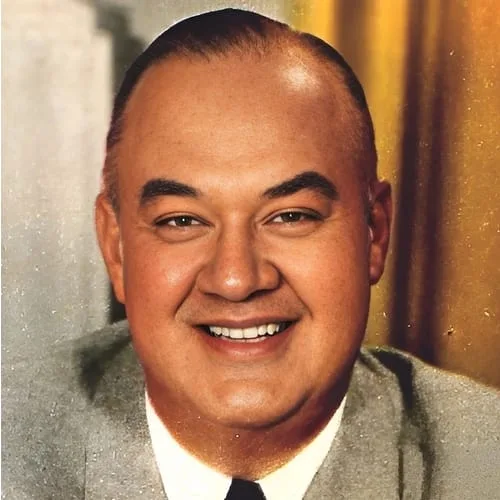
In the golden age of radio comedy, few personalities were as instantly recognizable and beloved as Don Wilson, the rotund announcer who became an integral part of Jack Benny's legendary radio program. Standing at 6 feet tall and weighing 300 pounds, Wilson was more than just a mere announcer – he was a comic institution whose resonant voice and jovial personality made him a crucial element of one of radio's most celebrated comedy teams.
Early Life and Radio Beginnings
Born on September 1, 1900, in Lincoln, Nebraska, Don Wilson's journey to radio stardom began in an unexpected way. In the 1920s, he was an accomplished athlete, playing football and becoming an excellent amateur golfer. His broadcasting career started humbly in 1923 when he began as a singer at radio station KFEL. By 1929, Wilson had transitioned to working at KFI and later KHJ in Los Angeles, laying the groundwork for his future success. Wilson's early career was marked by versatility. Before becoming a comedy staple, he worked as a sports announcer, covering significant events like the opening of stadiums and broadcasting games. His deep, resonant voice and larger-than-life personality would soon become his trademark in the entertainment world.
The Jack Benny Program: A Comedy Partnership
Wilson's career reached its pinnacle when he first worked with Jack Benny on a broadcast in April 1934. More than just an announcer, he became a critical comic foil in Benny's comedy ecosystem. At 6 feet tall and 300 pounds, Wilson possessed a distinctive vocal presence that perfectly complemented Benny's comedic style. His primary functions included reading opening announcements and commercial pitches for sponsors like Jell-O and Lucky Strike, but he was much more than a simple announcer. On radio, Wilson's physical size became a running comedic gag. Jokes often centered around his weight, such as humorous scenarios involving train porters or measuring him by the pound. Despite being the target of these jokes, Wilson was a consummate professional who rarely flubbed his lines, making his occasional slip-ups, like mispronouncing a name, memorable comedic moments.
Expanding Beyond Radio
Wilson's talents extended far beyond radio. He appeared in Broadway shows in the 1930s, including The Passionate Pilgrim and The First Legion. When television emerged, he seamlessly transitioned with Jack Benny, appearing in the TV series from 1950 to 1965. His television appearances often included comedic segments featuring his fictional son Harlow, played by Dale White. His on-screen work wasn't limited to Benny's show. Wilson made small film appearances as announcers or commentators and became particularly memorable as the spokesman for Candygram commercials from 1969 to 1971, famously bellowing, "Just tell them I want to send a Candygram!"
Personal Life and Legacy
Wilson's personal life was as colorful as his professional career. He was married four times, with his most stable relationship being his marriage to radio actress Lois Corbett in 1950. Together, they hosted a local television show called Town Talk from 1968 to the mid-1970s. After retirement, they lived in Palm Springs, where Wilson ultimately passed away from a stroke in April 1982. Don Wilson's legacy is intrinsically tied to the golden age of radio comedy. As more than just an announcer, he was a performer who helped define the comedic style of an era. His partnership with Jack Benny transformed him from a simple radio voice to a beloved entertainment personality who made millions laugh.
Works and Appearances
Radio
- The Jack Benny Program (1934-1950)
- Music by Gershwin (brief stint)
- Various variety shows and comedy programs
Television
- The Jack Benny Program (1950-1965)
- Town Talk (1968-mid-1970s)
- Death Valley Days (guest appearance)
Film
- Village Barn Dance
- Buck Benny Rides Again
- Various small roles as announcers or commentators
Commercials
- Candygram spokesman (1969-1971)
Don Wilson's remarkable career serves as a testament to the magic of old-time radio, where personality and voice could create enduring entertainment that transcended mere announcements.