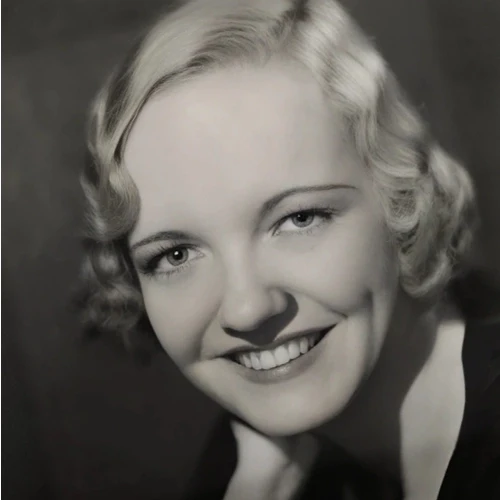
In the vibrant landscape of mid-20th century American entertainment, Betty Garde emerged as a remarkable performer whose talents spanned stage, radio, film, and television. Standing tall at 5'10", she was a versatile actress who became a distinctive voice in the golden age of radio, leaving an indelible mark on multiple entertainment mediums.
Early Years and Theatrical Beginnings
Born Katharine Elizabeth Garde on September 19, 1905, in Philadelphia, Pennsylvania, Betty Garde showed remarkable promise from an early age. By the time she was just 15 years old, she was already starring in productions of Broadway Players, demonstrating her precocious talent and passion for performance. Her early theatrical training at the University of Pennsylvania would prove to be a solid foundation for her future career. Garde's stage career began in earnest in the early 1920s. Her Broadway debut came in 1925-1926 when she played Alma Borden in Easy Come, Easy Go. Throughout the 1930s and 1940s, she continued to appear in notable stage productions, including The Social Register (1931-1932) and The Primrose Path (1939). A significant milestone in her stage career was her portrayal of Aunt Eller in the original 1943 Broadway production of Oklahoma!
Radio: A Medium of Endless Possibilities
In 1933, Garde's career took a significant turn when she began working extensively in radio. Her powerful and versatile voice made her a sought-after performer in the medium. She appeared in approximately three dozen radio shows, showcasing her incredible range and adaptability. Some of her notable radio performances included Mrs. Wiggs of the Cabbage Patch, The March of Time (where she played "all the women roles"), and several series with the legendary Orson Welles. Her collaboration with Welles was particularly noteworthy. In 1934, she worked with him on the The American School of the Air series and later appeared in several of his radio productions, including The Shadow, Mercury Theatre on the Air, and others. This association with one of radio's most innovative performers highlighted Garde's versatility and skill.
Expanding Horizons: Film and Television
While radio was her primary medium, Betty Garde also made significant contributions to film and television. Her film career began in the late 1920s, with her first credited roles in The Lady Lies (1929), Damaged Love (1930), and other early films. In the late 1940s and early 1950s, she appeared in notable films such as Call Northside 777 (1948) and Caged (1950), often playing character roles that showcased her dramatic range. Television became another platform for her talents. She made memorable appearances on shows like The Honeymooners (as the Kramdens' maid, Thelma), The Real McCoys (as farmer Aggie Larkin), and even appeared in two episodes of The Twilight Zone. Her ability to adapt to new media demonstrated her enduring appeal and professional versatility.
Legacy and Final Years
Betty Garde's career spanned nearly five decades, from 1925 to 1971, during which she consistently reinvented herself across different entertainment platforms. Her marriage to Frank Lennon in 1943 was a stable personal backdrop to her dynamic professional life. On December 25, 1989, she passed away in Sherman Oaks, California, at the age of 84, leaving behind a rich legacy of performance.
Works and Appearances
Radio Shows
- Mrs. Wiggs of the Cabbage Patch
- The March of Time
- Mercury Theatre on the Air
- The Shadow
Film
- The Lady Lies (1929) - Hilda Pearson
- Call Northside 777 (1948) - Wanda Skutnik
- Caged (1950) - Kitty Stark
Television
- The Honeymooners (1955) - Thelma
- The Real McCoys (1959-1960) - Aggie Larkin
- The Twilight Zone (1961) - Two episodes
Stage
- Easy Come, Easy Go (1925-1926)
- Oklahoma! (1943) - Aunt Eller
- Agatha Sue, I Love You (1966) - Mrs. Gordon
Betty Garde's remarkable career serves as a testament to the adaptability and talent of performers during radio's golden age, bridging multiple entertainment mediums with grace, skill, and professionalism.