Margaret Whiting
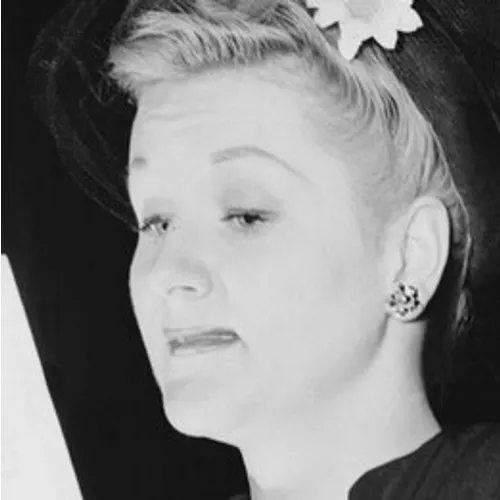
Margaret Whiting was a remarkable American singer who rose to prominence during the golden age of radio and popular music in the 1940s and 1950s. Her distinctive voice and interpretative skills made her one of the most beloved vocalists of her era, bridging the worlds of jazz, traditional pop, and radio entertainment.
Early Life and Musical Roots
Born Margaret Eleanor Whiting on July 22, 1924, in Detroit, Michigan, she was destined for musical greatness from the start. Her family moved to Los Angeles in 1929, where her musical environment would prove instrumental in shaping her career. Her father, Richard Whiting, was a renowned composer of popular songs, creating classics like "Beyond the Blue Horizon" and "Hooray for Hollywood" . The Whiting household was a hub of musical talent. Margaret's sister Barbara Whiting was an actress and singer, and an aunt was also a popular recording artist in the 1920s. At just seven years old, Margaret's singing ability caught the attention of Johnny Mercer, a legendary singer-lyricist with whom her father had collaborated. In a remarkable turn of events, Mercer co-founded Capitol Records in 1942 and signed Margaret to one of the label's first recording contracts .
Rise to Radio and Recording Stardom
Margaret's early recordings were as a featured singer with various orchestras. Her breakthrough came in 1944 when her version of "Silver Wings in the Moonlight" sold over one million copies and was awarded a gold record . She quickly became a prominent voice in the music industry, recording with notable orchestras and earning the title "Queen of the Jukeboxes". Her repertoire was diverse, including hits like "A Tree in the Meadow" which reached number one in 1948, and her duet with Johnny Mercer, "Baby, It's Cold Outside", another number one hit in 1949 that sold 1.75 million copies . Throughout the 1940s and 1950s, she consistently produced chart-topping singles and became a staple of American popular music.
Radio and Television Career
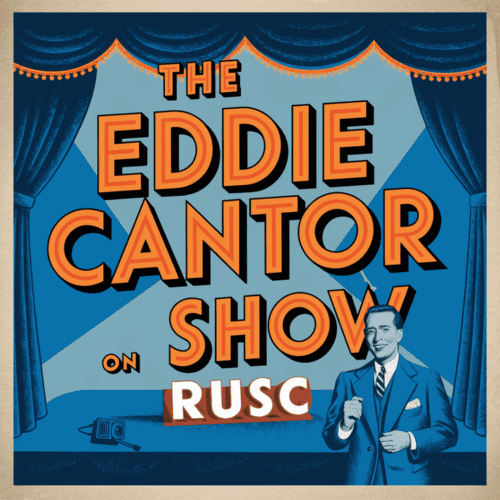
Beyond her recording success, Margaret was a prominent radio personality. She co-starred in 15-minute musical programs and was a vocalist on shows like The Eddie Cantor Show . Her television career was equally impressive, including a summer replacement series Those Whiting Girls with her sister Barbara, which aired on CBS from 1955 to 1957 . Whiting was a regular guest on numerous television shows throughout the 1950s, 1960s, and 1970s, appearing on programs like The Perry Como Show, The Ed Sullivan Show, and many others. Her versatility as an entertainer made her a sought-after performer across multiple media platforms .
Later Career and Legacy
As musical tastes changed, Margaret Whiting adapted. She continued recording with various labels like Dot, Verve, and London Records. In 1966, she had a final major hit with "Somewhere There's Love" . Beyond performing, she became an important mentor in the entertainment world, serving as Artistic Director of the Cabaret and Performance Conference at the Eugene O'Neill Theater Center from 1989 to 2001 . Margaret Whiting passed away on January 10, 2011, in Englewood, New Jersey, leaving behind a rich musical legacy. She was not just a singer, but a bridge between the big band era and the evolving popular music landscape of mid-20th century America.
Works and Appearances
Radio
- The Eddie Cantor Show
- Philip Morris Follies of 1946
- Barry Wood Show
Television
- Those Whiting Girls (1955-1957)
- The Perry Como Show
- The Ed Sullivan Show
- The Big Record
- Multiple guest appearances on variety shows (1950s-1970s)
Albums
- South Pacific (1949)
- Margaret Whiting Sings Rodgers and Hart (1950)
- The Wheel of Hurt (1967)
- Too Marvelous for Words (1980)
Notable Singles
- "Baby, It's Cold Outside"
- "A Tree in the Meadow"
- "Slippin' Around"
- "The Wheel of Hurt"