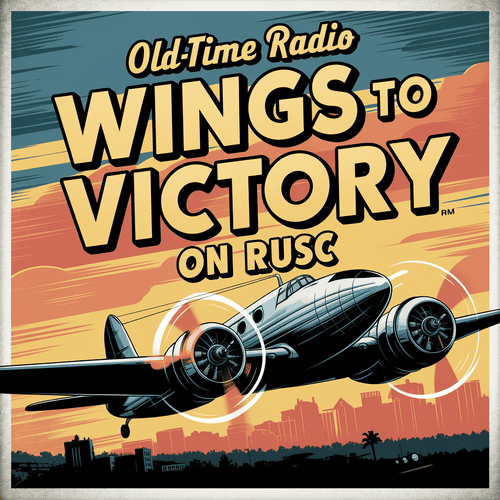
Wings to Victory was a patriotic World War II radio series that aired on the Blue Network from April 1943 to October 1943. Produced in cooperation with the U.S. Army Air Forces, this dramatic anthology program sought to boost morale on the home front while highlighting the heroic exploits of American airmen during the ongoing global conflict. Each week, the show presented fictionalized accounts based on true stories of aerial combat, daring missions, and the personal sacrifices made by the brave men of the Army Air Forces.
The series aimed to educate listeners about the vital role of air power in the war effort while also providing thrilling entertainment. Episodes typically focused on specific aircraft, missions, or individuals, weaving together elements of action, drama, and documentary-style information. The show’s blend of factual content and dramatic storytelling helped to create a vivid picture of the air war for audiences at home, many of whom had loved ones serving overseas.
Wings to Victory stood out among wartime radio programs for its attention to technical detail and its use of actual Army Air Forces personnel in advisory roles. This commitment to authenticity lent the series a sense of credibility and immediacy that resonated with listeners eager for news from the front lines. While the show’s run was relatively brief, it left a lasting impression as a unique fusion of propaganda, education, and entertainment during a critical period in American history.
The Stars
Unlike many radio dramas of the era, Wings to Victory did not feature a regular cast of stars. Instead, the show employed a rotating ensemble of actors to portray the various airmen, officers, and civilians featured in each week’s story. This approach allowed the series to focus on the real-life heroes and events being dramatized, rather than on the personalities of specific performers.
However, the show did have a consistent narrator who provided continuity and context for the dramatized segments. The identity of this narrator, unfortunately, has been lost to time, as complete records of the show’s production details have not survived. What is known is that the narrator’s authoritative voice helped to frame each episode’s story within the larger context of the war effort, often providing additional factual information about aircraft, tactics, or the strategic importance of the missions being portrayed.
While Hollywood stars occasionally made guest appearances on Wings to Victory, particularly for special episodes or war bond drives, the program’s emphasis remained on the real-life heroes of the Army Air Forces rather than on celebrity appeal.
Key Dates
- April 10, 1943: Wings to Victory debuts on the Blue Network, airing on Saturday evenings at 7:00 PM Eastern Time.
- October 2, 1943: The final episode of Wings to Victory is broadcast, concluding the series’ 26-week run.
- Throughout its six-month run, Wings to Victory maintained a consistent weekly schedule, with no significant breaks or changes to its timeslot. This regularity helped the show build and maintain a dedicated audience during its brief but impactful time on the air.
Other Information
Sponsorship: Unlike many radio programs of the era, Wings to Victory was not sponsored by a commercial entity. Instead, it was produced in direct cooperation with the U.S. Army Air Forces as part of the military’s broader public relations and recruitment efforts during World War II. This arrangement allowed for a greater focus on the educational and propagandistic aspects of the show without the need to incorporate advertising messages.
Production Values: Despite its relatively short run, Wings to Victory was known for its high production values. The show made extensive use of sound effects to create realistic portrayals of aerial combat and life on Air Force bases. Many episodes featured actual recordings of aircraft engines and weaponry, adding an extra layer of authenticity to the dramatizations.
Technical Advisors: To ensure accuracy in its portrayals of Air Force operations and equipment, Wings to Victory employed technical advisors from the Army Air Forces. These advisors worked closely with the show’s writers and producers to verify details about aircraft capabilities, mission protocols, and the realities of combat flying. This commitment to accuracy set Wings to Victory apart from other wartime dramas and contributed to its reputation as a reliable source of information about the air war.
Educational Impact: Beyond its entertainment value, Wings to Victory served an important educational function. Many episodes included detailed explanations of aircraft types, combat tactics, and the strategic importance of air power in modern warfare. This information helped to educate the American public about the complexities of aerial warfare and the rapid technological advancements being made in aviation during the war years.
Recruitment Tool: While not explicitly marketed as such, Wings to Victory undoubtedly served as a recruitment tool for the Army Air Forces. By portraying the excitement and importance of air combat, as well as the camaraderie among aircrews, the show likely inspired many young listeners to consider a career in aviation or to volunteer for air service during the war.
Historical Value: Today, Wings to Victory is valued by historians and old-time radio enthusiasts as a unique window into wartime American culture. The show’s blend of fact and fiction, its portrayal of contemporary attitudes towards the war, and its technical information about World War II-era aircraft all provide valuable insights for those studying the period.
Preservation Challenges: Unfortunately, like many radio programs of its era, Wings to Victory faces significant preservation challenges. Only a handful of episodes are known to have survived to the present day, making it difficult for modern listeners to fully appreciate the scope and impact of the series. The limited number of surviving episodes has made Wings to Victory a sought-after commodity among collectors of old-time radio programs.
Legacy: While Wings to Victory had a relatively short run compared to some other wartime radio series, its impact was significant. The show helped to shape public perception of the Army Air Forces and contributed to the romanticized image of the American aviator that persisted long after the war. Its innovative blend of drama, education, and propaganda served as a model for future military-themed entertainment across various media.
In conclusion, Wings to Victory stands as a fascinating artifact of World War II-era broadcasting. Its unique approach to dramatizing the experiences of American airmen, combined with its commitment to technical accuracy and educational content, made it a standout program during a time when radio played a crucial role in shaping public opinion and boosting morale. For modern listeners and historians alike, the series offers valuable insights into both the progress of the air war and the ways in which the American media mobilized to support the war effort on the home front.