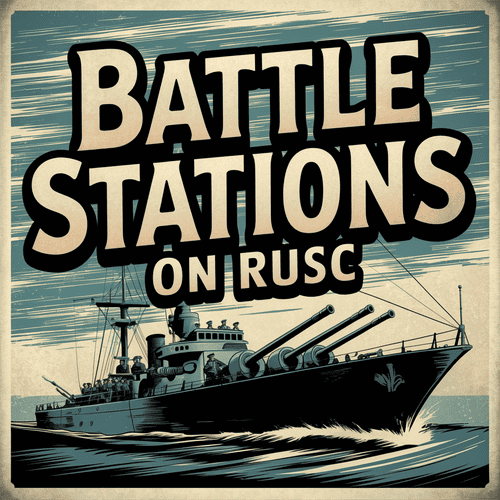
Battle Stations was a radio series created by the United States Navy during World War II. The program was designed to “report to the people of the United States on the progress of its navy in the war being fought in five oceans.”
The series consisted of four dramatic episodes that aimed to educate and entertain listeners about the accomplishments, history, and hopes of the U.S. Navy.
The first two episodes focused on providing updates on the Navy’s efforts in the Battle of the Atlantic and the Eastern Sea Frontier.
The latter two episodes delved into the history and capabilities of the Navy’s air arm, highlighting its role in World War I and its continued importance in the ongoing global conflict.
The Stars
Battle Stations did not feature any regular stars, as it was a documentary-style program produced by the U.S. Navy. However, the series did include appearances by high-ranking naval officers, who provided first-hand accounts and insights into the Navy’s operations and strategies.
Key Dates
- Battle Stations debuted on August 5, 1943
- The final episode aired on August 25, 1943.
- The series was produced and broadcast during the height of World War II, a time when the American public was eager for updates on the progress of the war and the role of the U.S. Navy in the global conflict.
Other Information
Battle Stations was part of a larger effort by the U.S. Navy to engage the public and boost morale during the war. The series was produced in collaboration with the Special Events Department at NBC, which helped to ensure the programs were both informative and entertaining.
The Battle Stations series was well-received by listeners and was praised for its ability to provide a behind-the-scenes look at the Navy’s operations and the sacrifices of its personnel. The program’s dramatic format and the inclusion of first-hand accounts from naval officers helped to bring the war effort to life for listeners, many of whom had family members or friends serving in the military.
In addition to Battle Stations, the U.S. Navy produced several other radio programs during World War II, including the jazzy The Navy Swings and the recruitment-focused A Serenade in Blue. These programs, along with Battle Stations, were part of the Navy’s broader efforts to maintain public support and enthusiasm for the war effort.
Battle Stations stands as a unique and important example of the role that radio played in shaping public perception and understanding of the U.S. Navy’s contributions to World War II.
The series provided listeners with a rare glimpse into the inner workings of the Navy and the sacrifices of its personnel, helping to foster a sense of national unity and pride during a time of great upheaval and uncertainty.