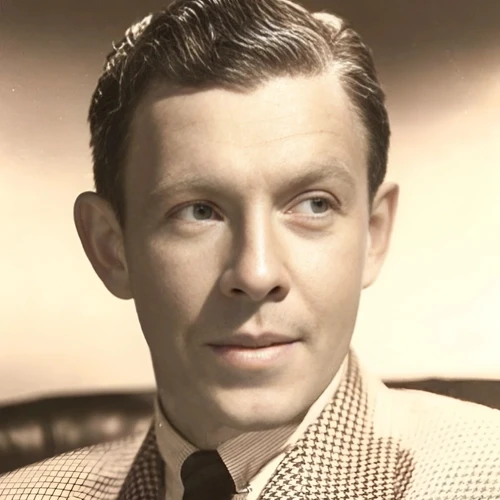
George Murphy was a multifaceted entertainer whose career spanned Hollywood musicals, radio, and ultimately, United States politics. A versatile performer who seamlessly transitioned between entertainment and public service, Murphy became a pioneering figure who bridged the worlds of show business and government.
Early Life and Hollywood Beginnings
Born on July 4, 1902, in New Haven, Connecticut, George Lloyd Murphy emerged from an Irish Catholic family with athletic roots. His father, Mike Murphy, was an athletic trainer and coach, which likely instilled in George a sense of discipline and performance. Growing up in New Haven, Murphy received his education locally, developing the skills and charisma that would later define his multifaceted career. Murphy's initial claim to fame was as a song-and-dance man in Hollywood's golden era of musicals. From 1930 to 1952, he appeared in numerous big-budget musical films, establishing himself as a leading performer during the talking pictures era. His movie debut coincided with the rise of sound in cinema, and he quickly became known for his energetic performances in films like Broadway Melody (1940) and For Me and My Gal (1942).
Radio and Entertainment Leadership
Beyond his film career, Murphy was deeply involved in the entertainment industry's organizational structures. He served as president of the Screen Actors Guild from 1944 to 1946, a period of significant transition for Hollywood performers. During World War II, he also organized entertainment for American troops, demonstrating his commitment to both performance and patriotism. His radio work, while not extensively documented in the provided sources, was part of his broader entertainment career. Murphy understood the power of media and performance, skills that would later prove crucial in his political endeavors. In 1951, he was awarded an Honorary Academy Award, recognizing his contributions to the entertainment industry.
Political Transformation
Murphy's most remarkable career pivot came when he entered politics. In 1952, he joined the Republican Party's leadership, marking the beginning of his political journey. His transition from Hollywood performer to politician was groundbreaking, paving the way for future actor-politicians like Ronald Reagan. In 1964, Murphy was elected as a Republican to the United States Senate, representing California. He was the first notable American actor to be elected to statewide office in California. During his Senate tenure from 1965 to 1971, he served on various committees and was even chairman of the National Republican Senatorial Committee.
Legacy and Impact
Murphy's legacy is defined by his ability to successfully navigate multiple professional domains. He demonstrated that performers could transition into serious political roles, breaking stereotypes about entertainers in public service. His political career, though ultimately ending in defeat, inspired future actor-politicians and showed the potential for cross-industry career transformations. Notably, Murphy created the famous "candy desk" tradition in the U.S. Senate, a lighthearted legacy that continues to this day. His fellow Republicans praised his fundraising abilities and public speaking skills, which he had honed during his years in entertainment.
Works and Appearances
Radio
- Suspense (episode "Death on Highway 99," 1945)
- Broadway's My Beat (episode, 1952)
Film
- New Faces of 1937
- Little Miss Broadway
- For Me and My Gal
- Bataan
- Songwriters Revue
Television
- New Comedy Showcase (episode "You're Only Young Twice," 1960)
Political Roles
- U.S. Senator from California (1965-1971)
- Chair of the National Republican Senatorial Committee (1967-1969)
George Murphy passed away on May 3, 1992, in Palm Beach, Florida, leaving behind a unique legacy that bridged entertainment, leadership, and public service.