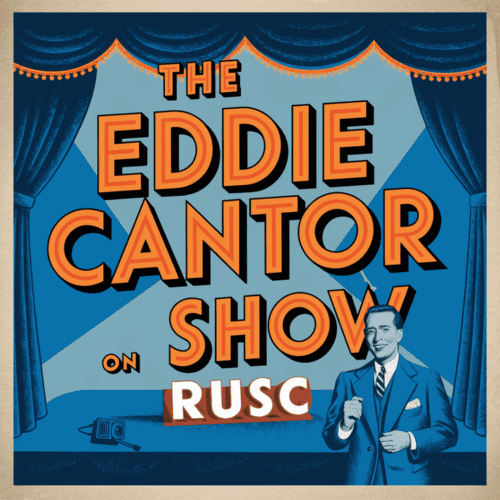
In the golden age of radio, few entertainers captured the hearts of Americans quite like Eddie Cantor. A multitalented performer who seamlessly blended comedy, music, and social commentary, Cantor became one of the most beloved radio personalities of the early 20th century. His infectious energy, distinctive voice, and groundbreaking approach to entertainment made him a true icon of American popular culture.
From Humble Beginnings to Vaudeville Stardom
Born Isidore Itzkowitz on January 31, 1892, in New York City, Eddie Cantor's early life was marked by struggle and determination. Raised in a Jewish immigrant family, he discovered his passion for performance at a young age. By his early teens, Cantor was already winning talent contests and performing in local theaters. His first paying job was a unique combination of waiting tables and singing for tips at a local saloon, where he began to hone his comedic skills. Cantor's breakthrough came through vaudeville, where he quickly distinguished himself as a dynamic performer. In 1912, he appeared in Kid Kabaret, creating his first character "Jefferson" and catching the attention of Broadway producers. His talent soon led him to the prestigious Ziegfeld Follies, where he would become a regular performer and help define the era's entertainment landscape.
The Radio Revolution: Cantor's Golden Age
Radio transformed Cantor from a stage performer to a national celebrity. He first appeared on radio on February 3, 1922, and by 1931, he had become a radio superstar. His Chase and Sanborn radio show established him as a leading comedian, with a format that included musical performances, comedy routines, and witty banter. Cantor's radio shows were revolutionary. They began with audiences chanting "We want Can-tor!", a tradition that originated in his vaudeville days. His show became a Sunday evening staple, featuring talented sidekicks like Bert Gordon (the Mad Russian) and introducing new performers like Dinah Shore. His ability to connect with audiences and discover new talent set him apart from other radio personalities of his time.
Beyond the Microphone: A Multifaceted Entertainer
While radio was his primary medium, Cantor was far from a one-dimensional performer. He was a successful recording artist, making records for various labels from 1917 onwards. He also made significant contributions to film, becoming a Hollywood star with movies like Whoopee! and Kid Boots. Cantor was also a talented composer, most famously writing "Merrily We Roll Along," which became the theme song for Merrie Melodies animated cartoons. His popularity was so immense that he was frequently caricatured in Warner Bros. cartoons, a testament to his cultural impact.
Social Activism and Personal Challenges
Beyond entertainment, Cantor was a committed social activist. He was involved in the actors' equity strike of 1919 and wasn't afraid to take political stands, even when it risked his professional career. The Great Depression hit him hard financially, but he used his writing talents to rebuild his fortune, publishing humorous books like Caught Short! A Saga of Wailing Wall Street. His personal life was marked by both joy and tragedy. He and his wife Ida had five daughters, and their family faced significant challenges, including the loss of their daughter Marjorie. Cantor himself suffered multiple heart attacks, which eventually led to his retirement.
Legacy of a Radio Pioneer
Eddie Cantor passed away on October 10, 1964, leaving behind an unparalleled legacy in entertainment. He was more than just a comedian; he was a trailblazer who helped shape American popular culture. From radio to film, from music to social activism, Cantor represented the quintessential entertainer of his era.
Works and Appearances
Radio
- Chase and Sanborn Show (1931-1946)
- Time to Smile (1940-1946)
- Pabst Show (1946-1949)
Television
- Guest host on various variety shows (1950-1954)
- Colgate Comedy Hour (1950)
Films
- Kid Boots (1926)
- Whoopee! (1930)
- If You Knew Susie (1948)
Broadway
- Ziegfeld Follies (multiple years from 1917-1927)
- Whoopee! (1928)
Books
- Caught Short! A Saga of Wailing Wall Street (1929)
- Yoo-Hoo, Prosperity! (1929)