Tyler McVey
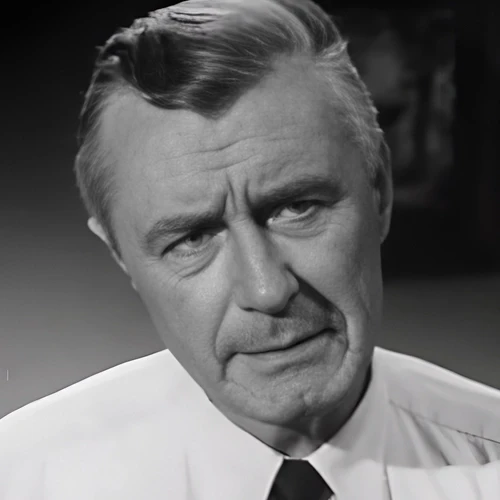
William Tyler McVey emerged as one of Hollywood's most reliable character actors, bringing authenticity and gravitas to supporting roles across radio, television, and film for over three decades. Born on February 14, 1912, in Bay City, Michigan, McVey's journey from small-town amateur productions to the bright lights of Los Angeles represents a quintessential mid-twentieth century entertainment success story. His career spanned the golden age of radio through the television boom and into the 1980s, establishing him as a consummate professional who could seamlessly transition between mediums and genres.
From Small Town to the Silver Screen
McVey's path to stardom began in his native Bay City, Michigan, where he gained early acting experience performing in amateur productions within his hometown. His formal training came during his high school years at Bay City Central High School, where he first discovered his passion for performance. Tragedy marked his childhood when his mother, Jessie Arvilla Tyler, died of tuberculosis when he was only one year old. Rather than remaining solely in his father William David McVey's care, McVey was raised by his maternal grandparents, a arrangement that perhaps instilled in him the resilience necessary for a successful career in the unpredictable entertainment industry. McVey's transition from the Midwest to California represented a pivotal moment in his professional development. The move positioned him to capitalize on emerging opportunities in the rapidly expanding entertainment industry during the late 1930s and 1940s. His early years in the industry required him to accept uncredited roles and bit parts, a common pathway for aspiring actors of that era.
The Radio Years and Broadcast Success
McVey's radio career marked a significant chapter in his professional life, demonstrating his talent for voice work and dramatic interpretation. Beginning in 1939, McVey became a regular on Lux Radio Theatre, one of the most prestigious dramatic programs in broadcasting history. His work on this acclaimed series launched his career trajectory significantly, eventually leading to an estimated participation in over 1,000 broadcasts throughout his radio career—a testament to his reliability and versatility as a performer. Beyond Lux Radio Theatre, McVey appeared on several other notable radio programs that showcased his range as a character actor. He guest-starred on Gene Autry's Melody Ranch, bringing his talents to the western genre in its audio format. His participation in Glamour Manor on June 10, 1946, as the character Caleb Hooten demonstrated his ability to anchor dramatic scenes with authority. McVey also lent his voice to One Man's Family, the long-running soap opera that explored domestic American life. These radio appearances helped establish McVey as a professional who could deliver consistent performances across multiple broadcast schedules, a skill that would serve him equally well when he transitioned to television and film.
Building a Television Legacy
McVey's television career began in earnest during the 1950s and proved remarkably prolific. His first major television appearance came in 1953 on Four Star Playhouse, a prestigious anthology series that featured established and emerging talent. Throughout the remainder of the 1950s, McVey became a familiar face in episodic television, appearing in dozens of programs that defined the era. He guest-starred in The Restless Gun, Gunsmoke, Dragnet, The Lone Ranger, I Love Lucy, Tales of Wells Fargo, Colt .45, Hallmark Hall of Fame, My Friend Flicka, Highway Patrol, It's a Great Life, and Annie Oakley. From 1953 to 1956, McVey contributed to You Are There, a CBS educational series narrated by the distinguished Walter Cronkite. This program presented historical events with dramatic recreations, allowing McVey to portray significant historical figures. A particularly notable television role came when McVey was cast as Major General Norgath in the CBS series Men into Space, which ran from 1959 to 1960. This science fiction series positioned McVey as a military authority figure in futuristic scenarios, a role that suited his commanding presence and authoritative demeanor. Throughout the 1960s and 1970s, McVey maintained an active television presence, appearing in numerous series including The Tom Ewell Show, Kentucky Jones, National Velvet, My Three Sons, The Rebel, The Everglades, Bat Masterson, Death Valley Days, Checkmate, Ripcord, The Wild, Wild West, Bonanza, Ironside, and Eight Is Enough. His performance in Death Valley Days as cattle baron John Chisum in the 1956 episode "Pat Garrett's Side of It" showcased his ability to portray historical western figures with authenticity. McVey's final television roles came in 1985 and 1986, when he appeared in two episodes of Highway to Heaven as different ministerial characters, demonstrating his continued viability as a performer well into his seventies.
Film Career and Industry Leadership
McVey's film career began with uncredited roles and gradually evolved into more substantial character parts. His earliest screen appearance came in 1951 in The Day the Earth Stood Still, where he portrayed the character Brady in an uncredited capacity. Throughout 1952, McVey appeared in several films including Washington Story, Diplomatic Courier, Confidence Girl, Horizons West, Back at the Front, and My Man and I—most in small, uncredited roles that nonetheless contributed to his growing visibility. In 1964, McVey received a more substantial film role when he was cast as General Hardesty in the political thriller Seven Days in May, a significant recognition of his talent for portraying military and authority figures. This period represented the height of his film presence, though he continued to accept television guest spots that often commanded greater attention from audiences and offered steadier employment. Beyond his acting career, McVey distinguished himself through industry leadership and union activism. During the 1960s, he served as president of the Los Angeles, California, local of the American Federation of Television and Radio Artists (AFTRA), later ascending to the position of national President. His commitment to the entertainment industry extended beyond performance; he became a founding member of the AFTRA/SAG Credit Union, demonstrating his dedication to protecting the interests and financial security of working actors. These professional achievements established McVey not merely as a talented performer but as a respected advocate for the entertainment community.
Legacy and Final Years
McVey's personal life reflected the complexities of an entertainment career spanning multiple decades. He was married three times: first to Lorraine Budge in 1937, then to Rita Ann Stickelmaier in 1950 (divorcing in 1970), and finally to Esther Geddes in 1971. On July 4, 2003, at the age of 91, McVey died of leukemia in Rancho Mirage, California. He was interred in Elm Lawn Cemetery in his native Bay City, Michigan, returning to the town where his remarkable journey had begun. Tyler McVey's career embodied the golden age of American entertainment. From radio broadcasts that reached millions to television appearances that spanned three decades, McVey demonstrated the professional versatility required to succeed in an industry undergoing dramatic transformation. His ability to command authority on screen, whether as a military officer, government official, or authority figure, made him an invaluable asset to countless productions. While McVey never achieved headline star status, his consistent presence in quality productions and his respected role within industry leadership circles secured his place in entertainment history as a consummate professional and dedicated advocate for performers.
Works and Appearances
Radio
- Lux Radio Theatre (1939 onwards)
- Gene Autry's Melody Ranch
- Glamour Manor (June 10, 1946)
- One Man's Family
Television
- Four Star Playhouse (1953)
- You Are There (1953-1956)
- The Restless Gun (1950s)
- Gunsmoke (1957)
- Dragnet (1950s)
- The Lone Ranger (1950s)
- I Love Lucy (1950s)
Film
- The Day the Earth Stood Still (1951)
- Washington Story (1952)
- Diplomatic Courier (1952)
- Confidence Girl (1952)
- Horizons West (1952)
- Back at the Front (1952)
Heard in