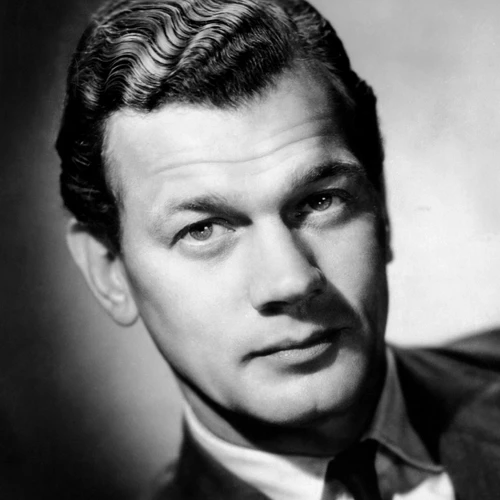
Joseph Cotten was a remarkable performer who seamlessly bridged the worlds of radio, stage, and cinema during Hollywood's golden era. Though primarily known for his film roles, Cotten's early career was deeply rooted in radio and theatrical performance, making him a quintessential multimedia artist of the mid-20th century.
Early Life and Theatrical Beginnings
Born on May 15, 1905, in Petersburg, Virginia, Joseph Cheshire Cotten Jr. showed an early inclination towards performance. In 1923, his family supported his artistic aspirations by arranging private lessons at the Hickman School of Expression in Washington, D.C. During this period, Cotten demonstrated remarkable resourcefulness, earning spending money by playing professional football and working as a lifeguard. In 1925, Cotten moved to Miami and began working as an advertising salesman for The Miami Herald. Simultaneously, he started performing at the Miami Civic Theatre, where he would spend five years honing his craft. Interestingly, he also reviewed theatre shows for the Herald, giving him a comprehensive understanding of performance arts.
Transition to New York and Radio Performance
Cotten's professional journey took a significant turn when he moved to New York. He initially worked as an assistant stage manager and began understudying roles in theatre productions. During the challenging economic times of the Great Depression, Cotten diversified his income by modeling and performing in industrial films. Radio became another crucial platform for his emerging talents. His Broadway debut in Absent Friends in 1932 marked the beginning of his stage career. Though early productions like Jezebel had short runs, Cotten persistently developed his skills across multiple performance mediums. Radio provided him with steady work and exposure during this formative period.
Breakthrough in Hollywood and Radio
Cotten's collaboration with Orson Welles proved transformative. He gained worldwide fame through their joint film projects like Citizen Kane (1941), The Magnificent Ambersons (1942), and Journey into Fear (1943), in which he was also credited with the screenplay. During the 1940s, Cotten became a prominent Hollywood actor, appearing in numerous significant films. His radio work complemented his screen performances, allowing him to reach broader audiences. In 1955, he even hosted The 20th Century Fox Hour and introduced his own anthology series, On Trial, which ran for 41 episodes.
Later Career and Legacy
As television emerged, Cotten adapted seamlessly. He guest-starred in multiple television series and continued to make feature films. Despite his remarkable career, he was notably one of the best actors never to receive an Oscar nomination. In 1981, Cotten experienced health challenges, including a stroke that temporarily affected his speech. However, he remained resilient, undergoing therapy and maintaining his connection with colleagues like Welles. He passed away on February 6, 1994, leaving behind a rich legacy in entertainment.
Personal Life and Recognition
Cotten was married twice - first to Lenore Kipp (1931-1960) and then to Patricia Medina (1960 until his death). At the Venice International Film Festival, he won the International Prize for Best Actor in 1949 for his performance in Portrait of Jennie.
Works and Appearances
Radio
- Various radio performances (1930s-1940s)
- On Trial anthology series (1956-1959)
Television
- The 20th Century Fox Hour (Host, 1955)
- On Trial (Host/Actor, 1956-1959)
- Guest appearances on multiple series
Film Highlights
- Citizen Kane (1941)
- The Magnificent Ambersons (1942)
- Journey into Fear (1943)
- Portrait of Jennie (1948)
Theatre
- Absent Friends (Broadway debut, 1932)
- Jezebel (1933)
- Broadway production (1958-1960)
Joseph Cotten exemplified the versatility of mid-20th century performers, masterfully navigating radio, stage, and screen with remarkable skill and adaptability.