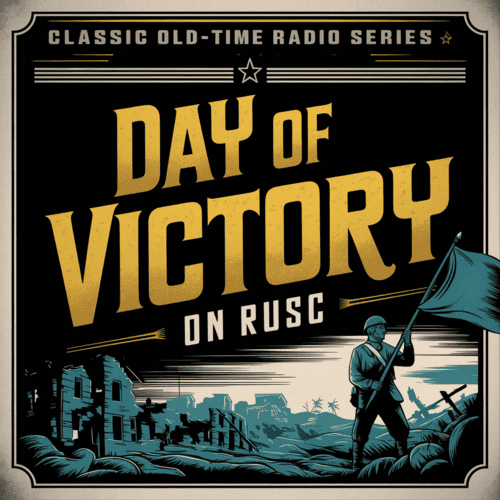
Day of Victory
Day of Victory was a special radio broadcast that aired on May 8, 1945, marking the end of World War II in Europe. Produced and directed by acclaimed radio dramatist Norman Corwin, the program was a poetic and reflective tribute to the sacrifices and triumphs of the war effort. Corwin’s lyrical script, combined with a talented cast and evocative sound effects, created a powerful and moving listening experience that captured the complex emotions of the moment - the relief, the sorrow, the pride, and the uncertainty of what lay ahead.
The broadcast was initially aired on the night of Germany’s unconditional surrender, when millions of Americans tuned in to hear President Harry S. Truman’s announcement of the historic event. By popular demand, Day of Victory was repeated a few days later on May 13th, allowing the nation to collectively process the end of the European conflict through Corwin’s artistic vision.
The Stars
Day of Victory featured a large ensemble cast, with no single protagonist. Instead, Corwin’s script wove together the voices of soldiers, civilians, and historical figures to create a tapestry of the wartime experience.
Notable performers included Martin Gabel, who provided the narration, as well as a supporting cast that included Everett Sloane, Arlene Francis, and Arnold Moss.
Key Dates
- Day of Victory was first broadcast on May 8, 1945, the same day that Germany surrendered unconditionally to the Allied forces.
- Due to the overwhelming public response, the program was repeated on May 13, 1945.
- This repeat broadcast allowed even more Americans to experience Corwin’s poetic tribute to the end of the war in Europe.
Other Information
Day of Victory was considered a landmark achievement in radio drama, with many critics hailing it as Corwin’s masterpiece. The program’s innovative use of sound, poetry, and multiple perspectives to capture the complex emotions of the moment was widely praised.
Day of Victory has been recognized as one of the single greatest radio broadcasts of the 20th century, a testament to Corwin’s skill as a writer and director.
The program’s impact extended beyond the radio airwaves. Day of Victory was later adapted for the stage and published in book form, ensuring that Corwin’s artistic vision would continue to be experienced by new generations.
The program’s enduring legacy is a testament to its ability to transcend the medium of radio and speak to the universal human experience of war, loss, and triumph.
Cast & Crew

Ratings & reviews
Loading reviews…
Episodes

Ah, Day of Victory — a fine choice. Let me set a few more down beside it that I think you'll take to.