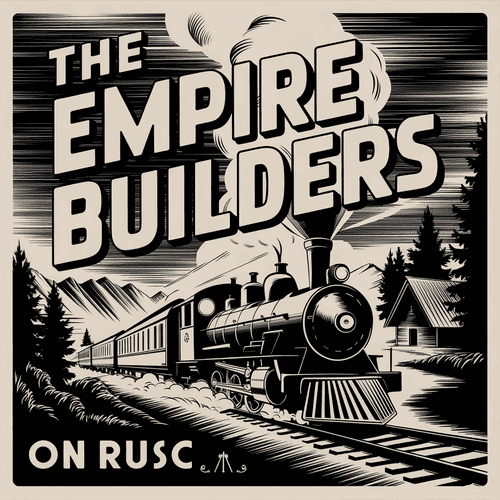
Empire Builders was an American old-time radio Western anthology series that aired on NBC-Blue from January 14, 1929, to June 22, 1931. This groundbreaking program is considered by many to be one of the first Western dramas on radio, and it certainly stood out as one of the most unique offerings of its time.
The 30-minute weekly episodes masterfully blended romance, music, gritty adventure, and occasional bitter violence, featuring both real historical figures and fictional characters. The show’s storylines spanned a broad timeline, with episodes set anywhere from the mid-1700s to the 1930s. This wide-ranging approach allowed the series to explore various facets of American history and the development of the Western frontier.
Empire Builders was sponsored by the Great Northern Railway, which significantly influenced the show’s content. As a result, the stories primarily took place in the states served by the railway: California, Idaho, Montana, Oregon, and Washington. This geographical focus gave the series a distinct flavor, allowing listeners to explore the rich history and diverse landscapes of the American Northwest.
Each episode was introduced by a narrator known as the Old Timer, whose characteristic chuckles and colloquialisms became a beloved feature of the program. This framing device helped to create a sense of continuity and familiarity for regular listeners, while also setting the stage for the varied adventures that would unfold in each installment.
The Stars
The cast of Empire Builders evolved over the course of its run, featuring several talented performers who brought the stories of the American West to life. In its original incarnation, when the show originated from WJZ in New York City, Virginia Gardner and Bob McGimsey starred as the lead actors.
When the production moved to Chicago, a new cast was assembled. This Chicago-based version of the show starred Don Ameche, Bernardine Flynn, and Harvey Hayes in the lead roles. Ameche and Flynn, both alumni of the University of Wisconsin, were selected from hundreds of actors who auditioned for the program, highlighting the show’s commitment to finding top-tier talent.
The supporting cast regularly included Obed “Dad” Pickard, Lucille Husting, and Bob White, who added depth and variety to the weekly adventures. Other performers who lent their voices to the show included Jack Daly, further enriching the auditory tapestry of Empire Builders.
Behind the scenes, the production was guided by a team of skilled professionals. Ted Pearson served as the announcer, while Don Bernard took on directorial duties. The musical backdrop, an essential element in creating the show’s atmosphere, was provided by an orchestra conducted by Josef Koestner.
Key Dates
- January 14, 1929: Empire Builders debuts on NBC-Blue, marking the beginning of its journey as a pioneering Western radio drama.
- February 18, 1929: The show airs a notable two-part program focusing on the Lewis and Clark Expedition, showcasing its ability to blend historical events with dramatic storytelling.
- September 1930: The program’s production moves from WJZ in New York City to Chicago, bringing with it a new cast and a fresh perspective on the series.
- June 22, 1931: Empire Builders broadcasts its final episode, concluding its run after two and a half years of bringing the American West to life for radio audiences.
Other Information
Empire Builders stood out among its contemporaries for its unique approach to the Western genre. Unlike many later Western radio shows that focused primarily on gunfights and stereotypical cowboy adventures, this series took a broader view of American history and the development of the Western frontier.
The show’s sponsorship by the Great Northern Railway played a significant role in shaping its content. This partnership allowed Empire Builders to showcase the diverse landscapes and rich history of the American Northwest, areas that were often overlooked in other Western-themed entertainment of the time.
One of the most notable aspects of Empire Builders was its blend of historical fact and fiction. The series frequently featured episodes based on real historical events and figures, such as the Lewis and Clark Expedition. This approach not only entertained listeners but also educated them about important moments in American history.
The program’s willingness to tackle more serious themes set it apart from many of its contemporaries. While it certainly included its share of adventure and romance, Empire Builders wasn’t afraid to depict the harsher realities of frontier life, including occasional scenes of bitter violence. This more mature approach to storytelling likely contributed to its appeal among adult listeners.
Empire Builders also played a significant role in the careers of some of its stars. For actors like Don Ameche and Bernardine Flynn, the show provided valuable experience and exposure early in their careers. Ameche, in particular, would go on to become a major star in both radio and film.
The series’ format, which allowed for stories set across a wide range of time periods, gave the writers and actors considerable creative freedom. This flexibility enabled Empire Builders to explore a diverse array of storylines and characters, keeping the content fresh and engaging for its audience throughout its run.
While Empire Builders had a relatively short run compared to some other radio series of the era, its impact on the development of the radio Western genre was significant. It helped pave the way for later, more famous Western radio dramas like Gunsmoke and The Lone Ranger, demonstrating that there was an audience for more sophisticated, historically-grounded Western storytelling on the airwaves.
Today, Empire Builders stands as a fascinating artifact of early radio drama, offering modern listeners a glimpse into how the mythology and history of the American West were portrayed and interpreted in the late 1920s and early 1930s. Its blend of fact and fiction, adventure and education, continues to make it an intriguing listen for enthusiasts of old-time radio and American history alike.