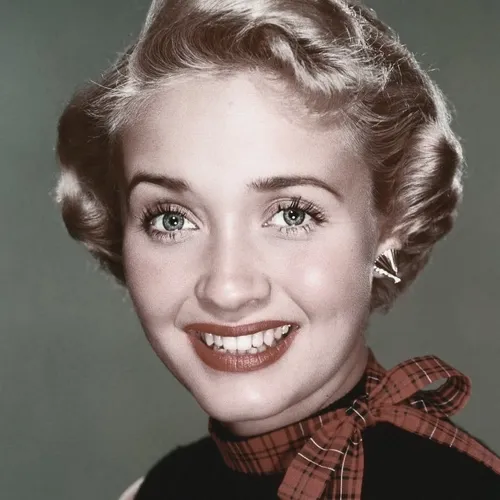
Jane Powell, born Suzanne Lorraine Burce, was a multifaceted entertainer whose vibrant career spanned radio, film, and stage. From her early beginnings as a child performer to becoming a beloved voice of mid-20th century entertainment, Powell's journey epitomized the golden age of American media.
Early Life and Musical Beginnings
Born on April 1, 1929, in Portland, Oregon, Jane Powell showed remarkable musical talent from an incredibly young age. By two years old, she had already begun dance lessons, and by five, she was appearing on the local children's radio program Stars of Tomorrow . Her precocious talents caught the attention of local talent scouts, who recognized her potential for broader entertainment opportunities. At just 12 years old, Powell became the Oregon Victory Girl, traveling throughout the state singing and selling victory bonds during World War II. This early experience not only honed her performance skills but also introduced her to the power of using entertainment for national morale . Her breakthrough came in 1943 when she won a Hollywood talent show while vacationing in California, subsequently signing a contract with MGM Theaters the very next day at just 14 years old.
Radio Career and Early Performances
Powell's radio career was vibrant and diverse. In 1944, she played the title role in a radio production, marking her early presence in broadcast entertainment . Her radio work expanded significantly in 1949 when she played main roles in a series of musical radio programs on the Railroad Hour, performing in productions like Sweethearts, Music in the Air, Brigadoon, and Good News . Her musical recordings during this period further demonstrated her versatility. Between 1949 and 1956, she released several notable recordings, including Romance, A Date with Jane Powell, and Can't We Be Friends? . These recordings showcased her remarkable vocal talents and helped establish her as a prominent entertainment personality.
Transition to Film and Broader Entertainment
While radio was an important part of her early career, Powell quickly transitioned to film, becoming a celebrated musical movie star. Her film debut came in 1944 with Song of the Open Road, where she interestingly played a character named Jane Powell - a name she would adopt professionally . Throughout the 1940s and 1950s, Powell starred in numerous musical films that cemented her status as a Hollywood icon. Notable films included Seven Brides for Seven Brothers (1954), Royal Wedding (1951), and Hit the Deck (1955) . Her girl-next-door image and exceptional singing voice made her a beloved figure in American entertainment.
Later Career and Legacy
As the entertainment landscape evolved, Powell adapted, moving into television, stage productions, and occasional film appearances. She had guest roles in popular television series like Growing Pains in the late 1980s and continued performing in stage productions well into the 2000s . Powell's legacy extends beyond her performances. She was considered one of the last surviving stars of Hollywood's Golden Age, symbolizing an era of wholesome entertainment and musical excellence. Despite personal challenges, she maintained a public image of the all-American girl and remained an inspiration to many .
Conclusion
Jane Powell's journey from a young radio performer to a multifaceted entertainer represents the dynamic nature of mid-20th century American media. Her ability to transition between radio, film, television, and stage demonstrated not just her remarkable talents, but also her adaptability as an artist.
Works and Appearances
Radio
- Stars of Tomorrow (Child performer, early 1930s)
- Railroad Hour Musical Series (1949)
- Sweethearts
- Music in the Air
- Brigadoon
- Good News
Film
- Song of the Open Road (1944)
- Seven Brides for Seven Brothers (1954)
- Royal Wedding (1951)
- Hit the Deck (1955)
Television
- Growing Pains (Guest role, 1988-1992)
- Various guest appearances (1981-2002)
Stage
- Avow (2000)
- 70, Girls, 70 (2000)
- Road Show (2003-2004)
Recordings
- Romance (1949)
- A Date with Jane Powell (1949)
- Can't We Be Friends? (1956)