Gregory Peck
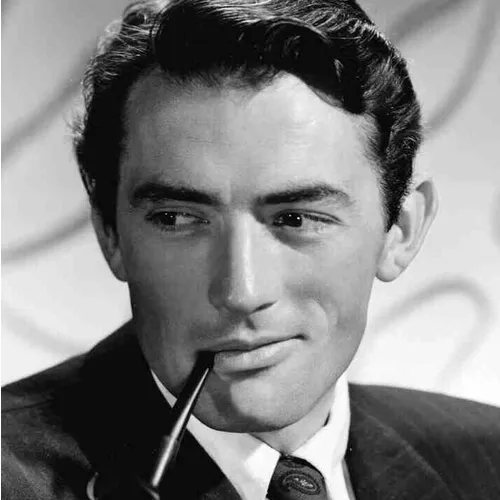
Gregory Peck (1916-2003) was a remarkable American actor whose extraordinary talent transcended multiple media platforms, making him one of the most iconic performers of the 20th century. With a career spanning film, radio, television, and stage, Peck became synonymous with dignity, integrity, and powerful storytelling.
Early Life and Hollywood Breakthrough
Born in 1916, Gregory Peck quickly emerged as a versatile actor with an undeniable screen presence. His breakthrough came in 1944 with a pivotal role as a priest in a film that earned him his first Academy Award nomination. In the same remarkable year, he demonstrated his radio versatility by playing Count Vronsky in a radio adaptation of a classic novel. Peck's early career was marked by a series of critically acclaimed performances. In rapid succession, he starred in psychological thrillers and received multiple Academy Award nominations for his nuanced portrayals. His roles in films like Gentleman's Agreement (1947), where he played a journalist investigating antisemitism, showcased his commitment to socially conscious storytelling.
Radio and Stage Collaborations
Beyond cinema, Peck was deeply involved in theatrical arts. In 1947, he co-founded a theatre company with fellow performers, demonstrating his passion for live performance. He starred in productions like The Male Animal, revealing his versatility as a stage actor. His radio work was equally impressive. During the 1940s, Peck participated in radio adaptations that brought literary classics to life for audiences across America. These performances highlighted his exceptional vocal range and storytelling abilities, bridging the gap between literature and broadcast entertainment.
Defining Cinematic Roles
Peck's most iconic role came in 1962 with To Kill a Mockingbird, where he portrayed Atticus Finch, a lawyer defending a wrongly accused Black man. This performance not only won him the Academy Award but also topped the American Film Institute's list of greatest heroes. Throughout the 1950s and 1960s, Peck continued to choose roles that challenged societal norms and explored complex human emotions. From war heroes to journalists, his characters were often principled individuals facing moral challenges.
Legacy and Later Career
In his later years, Peck remained active in television and documentary work. He appeared in historical documentaries, miniseries, and even received Emmy recognition for his portrayal of Father Mapple in a 1998 miniseries. His commitment to storytelling extended beyond acting. Peck became a respected narrator and appeared in numerous documentaries, using his distinctive voice to bring historical narratives to life.
Conclusion
Gregory Peck was more than an actor; he was a cultural icon who used his platform to tell stories that mattered. His work in radio, film, and television left an indelible mark on American entertainment, representing integrity, compassion, and profound human understanding.
Works and Appearances
Radio
- Anna Karenina (1944) - Count Vronsky
- Various dramatic adaptations (1940s)
Film
- Days of Glory (1944)
- Gentleman's Agreement (1947)
- To Kill a Mockingbird (1962)
- Cape Fear (1962)
- The Omen (Archival footage, 2024)
Television
- The Blue and the Gray (1982) - President Lincoln
- Cape Fear Miniseries (1991)
- Father Mapple in Miniseries (1998)
Documentaries
- Super Chief: The Life and Legacy of Earl Warren (1989) - Narrator
- The Hunt for Adolf Eichmann (1994) - Narrator
- Wild Bill: Hollywood Maverick (1995) - Himself
Heard in