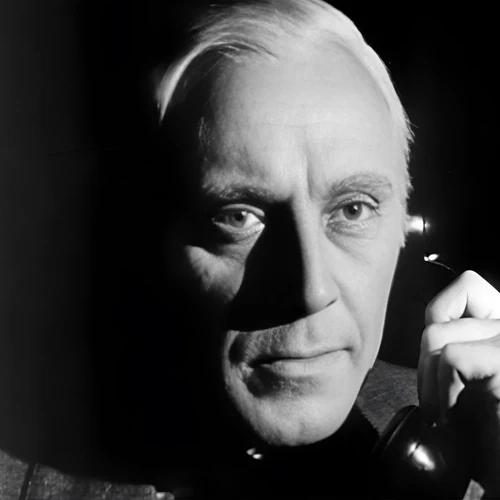
George Coulouris was a remarkable actor whose dynamic career spanned radio, stage, and screen, making significant contributions to the golden age of broadcasting. With a career that stretched from the 1920s to the 1980s, Coulouris became known for his versatile performances and memorable character portrayals across multiple media platforms.
Early Life and Theatrical Beginnings
Born on October 1, 1903, in Manchester, Lancashire, George Alexander Coulouris emerged from an Anglo background with a passion for performance. His early theatrical training at the Royal Central School of Speech and Drama laid the foundation for what would become a remarkable career. Coulouris made his stage debut in 1926, quickly establishing himself as a talented and adaptable performer. By 1928 and 1929, he was appearing in notable productions, including Eugene O'Neill's The Hairy Ape, which demonstrated his early commitment to challenging theatrical work. His stage presence and dramatic skills would soon translate perfectly to the emerging world of radio performance.
The Mercury Theatre and Radio Revolution
A pivotal moment in Coulouris's career came in 1936 when he met Orson Welles. This encounter would dramatically shape his professional trajectory. Welles invited Coulouris to become a charter member of the Mercury Theatre, where he performed the role of Mark Antony in their innovative modern-dress production of Julius Caesar in 1937. His radio work became equally impressive. Coulouris became part of the repertory company for CBS Radio's dramatic productions, including The Mercury Theatre on the Air and its sponsored continuation. His rich, distinctive voice made him a sought-after performer in radio dramas.
Diverse Radio and Performance Landscape
Coulouris's radio career was remarkably diverse. He appeared in numerous radio series, including notable performances in Suspense, where he starred in episodes like "The Last Letter of Dr. Bronson" and "Portrait without a Face". Notably, he was the first actor to star in the title role of a specific radio program, showcasing his versatility. Beyond radio, Coulouris continued to excel in stage and film. His performance as Walter Parks Thatcher in Orson Welles'sCitizen Kane (1941) was particularly memorable, earning him critical recognition. During the 1940s, he remained a regular figure on stage and screen, starring in his own Broadway production and appearing in multiple films.
Later Career and Legacy
Returning to Britain in 1950, Coulouris continued to demonstrate his remarkable range. He joined the Bristol Old Vic company, appearing in various significant roles. His stage work included performances in productions like An Enemy of the People and Tennessee Williams's Cat on a Hot Tin Roof. His television and radio work continued prolifically. He had recurring roles in science fiction serials like Pathfinders to Mars and Pathfinders to Venus, and appeared as Arbitan in the Doctor Who serial The Keys of Marinus in 1964.
Conclusion
George Coulouris represented the quintessential mid-20th-century performer - adaptable, talented, and capable of bringing depth to every character he portrayed. His contributions to radio, stage, and screen helped define an era of dramatic storytelling, making him a significant figure in entertainment history.
Works and Appearances
Radio
- The Mercury Theatre on the Air (1938-1940)
- Suspense (1943-1944)
- Episode: "The Last Letter of Dr. Bronson"
- Episode: "Portrait without a Face"
Pathfinders to Mars (Recurring role)Pathfinders to Venus (Recurring role)Television
- Pathfinders in Space
- Doctor Who - Arbitan in The Keys of Marinus (1964)
Film
- Citizen Kane (1941) - Walter Parks Thatcher
- Multiple films from 1933-1980, including roles in Watch on the Rhine (1943) and Joan of Arc (1948)
Stage
- Julius Caesar (Mercury Theatre, 1937) - Mark Antony
- The Shoemaker's Holiday (1938)
- An Enemy of the People (1959)
- Cat on a Hot Tin Roof (1970)