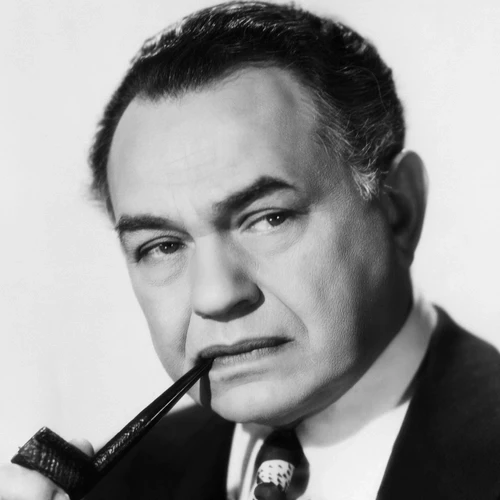
Edward G. Robinson was far more than just a Hollywood icon; he was a multifaceted performer whose radio career reflected his passionate commitment to entertainment and social activism. Though best known for his tough-guy film roles, Robinson's radio work revealed a deeper, more nuanced talent that connected him directly with audiences during some of America's most challenging times.
Early Life and Radio Beginnings
Born Emanuel Goldenberg in Bucharest, Romania, in 1893, Robinson immigrated to the United States as a young boy, finding in America a new identity and boundless opportunities. His journey into radio was a natural extension of his theatrical training and dynamic performing style. From 1937 to 1942, Robinson starred as Steve Wilson, editor of the Illustrated Press, in a compelling newspaper drama that showcased his ability to bring complex characters to life. Robinson's radio talents extended beyond traditional dramatic roles. He portrayed hardboiled detective characters and became a multilingual radio broadcaster with remarkable versatility. During the 1940s, he performed on CBS Radio's "Cadena de las Américas" network, broadcasting to South America in collaboration with the U.S. State Department's initiatives.
Wartime Broadcasting and Activism
Robinson's radio work was deeply intertwined with his political activism. When World War II erupted, he used his linguistic skills and passionate oratory to support the Allied cause. Despite being unable to enlist due to his age, he was appointed a Special Representative based in London. From this position, he delivered radio addresses in over six languages to European countries under Nazi occupation, demonstrating remarkable dedication to combating fascism. His radio performances were not merely entertainment but powerful tools of moral and political engagement. The Office of War Information recognized his contributions, awarding him for his "outstanding contribution to morale through stirring patriotic appeals". Robinson became an enthusiastic campaigner for President Roosevelt, using radio as a platform to rally support and maintain national unity.
Radio Performances and Artistic Range
Beyond his wartime broadcasts, Robinson explored diverse radio genres. He starred in newspaper dramas, detective series, and programs that highlighted his remarkable vocal range and dramatic capabilities. His ability to switch between tough-guy personas and more nuanced characters made him a versatile radio performer. Interestingly, Robinson's radio work complemented his film career, allowing him to reach audiences in intimate, immediate ways that cinema could not. His radio performances demonstrated an artistic flexibility that went far beyond his famous gangster film roles, revealing a sophisticated, multilayered performer.
Legacy of a Multimedia Performer
Robinson's radio career was more than a side pursuit; it was an integral part of his artistic and political identity. He used the medium not just for entertainment, but as a platform for social commentary and patriotic expression. His broadcasts during World War II were particularly significant, representing a form of cultural diplomacy that transcended traditional entertainment. Though primarily remembered for his film work, Robinson's radio contributions were substantial. He embodied the ideal of an artist-activist, using his voice and platform to inform, inspire, and challenge his audiences during critical moments in American history.
Works and Appearances
Radio
- Illustrated Press (1937-1942) - Steve Wilson
- Various CBS Radio "Cadena de las Américas" broadcasts (1940s)
- Multiple wartime propaganda and morale-boosting programs
Film
- Little Caesar (1931)
- Dr. Ehrlich's Magic Bullet (1940)
- Numerous gangster and dramatic roles (1930-1950s)
Television
- Brief appearances in various programs
- Guest roles in dramatic series
Activism and Broadcasting
- Special Representative for U.S. Information Services (World War II)
- Multilingual radio broadcaster
- Contributor to war relief and cultural programs
Edward G. Robinson's radio legacy stands as a testament to the power of performance as a tool for communication, education, and social change.