Douglas Fairbanks Jnr
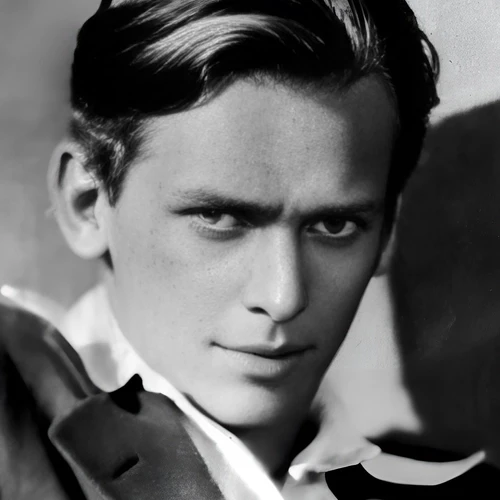
Douglas Fairbanks Jr. was far more than just the son of a Hollywood legend. A versatile performer, naval officer, and cultural icon, he carved out a unique legacy that spanned multiple entertainment mediums and decades of American cultural history.
The Making of a Hollywood Heir
Born in New York City in 1909, Douglas Elton Fairbanks Jr. was the only child of silent film superstar Douglas Fairbanks and Anna Beth Sully. From an early age, he was immersed in the world of entertainment, making small roles in his father's films like The Halfbreed (1916) and The Mollycoddle (1921). Despite his famous lineage, young Douglas was determined to establish his own identity in Hollywood. His early career was marked by a deliberate attempt to differentiate himself from his father's swashbuckling image. He sought diverse roles and worked diligently to prove his acting capabilities beyond the shadow of his legendary parent. By the late 1920s, he had begun to make a name for himself, receiving excellent reviews for his stage debut in Young Woodley and securing increasingly prominent film roles.
Radio and Performance Versatility
While primarily known for his film work, Douglas Fairbanks Jr. was also active in radio broadcasting. His radio appearances, though not extensive, demonstrated his versatility as a performer. In 1946, he appeared on the Screen Guild Players program in an episode titled "The Old Lady Shows Her Medals". His radio work was just one facet of a broader entertainment career that included stage, film, and later television performances. This versatility was a hallmark of Fairbanks' professional approach, always seeking to expand his artistic horizons and challenge himself in different mediums.
A Decorated Naval Officer and Diplomat
Beyond entertainment, Fairbanks distinguished himself as a remarkable naval officer during World War II. Commissioned as a reserve officer, he was assigned to important strategic roles. Most notably, he was the "Father of the U.S. Navy Beach Jumpers," a military deception unit that would simulate amphibious landings to mislead enemy forces. His diplomatic skills were also recognized when President Franklin D. Roosevelt appointed him as a special envoy to South America in 1941. This blend of artistic talent and public service made Fairbanks a truly unique figure of his generation.
Later Career and Legacy
In his later years, Fairbanks continued to be active in entertainment. He toured on stage, appeared in television movies and series, and remained a respected figure in Hollywood. His final feature film was Ghost Story in 1981, and his last TV roles were in the mini-series Anastasia: The Mystery of Anna in 1987. Fairbanks passed away on May 7, 2000, at the age of 90, leaving behind a remarkable legacy. He was honored with three stars on the Hollywood Walk of Fame and was inducted into the Television Hall of Fame in 1969.
Conclusion
Douglas Fairbanks Jr. was more than just a Hollywood actor. He was a renaissance man who excelled as an actor, naval officer, diplomat, and cultural ambassador. His ability to reinvent himself across different domains made him a truly exceptional figure of 20th-century American entertainment and public service.
Works and Appearances
Radio
- Screen Guild Players (1946) - Episode: "The Old Lady Shows Her Medals"
Film
- The Halfbreed (1916) - Small role
- The Mollycoddle (1921) - Small role
- Ghost Story (1981) - Final feature film
Television
- Anastasia: The Mystery of Anna (1987) - Mini-series
- Various TV movies and series between 1972-1987
Stage
- Young Woodley (1927) - Stage debut
- Multiple stage tours, including productions in 1968, 1970-1972, and 1977
Military Service
- U.S. Navy Reserve Officer during World War II
- Special envoy to South America (1941)
- Founder of the Navy Beach Jumpers program
Heard in