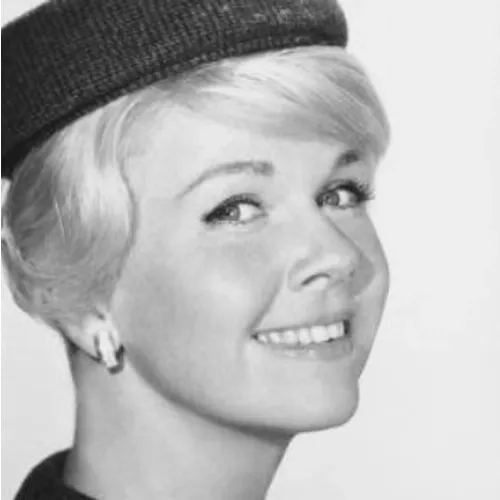
Doris Day emerged as one of the most captivating and versatile performers of the mid-20th century, whose remarkable journey began with radio and blossomed into a multifaceted career spanning music, film, and television. Her distinctive voice and magnetic personality would come to define an entire era of American entertainment.
Early Life and Musical Beginnings
Born Doris Mary Kappelhoff on April 3, 1922, in Cincinnati, Ohio, Day's entry into the world of music was anything but planned. A near-fatal car accident in her teenage years unexpectedly transformed her life trajectory. While recovering, she discovered her extraordinary vocal talent by singing along to radio broadcasts. Her mother, Alma, recognized her potential and arranged singing lessons with Grace Raine, who would profoundly influence Day's musical style. Day's early musical education was unconventional. She learned by listening intently to radio voices, particularly admiring Ella Fitzgerald's nuanced vocal techniques. These formative experiences would shape her future approach to singing and performance. Her natural talent quickly became apparent, and she began performing with local bands, setting the stage for her remarkable career.
Rise to Radio Stardom
In the late 1930s and early 1940s, Day's career took flight when she began singing with Les Brown and His Band of Renown. Her breakthrough came with hit recordings that captured the nation's attention. Between 1948 and 1951, she was one of the top female pop vocalists, competing with contemporaries like Peggy Lee and Dinah Shore. Her radio performances were characterized by a warm, accessible style that resonated with audiences. Day's ability to connect emotionally through her music made her a favorite on weekly radio programs. During this period, she toured extensively across the United States, performing in the waning era of big bands and emerging as a solo pop sensation.
Transition to Broader Entertainment
While radio was her initial platform, Day's talents quickly expanded beyond musical broadcasting. Her performance caught the attention of Hollywood, leading to her film debut in Romance on the High Seas (1948). This marked the beginning of a remarkable film career that would see her become one of the biggest box-office stars of the 1960s. Remarkably, Day continued to maintain her musical prominence even as her film career flourished. Her recordings like "Secret Love" and "Que Sera, Sera" became iconic, demonstrating her ability to excel across multiple entertainment mediums. Her radio background had provided her with the versatility and performance skills that would serve her throughout her career.
Legacy and Cultural Impact
Day's influence extended far beyond entertainment. She became a prominent advocate for animal welfare, founding the Doris Day Animal Foundation. Her commitment to this cause was as passionate as her artistic pursuits. Throughout her career, she received numerous accolades, including the Presidential Medal of Freedom in 2004, recognizing both her artistic achievements and humanitarian efforts. By the time she passed away on May 13, 2019, at the age of 97, Doris Day had become more than just a performer—she was a cultural icon who represented the optimism, talent, and grace of mid-20th century America.
Works and Appearances
Radio
- Les Brown and His Band of Renown (1940s)
- CBS Radio Program (1952-1953)
Music
- Hit Singles: "Sentimental Journey", "Que Sera, Sera", "Secret Love"
- Albums: You're My Thrill (1949)
- Last Album: My Heart (2011)
Film
- Romance on the High Seas (1948)
- Calamity Jane (1953)
- Pillow Talk (1959)
- Move Over, Darling (1963)
Television
- The Doris Day Show (1968-1973)
Awards and Honors
- Presidential Medal of Freedom (2004)
- Grammy Lifetime Achievement Award (2008)
- Los Angeles Film Critics Career Achievement Award (2011)