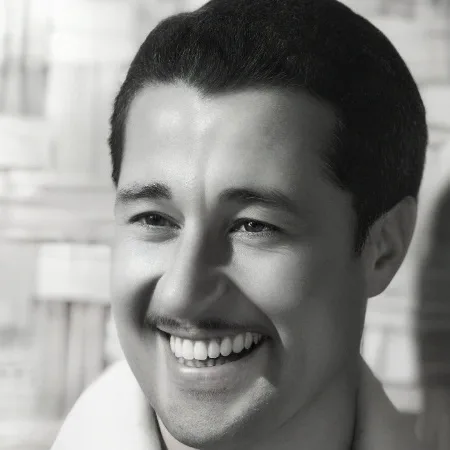
In the vibrant landscape of early 20th-century broadcasting, few personalities shone as brightly as Don Ameche. A versatile performer who seamlessly transitioned between radio, film, and television, Ameche became a quintessential entertainer who defined the spirit of mid-century American media.
From Kenosha to the Airwaves
Born Dominic Felix Amici on May 31, 1908, in Kenosha, Wisconsin, Don Ameche emerged from a large, working-class Italian-American family. The second of eight children, he showed early promise in performance during his college years. After studying at Loras College and Marquette University, Ameche's natural charisma and vocal talents would soon propel him into the entertainment world. His initial foray into performance came unexpectedly when he filled in for a missing lead actor in a stock company production. This chance opportunity ignited a passion that would define his career. By 1930, Ameche had arrived in Chicago, where he began his remarkable radio journey.
The Radio Revolution
Ameche quickly became a prominent figure in Chicago's radio scene. By 1932, he had established himself as a leading man on two significant programs: a dramatic anthology and a groundbreaking show that many considered the forerunner of the soap opera genre. His rich, engaging voice and dynamic performance style made him a favorite among listeners. His radio career reached new heights when he became a central figure in "The Bickersons", a comedy series featuring a hilariously combative married couple. Broadcast on NBC in the late 1940s, the show showcased Ameche's exceptional comedic timing and became a beloved staple of American radio entertainment.
Hollywood and Beyond
Ameche's radio success naturally led to opportunities in film. 20th Century Fox brought him to Hollywood, where he became a leading romantic actor, paired with many of the era's top female stars. His versatility was evident in roles ranging from historical figures like Alexander Graham Bell to romantic leads. Interestingly, his portrayal of the telephone's inventor in The Story of Alexander Graham Bell was so memorable that the term "ameche" briefly became slang for telephone. In the 1940 film Down Argentine Way, Groucho Marx even joked, "Telephone? This is 1870, Don Ameche hasn't invented the telephone yet."
A Late-Career Renaissance
After a period of reduced visibility, Ameche experienced a remarkable career resurgence in the 1980s. His role in Trading Places (1983) marked the beginning of an unexpected comeback. His most celebrated late-career moment came with Cocoon (1985), for which he won the Academy Award for Best Supporting Actor. This renaissance demonstrated Ameche's enduring talent and adaptability. From radio star to Hollywood actor to Oscar winner, he continually reinvented himself, remaining relevant across decades of entertainment history.
Legacy of a Broadcast Legend
Don Ameche passed away on December 6, 1993, in Scottsdale, Arizona, leaving behind a remarkable legacy. He was more than just an entertainer; he was a bridge between radio's golden age and modern multimedia performance. His ability to captivate audiences across different mediums made him a true icon of 20th-century American entertainment.
Works and Appearances
Radio
- The Bickersons (1946-1951)
- Various dramatic anthology programs (1930-1940s)
- The Old Gold Don Ameche Show (Early 1940s)
Film
- Alexander's Ragtime Band (1938)
- The Story of Alexander Graham Bell (1939)
- Heaven Can Wait (1943)
- Trading Places (1983)
- Cocoon (1985)
- Homeward Bound: The Incredible Journey (1993, voice role)
Television
- International Showtime (Host, 1961-1965)
- The Golden Girls (Guest appearance, 1990)
Stage
- Multiple Broadway productions from 1954-1989, including The Pajama Game and How to Succeed in Business Without Really Trying