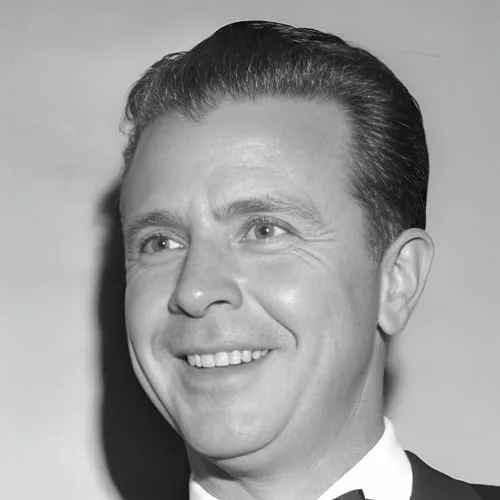
Dick Powell was a remarkable entertainer who defied Hollywood's typecasting, transforming from a musical comedy performer to a hard-boiled dramatic actor and becoming a pioneering figure in radio and television. His remarkable career spanned multiple decades and mediums, showcasing an extraordinary ability to reinvent himself in the rapidly changing landscape of 20th-century entertainment.
Early Life and Musical Beginnings
Born Richard Ewing Powell on November 14, 1904, in Mountain View, Arkansas, Powell emerged from humble beginnings. As the middle son of Ewing Powell and Sally Rowena Thompson, he showed early promise in musical performance. In the late 1920s, Powell began recording records with various musical groups, demonstrating his vocal talents and setting the stage for his future entertainment career. His initial breakthrough came through musical comedy performances, where his charming persona and melodic voice made him a popular leading man in Hollywood's early musical productions. Powell's early career was characterized by light-hearted roles that showcased his singing and dancing abilities, establishing him as a quintessential song-and-dance man of the 1930s.
Transformation into a Dramatic Actor
By 1944, Powell recognized the need to evolve beyond romantic leading roles. In a bold career move, he successfully reinvented himself as a dramatic actor, most notably by portraying Philip Marlowe in Murder, My Sweet (1944). This film marked a significant turning point, proving Powell's remarkable versatility. His dramatic transformation continued with a series of film noir and hardboiled detective roles. He became the first actor to play Philip Marlowe on screen, a groundbreaking achievement that redefined his public image. Films like Cornered (1945) and Pitfall (1948) further solidified his reputation as a serious dramatic actor, moving far beyond his earlier musical comedy persona.
Radio and Television Pioneering
Powell was not just a film actor but a significant radio and television innovator. From 1949 to 1953, he starred in the Richard Diamond, Private Detective radio theater production, where his character combined wit, detective skills, and musical interludes. Many episodes showcased Powell's continued musical talents, with his character often ending scenes by singing to his date. In the 1950s, Powell became one of the founders of Four Star Television, a groundbreaking production company. He hosted and starred in Dick Powell's Zane Grey Theater on CBS from 1956 to 1961 and his final anthology series, Dick Powell Theater, on NBC from 1961 to 1963.
Personal Life and Legacy
Powell was married three times: to Mildred Maund (1925-1932), Joan Blondell (1936-1944), and finally to June Allyson from 1945 until his death. He had four children and was known for his versatility both on and off screen. Tragically, Powell was diagnosed with cancer, which he publicly acknowledged in September 1962. He passed away on January 2, 1963, at the age of 58. In recognition of his significant contributions to entertainment, the Television Academy posthumously presented him with the Television Academy Trustee Award in May 1963.
Conclusion
Dick Powell's career represents a masterclass in artistic reinvention. From musical comedy performer to hard-boiled detective actor, from radio star to television producer, he consistently demonstrated an extraordinary ability to adapt and excel. His legacy extends beyond his performances, embodying the dynamic spirit of mid-20th century American entertainment.
Works and Appearances
Radio
- Rogue's Gallery (1945-1946) - Detective Richard Rogue
- Richard Diamond, Private Detective (1949-1953) - Richard Diamond
- Johnny Dollar (1948) - Insurance Investigator Johnny Dollar
Television
- Dick Powell's Zane Grey Theater (1956-1961) - Host/Star
- Dick Powell Theater (1961-1963) - Host/Star
Film
- Musical Comedies (1930s)
- Murder, My Sweet (1944)
- Cornered (1945)
- Pitfall (1948)
- Susan Slept Here (1954) - Final film appearance
Notable Awards
- Posthumous Television Academy Trustee Award (1963)
- Star on Hollywood Walk of Fame