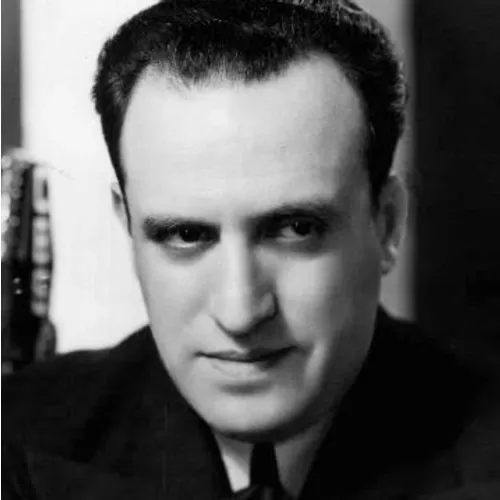
Al Goodman
In the vibrant world of early 20th-century entertainment, Al Goodman emerged as a pivotal musical director whose talents bridged the realms of Broadway, radio, and early television. His remarkable career spanned several decades, making him one of the most sought-after conductors and musical arrangers of his time.
From Russian Roots to American Dreams
Alfred Goodman was born on August 12, 1890, in Nikopol, Russian Empire (now Ukraine), to a family deeply rooted in musical tradition. His father, Tobias Goodman, was a synagogue cantor, which profoundly influenced young Al's musical development. By the age of 5, Goodman was already singing in a choir and had become fluent in reading music by 6.
The Goodman family's journey to America was fraught with challenges. Escaping persecution, they disguised themselves as farmers and made a perilous journey through Romania before ultimately settling in Baltimore. This early experience of resilience would later reflect in Goodman's adaptable and dynamic musical career. After graduating from local schools, he began earning money by playing piano for films at the Pickwick Theatre in Baltimore.
Broadway's Musical Maestro
Goodman's professional journey took a significant turn when he began working as a musician in a nickelodeon and as a chorus boy in operettas. Before turning 20, he was already working as an orchestrator in Chicago for a music publishing company. His move to Los Angeles marked the beginning of his conducting and composing career.
His breakthrough came through a connection with Al Jolson, which brought him to New York as Jolson's conductor. Earl Carroll introduced him to musical comedy, collaborating on productions like So Long Letty and the hit Sinbad. Goodman quickly became one of Broadway's most popular conductors, directing over 150 first-night performances. His Broadway debut as a musical director was Canary Cottage in 1917, with his final production coming in 1940.
Radio and Television Pioneer
Goodman's versatility extended far beyond the stage. He became a prominent figure in radio broadcasting, directing music for numerous network shows. His impressive portfolio included programs like Al Goodman's Musical Album, The Family Hour, and The James Melton Show. He also ventured into early television, working on shows such as Sound Off Time.
His musical talents weren't limited to conducting; Goodman was also a composer. He wrote memorable songs like "When Hearts Are Young", "Call of Love", and "Twilight", further cementing his reputation as a multifaceted musical talent.
Personal Life and Legacy
Despite his professional success, Goodman maintained a relatively private personal life. He was married to Fannie Sneidman and spent most of his career in New York City. When he passed away on January 10, 1972, he left behind a legacy of musical innovation that had significantly shaped the entertainment landscape of the mid-20th century.
Goodman represented a generation of musicians who seamlessly transitioned between live performance, radio, and emerging television mediums. His ability to adapt and excel across these platforms made him a true pioneer of American entertainment.
Works and Appearances
Radio
- Al Goodman's Musical Album (1951-1953)
- The Family Hour
- The Gulf Show
- The James Melton Show (1935-1937)
- Showboat
Television
- Sound Off Time
- Various unnamed television productions
Broadway Productions (as Musical Director)
- Canary Cottage (1917)
- Flyin' High
- Final Broadway production (1940, unnamed)
Compositions
- "When Hearts Are Young"
- "Call of Love"
- "Twilight"