Walter Brennan
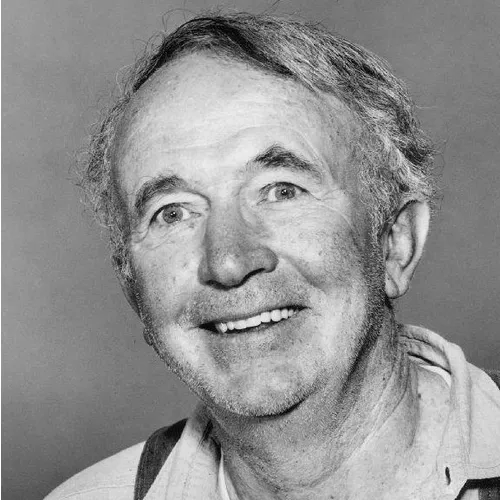
Walter Brennan stands as one of the most distinctive and accomplished voices in broadcasting history. His unmistakable high-pitched, croaking vocal delivery became instantly recognizable to millions of listeners across multiple decades and media formats. Yet what makes Brennan's story particularly compelling is not just his success in radio—though that was substantial—but his remarkable ability to transition seamlessly from the golden age of radio into film and television, ultimately becoming the only actor to win three Academy Awards for Best Supporting Actor. His career trajectory demonstrates the interconnected nature of mid-twentieth-century entertainment and the versatility required of performers during this transformative era.
The Man Behind the Voice
Walter Andrew Brennan was born on July 25, 1894, in Lynn, Massachusetts, to Irish immigrant parents. His father worked as an engineer and inventor, establishing a household that valued technical expertise and innovation. Brennan himself pursued engineering studies during his high school years, a path that seemed destined until economic circumstances redirected his life. Working as a bank clerk in his early adulthood, Brennan's trajectory would change dramatically when he enlisted in the U.S. Army during World War I. Brennan served as a private with the 101st Field Artillery Regiment, stationed in France for two years. The experience left an indelible mark on him, though not through conventional military glory. During his service, he suffered a severe injury to his vocal cords from exposure to mustard gas—a chemical weapon that would inadvertently create his most famous trademark. The injury left him with what would become his signature sound: a distinctively reedy, high-pitched voice that seemed almost fragile yet possessed remarkable carrying power. Rather than viewing this as a career impediment, Brennan would eventually recognize it as his greatest asset, the very quality that would make him unforgettable to audiences across decades.
Rise to Prominence Through Radio
Brennan's entry into entertainment began with radio work during the golden age of broadcasting. His distinctive voice proved perfectly suited to the medium, where physical appearance mattered not at all but vocal character was everything. The specifics of his early radio work remain somewhat elusive in available documentation, but what is clear is that by the 1940s, Brennan had established himself as a reliable and distinctive presence in radio programming. His radio career intersected with his growing success in cinema and eventually led to one of his most celebrated radio appearances. In 1945, Brennan appeared on the prestigious Lux Radio Theatre broadcast, performing in an adaptation of Kentucky alongside Laraine Day. This appearance represented the kind of high-profile radio work that demonstrated his status as an established entertainment personality. The Lux Radio Theatre program was among the most respected dramatic anthology series of the era, featuring prominent film and stage actors in adaptations of well-known films and stories, making Brennan's participation a testament to his standing in the entertainment industry.
A Multifaceted Career Across Media
What distinguished Brennan from many of his contemporaries was his refusal to remain confined to a single medium. While his radio work garnered respect and steady employment, his film career achieved far greater prominence and lasting cultural impact. Between 1925 and the early 1970s, Brennan built a remarkable filmography that showcased his versatility as a character actor. His Academy Award achievements stand as a remarkable testament to his craft. Brennan won the Oscar for Best Supporting Actor three times: for Come and Get It in 1936, Kentucky in 1938, and The Westerner in 1940. This triple victory in such a compressed timeframe—four years—remains an extraordinary achievement, making him the only male or female actor to accomplish this feat in the supporting actor category. His performance as the villainous Judge Roy Bean in The Westerner, opposite Gary Cooper, was particularly acclaimed and demonstrated his range beyond the kindly elder characters he sometimes portrayed. Beyond his award-winning roles, Brennan contributed to numerous significant films across decades. His 1948 appearance in Red River, where he played John Wayne's sidekick, placed him in one of the greatest Westerns ever made. He continued this association with Wayne in 1959 when he appeared in director Howard Hawks' Rio Bravo, alongside John Wayne and Dean Martin. His consistent presence in quality films and his ability to enhance any production with his distinctive presence made him one of the most reliable and respected character actors in Hollywood.
Television Success and Later Years
Following his success in film, Brennan transitioned to television with remarkable success. His most celebrated television role came as Grandpa Amos McCoy in the long-running sitcom The Real McCoys, which premiered in 1957. The series proved immensely popular, running for multiple seasons across different networks—initially on ABC for five years before moving to CBS for a final season. During the show's run, Brennan appeared in 224 episodes, establishing himself as a beloved television personality to millions of American households. The role perfectly suited his persona: a crusty but lovable elder providing wisdom and comic relief. Brennan's success with The Real McCoys led him to pursue recording opportunities. In 1962, at the age of 67, he released the single "Old Rivers", a novelty song about an old farmer and his mule. The recording achieved remarkable success, reaching number five on the U.S. Billboard chart and making Brennan the oldest living person to achieve a Top 40 hit at that time. Later that same year, at age 68, he returned to the charts with "Mama Sang a Song" on November 17, 1962. These musical ventures, while perhaps unexpected for an actor, demonstrated the cross-platform appeal Brennan had cultivated. Beyond The Real McCoys, Brennan continued appearing in television throughout the 1960s. He served as a musical judge on the 1953–1954 ABC series Jukebox Jury, appeared in The Guns of Will Sonnett (1967–69), and took a role in To Rome with Love (1969–1971) alongside John Forsythe. In one final notable television achievement, he received top billing over Pat O'Brien in the TV movie The Over-the-Hill Gang (1969) and over Fred Astaire in its sequel The Over-the-Hill Gang Rides Again (1970). His final television series role came in the permanent cast of To Rome with Love, though he made occasional guest appearances on other programs thereafter.
Legacy and Enduring Impact
Walter Brennan's career represents a masterclass in longevity and adaptability within the entertainment industry. From the era of radio through the golden age of Hollywood and into the television age, he maintained relevance and respect through pure talent and distinctive presence. His voice—once a potential liability from a wartime injury—became his most valuable asset, instantly distinguishing him in any production. Brennan demonstrated that character actors need not be leading men to achieve remarkable success and cultural significance. His willingness to appear in diverse roles, from villains to kindly grandfathers, from serious dramas to comedies, made him an invaluable asset to producers and directors throughout his career. Brennan passed away on September 21, 1974, at the age of 80, having spent nearly five decades in professional entertainment. He was laid to rest at San Fernando Mission Cemetery in Los Angeles. His contributions to entertainment—whether measured in Academy Awards, television episodes, films, or the countless radio broadcasts in which he appeared—left an indelible mark on American popular culture. The actor who won three Oscars in four years and later became a recording artist at an age when most performers had retired proved that talent and distinctive character could overcome any obstacle, even the lingering effects of a wartime chemical weapon.
Works and Appearances
Radio
- Lux Radio Theatre – "Kentucky" (1945)
- Jukebox Jury – Musical judge (1953–1954)
Television
- The Real McCoys
- The Tycoon
- The Guns of Will Sonnett
- The Red Skelton Hour – Various roles
- To Rome with Love (1969–1971)
- The Over-the-Hill Gang (1969)
- The Over-the-Hill Gang Rides Again (1970)
- Alias Smith and Jones
Cinema (Selected Significant Appearances)
- Come and Get It (1936)
- Kentucky (1938)
- The Westerner (1940)
- Sergeant York (1941)
- Red River (1948)
- Rio Bravo (1959)
- Those Calloways (1965)
Recordings
- "Old Rivers" (1962)
- Old Rivers – Album
- "Mama Sang a Song"