Vinton Hayworth
Vinton Hayworth was a man of many talents who shaped the entertainment landscape across multiple decades and mediums. Born on June 4, 1906, in Washington, D.C., and passing away on May 21, 1970, Hayworth carved out a remarkable career that spanned from the pioneering days of radio through the golden age of Hollywood and into the television era. Known also by the names Jack Arnold and Vincent Haworth, this actor, playwright, and screenwriter appeared in over 90 films and countless television productions, yet his most enduring legacy may well lie in his contributions to the founding and leadership of the very unions that would protect performers for generations to come. His final television role as General Winfield Schaeffer on the beloved sitcom I Dream of Jeannie introduced him to a new generation of audiences, cementing his place in entertainment history.
From Washington to the Airwaves: The Early Years
Hayworth's entry into entertainment began remarkably early, with his involvement in radio starting in his late teens. He emerged as a pioneering radio announcer in the early 1920s, beginning his career right in his hometown of Washington, D.C. before expanding his horizons to New York City and eventually Chicago. This geographic progression reflected the expansion of radio broadcasting itself during that formative period, with Hayworth establishing himself as a skilled voice capable of handling the demands of live broadcasting in its infancy. Rather than remaining confined to announcing duties, Hayworth quickly diversified his radio work into character roles that showcased his range as a performer. He became known for his ability to slip seamlessly between different types of characters and programs, demonstrating the versatility that would define his entire career. His willingness to work across various radio formats and genres positioned him perfectly to capitalize on the rapid growth of the medium throughout the 1920s and 1930s.
Radio's Golden Voice: Programs and Characters
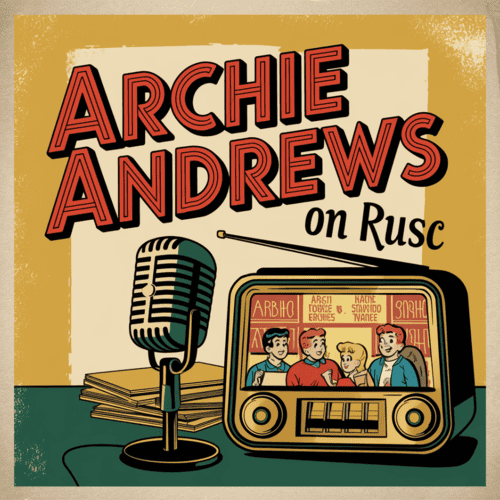
Hayworth's radio résumé reads like a compendium of significant programs from radio's most creative period. He played Fred Andrews on Archie Andrews, contributed as an announcer on Chaplain Jim, and took on the role of Philip Roberts on It's Higgins, Sir. His performances extended to Lone Journey where he portrayed Port, and he brought Alonzo Smith to life on Meet Me in St. Louis. Additionally, Hayworth became known for his work on Myrt and Marge, where he portrayed the character Jack Arnold—a name that would become so closely associated with his persona that he sometimes received billing under that name. The breadth of these roles demonstrates that Hayworth was not simply a utility player filling slots on the radio schedule. Instead, he was a sought-after performer trusted with substantial roles across comedy, drama, and variety programs. His appearances credited as Jack Arnold continued into the early 1940s before he embarked on a significant departure from radio work.
Building the Union and Broadway Interlude
While Hayworth continued his broadcasting career, he also made a crucial contribution to the infrastructure of entertainment that extended far beyond his individual performances. He became one of the founders of AFRA (which later became AFTRA), the union representing radio and television artists. His commitment to the welfare of his fellow performers was demonstrated most powerfully when he served as president of the union from 1951 to 1954, a period when broadcast unions were consolidating their power and influence in an increasingly complex industry. Between his early film appearances and his television work, Hayworth took a deliberate step back to pursue theatrical work on Broadway from 1942 to 1944. This two-year stint represented a significant investment in his craft, suggesting that Hayworth viewed the stage as an important creative outlet alongside his broadcasting and film work. Following this theatrical interlude, he returned to California, where he resumed his work in films and continued to build his presence in the emerging medium of television.
The Television Years and Final Roles
As Hayworth moved into the 1950s, his work increasingly shifted toward television, marking an important transition in his career trajectory. In 1953–1954, he worked as an announcer on The Buick-Berle Show on NBC, positioning himself at the center of one of the early era's most prominent television variety programs. Throughout the decade and into the 1960s, his television appearances became remarkably diverse and prolific. He appeared across a wide range of series including Alfred Hitchcock Presents, Gunsmoke, Perry Mason, Hazel, The Munsters, and Green Acres. One of his most significant television roles came when he was cast as Magistrado Carlos Galindo on Disney's Zorro between 1957 and 1959, a role that allowed him to contribute to one of television's most beloved adventure series during its original run. A particularly poignant episode of Dennis the Menace in 1960 saw him playing Mr. Cramer in an episode titled "Out of Retirement," a subtle reminder of his decades-long career and the wisdom age could bring to comedic situations. His final role, and the one most remembered by audiences who knew him from television, was as General Winfield Schaeffer on I Dream of Jeannie between 1969 and 1970. Hayworth replaced Barton MacLane, who had played General Martin Peterson until his death in 1969. In a poignant footnote to entertainment history, both Hayworth and MacLane passed away before the final episodes in which they appeared had been broadcast, meaning audiences saw their final performances only after they had already left the world.
Legacy and Enduring Impact
Vinton Hayworth's career exemplifies the multifaceted nature of entertainment work in the twentieth century. He was equally comfortable working before a microphone, before a camera, or before a live theater audience. His contributions to the establishment and leadership of performers' unions demonstrated that his commitment extended beyond individual success to collective welfare. With appearances in over 90 films and his extensive television and radio work, Hayworth maintained a presence in American entertainment across nearly half a century, adapting to technological change and shifting audience preferences while maintaining the professionalism that defined his generation of performers.
Works and Appearances
Radio
- Archie Andrews – Fred Andrews
- Chaplain Jim – Announcer
- It's Higgins, Sir – Philip Roberts
- Lone Journey – Port
- Meet Me in St. Louis – Alonzo Smith
- Myrt and Marge – Jack Arnold
Television
- The Buick-Berle Show (1953–1954)
- Alfred Hitchcock Presents (1956)
- Zorro (1957–1959)
- Dennis the Menace (1960)
- Gunsmoke
- Perry Mason
Film (Selected)
- When Tomorrow Comes (1939)
- The Day the Bookies Wept (1939)
- Sued for Libel (1939)
- That's Right – You're Wrong (1939)
- Mexican Spitfire Out West (1940)
Theater
- Broadway productions (1942–1944)
Other
- Founder of AFRA (later AFTRA)
- President of AFRA/AFTRA (1951–1954)