Victor Moore
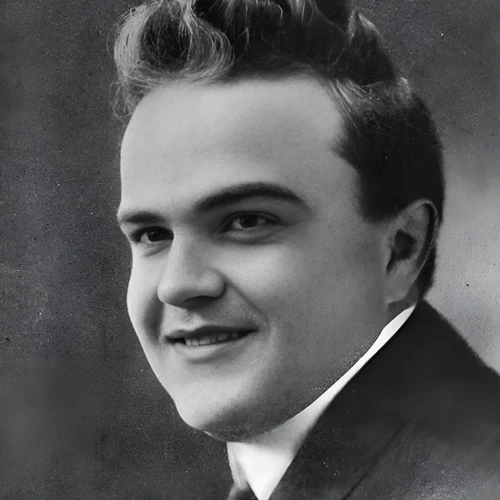
Victor Moore was a towering figure in American entertainment who dominated Broadway stages and graced film screens across multiple decades. Born in Hammonton, New Jersey, Moore carved out a legendary career that spanned theater, cinema, radio, and television, establishing himself as a master of comedic timing and character work. His ability to combine genuine pathos with infectious humor made him a beloved performer whose presence could elevate an entire production. From his 1896 Broadway debut in Rosemary through his final screen appearance nearly 60 years later, Moore demonstrated a remarkable capacity to reinvent himself while maintaining the "creaky charm" that critics and audiences treasured.
From Stage to Screen: The Early Years
Moore's theatrical pedigree was established early when he made his Broadway debut in Rosemary in 1896, positioning himself as a rising talent during the theatrical golden age. His breakthrough came through collaborations with George M. Cohan, one of Broadway's most celebrated figures, when Moore appeared in Forty-five Minutes from Broadway, which opened on January 1, 1906. The success of this production led to an immediate sequel, The Talk of New York (1907), cementing Moore's status as a reliable draw in stage productions. These early years established the pattern that would define his career: Moore possessed an uncanny ability to play characters whose apparent foolishness masked underlying wisdom and kindness, creating a distinctive comic persona that resonated with audiences. Throughout the late 1920s and 1930s, Moore became a fixture on Broadway, tackling roles in some of the era's most prestigious productions. He portrayed Shorty McGee in Oh, Kay! (1926) and Nosey Bartlett in Hold Everything! (1928), both comedic turns that showcased his gift for physical comedy and character development. His association with the Gershwin brothers brought him to Of Thee I Sing (1931), where he played Vice-president Alexander Throttlebottom, and later appeared in Let 'Em Eat Cake (1933). These prestigious theatrical engagements demonstrated that Moore was not merely a comedian but an actor trusted by the era's most innovative composers and lyricists. His theatrical success eventually extended to 21 Broadway shows throughout his lifetime, making him one of the most prolific stage performers of his generation.
Building a Film Career Alongside Theater
While maintaining his Broadway presence, Moore transitioned into sound films with remarkable success, appearing in more than 50 films throughout his career. One of his most memorable film partnerships was with Fred Astaire and Ginger Rogers in Swing Time (1936), where he played Edwin "Pop" Cardetti, contributing comic relief to one of cinema's most celebrated dance partnerships. Moore demonstrated versatility by working with another Hollywood legend, appearing opposite Mae West in The Heat's On, and reuniting with Ginger Rogers in We're Not Married (1952) for a second time, proving his ability to complement diverse screen partners. Moore's film work displayed remarkable range across genres and dramatic contexts. He appeared in Make Way for Tomorrow (1937) as Barkley Cooper, Louisiana Purchase (1941) as Senator Oliver P. Loganberry (a role he had previously performed on stage), and Ziegfeld Follies (1946) as a Lawyer's Client. His final screen appearance came in The Seven Year Itch (1955), where he played a plumber, providing a fitting capstone to a film career spanning nearly two decades. Among his most interesting film appearances was voicing himself as a Hunter in the 1945 Daffy Duck cartoonAin't That Ducky, a role that pleased Moore so thoroughly that he offered to provide his voice free of charge—on the condition that the animators draw him with more hair than his actual appearance warranted.
Radio Prominence and Television Transitions
Moore's radio career reflected his status as an established entertainment personality rather than marking his initial rise to prominence. His August 16, 1949 guest appearance as himself on The Martin and Lewis radio show demonstrated his willingness to participate in contemporary comedy formats, while his role as a regular on The Jimmy Durante Show showcased his ability to work alongside other major radio personalities. Moore also participated in radio adaptations of literary classics and films, including a 1947 version of It's a Wonderful Life on Lux Radio Theatre, which allowed him to extend his reach into the intimate medium of radio drama. As television emerged during the postwar era, Moore adapted to this new medium with the same professionalism he had demonstrated throughout his career. He appeared on variety programs including The Colgate Comedy Hour and So This Is Hollywood (where he appeared alongside former child star Mitzi Green), bringing his distinctive comedic sensibility to the home screen. Moore's transition to television represented the final chapter of a career that had consistently embraced new technology and entertainment formats. Unlike many performers who struggled with the transition from radio or theater, Moore's fundamental strengths—his comic timing, expressive face, and ability to create memorable characters—translated seamlessly across multiple media platforms.
Partnerships and Professional Relationships
Perhaps no professional relationship defined Moore's theatrical career more significantly than his partnership with William Gaxton. The two became a popular theatre duo in the 1930s, with Gaxton's self-assured "slicker" characters providing the perfect foil to Moore's worried, sympathetic characters. This dynamic proved so effective that it became their signature pairing, appearing in multiple productions throughout the decade. Their chemistry owed much to contrasting stage personalities: where Gaxton commanded attention through confidence and charm, Moore generated laughs and sympathy through vulnerability and befuddlement, creating a theatrical balance that audiences found irresistible. Moore's willingness to work across generations and with performers from different backgrounds demonstrated his professionalism and collaborative spirit. Whether supporting the balletic brilliance of Astaire and Rogers, the dramatic intensity of Mae West, or the comedic timing of Jimmy Durante, Moore proved he could enhance rather than compete with his scene partners. His consistent employment across multiple decades and across various performance contexts speaks to his reputation as a reliable, talented performer who elevated productions through his contributions.
Legacy of Comedic Excellence
Victor Moore's career stands as a testament to the value of versatility, timing, and genuine comic instinct in entertainment. From 1896 to 1955, Moore maintained consistent employment across theater, film, radio, and television—a remarkable achievement spanning nearly 60 years. His success derived not from a single gimmick or character but from his fundamental understanding of comedy as a human experience rather than merely jokes and pratfalls. Critics recognized this quality; in reviewing It Happened on 5th Avenue (1947), The New York Times critic Bosley Crowther praised Moore's "charming performance," while Time magazine credited Moore's "creaky charm and pathos" as fundamental to whatever production featured him. Moore's personal life included family bonds he maintained throughout his career. He had three children with his first wife: an adopted son named Victor, Jr., and two biological children, Ora Victora and Robert Emmett. Despite the demands of an entertainment career spanning nearly six decades, Moore managed to sustain personal relationships while delivering consistent professional excellence. His legacy remains that of a complete entertainer—a skilled stage actor, a capable film performer, a reliable radio presence, and an adaptable television personality—whose genuine warmth and comic sensibility made him indispensable across all formats.
Works and Appearances
Radio
- Amos 'n' Andy (1944) — "Between Life and Death" episode
- Lux Radio Theatre (1947) — It's a Wonderful Life
- The Jimmy Durante Show (1947) — "The Presidential Campaign"
- Hallmark Playhouse (1948) — "Old Man Minnick"
- The Fred Allen Show (1949) — "Mob Buster"
- The Martin and Lewis radio show (August 16, 1949)
Theater
- Rosemary (1896)
- Forty-five Minutes from Broadway (1906)
- The Talk of New York (1907)
- Oh, Kay! (1926)
- Hold Everything! (1928)
- Of Thee I Sing (1931)
- Let 'Em Eat Cake (1933)
- Anything Goes (1934)
- Louisiana Purchase (1940)
Cinema (Selected)
- Dangerous Nan McGrew (1930) — Doc Foster
- Heads Up (1930) — Skippy Dugan
- Love in the Suburbs (1931)
- Ladies not Allowed (1932)
- Romance in the Rain (1934) — J. Clarence 'Pudgy' Beaver
- Make Way for Tomorrow (1937) — Barkley Cooper
Television
- The Colgate Comedy Hour
- So This Is Hollywood
Heard in