Tony Randall
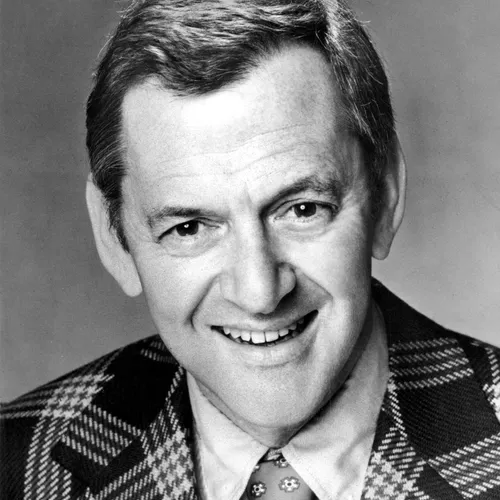
Anthony Leonard Randall, born Aryeh Leonard Rosenberg on February 26, 1920, in Tulsa, Oklahoma, became one of broadcasting's most distinctive voices—a performer whose meticulous diction, refined sensibility, and comedic precision made him a fixture across multiple entertainment mediums. While many know him best for his television portrayal of the fastidious Felix Unger in The Odd Couple, Randall's career trajectory began in radio, where he honed the impeccable delivery and character work that would define his six-decade entertainment career. His transition from radio to television and film showcases the fluid movement of talent through mid-twentieth-century media, yet his radio roots remained an integral part of his professional identity and legacy.
From Oklahoma to Broadway: The Formative Years
Randall's path to broadcasting stardom followed the well-worn trail of many entertainment professionals of his generation. After attending Tulsa Central High School, he pursued formal training and theatrical education before making his way to New York City. The young performer's early years in the entertainment world positioned him perfectly for the radio boom of the 1940s and 1950s, when the medium offered unprecedented opportunities for actors to showcase their vocal range and interpretive abilities without the constraints of physical appearance that film required. Like many aspiring performers of the era, Randall worked extensively in theater during the 1940s, primarily in supporting roles on Broadway stages. This theatrical foundation proved invaluable, as it trained him in the precision, timing, and character nuance that radio performances demanded. The stage work also established his reputation as a serious, classically trained performer—an image that would follow him throughout his career and inform how casting directors approached him for more distinguished roles.
The Radio Years and Early Television Success
Randall's most notable early radio work came through his regular appearances on I Love a Mystery, the adventure series where he portrayed the character Reggie York during the show's 1949-1952 revival. This role demonstrated his ability to embody characters with depth and personality, qualities essential to radio acting where vocal performance alone had to convey emotion, motivation, and authenticity. His success in this revival led to expanded opportunities in the emerging television medium, which was beginning to cannibalize radio's audience and talent pool by the early 1950s. His breakthrough in television came with Mister Peepers (1952–1955), where he played Harvey Weskit, a history teacher, establishing himself as a versatile performer capable of anchoring a series. The success of this role led to numerous guest appearances across television's golden age, including spots on The Gulf Playhouse, Kraft Theatre, The Motorola Television Hour, Armstrong Circle Theatre, and Studio One in Hollywood. These appearances on prestigious dramatic programs reinforced his status as a serious actor, not merely a radio personality transitioning to television.
Broadway Prestige and National Recognition
Randall's theatrical ambitions never waned, and his most significant Broadway achievement came with Inherit the Wind (1955–1957), where he portrayed newspaperman E. K. Hornbeck, a character based on the real-life cynic H. L. Mencken. Performing alongside distinguished actors Ed Begley and Paul Muni, Randall demonstrated that he could hold his own in heavyweight dramatic company. This role became transformative for his career, establishing him as a legitimate stage actor capable of commanding respect in challenging dramatic material. His performance earned critical attention and helped position him for increasingly substantial television and film opportunities throughout the late 1950s and 1960s. During this period, Randall's versatility became increasingly apparent. In 1961, he demonstrated his range by taking on a "highly dramatic role" in "Hangover," an episode of The Alfred Hitchcock Hour, where he portrayed an alcoholic advertising executive spiraling into self-destruction—a far cry from the comedic roles for which he would later become best known. He starred in a television adaptation of Arsenic & Old Lace (1962) and secured leading roles in films such as Boys' Night Out (1962) and Island of Love (1963). These varied assignments showcased an actor determined to explore the full spectrum of human experience across multiple formats.
The Odd Couple and Television Immortality
When ABC cast Randall as Felix Unger opposite Jack Klugman's Oscar Madison in The Odd Couple (1970), the network found the perfect embodiment for Neil Simon's obsessively neat character. The show ran from 1970 to 1975, and Randall earned Emmy nominations for each season, finally winning the award in 1975 for the series' final year. The role perfectly matched Randall's carefully cultivated public persona—fastidious, sophisticated, and comedically precise. His portrayal of Felix became iconic, a performance that defined both the character and Randall's public identity for subsequent generations of viewers. Randall's success with The Odd Couple opened doors to further television ventures. He starred in The Tony Randall Show (1976), playing a Philadelphia judge, and later took the lead role in Love, Sidney (1981), portraying a gay artist—a rare depiction of LGBTQ+ characters in mainstream television at that time. The latter role earned him two additional Golden Globe nominations, further cementing his status as one of television's most respected character actors. Beyond his starring vehicles, Randall continued to make strategic guest appearances, maintaining a presence across the medium throughout the 1970s and beyond.
Later Career and Cultural Contributions
As television evolved, Randall found new ways to contribute to broadcasting. In the 1980s, he served as an off-camera narrator for several video productions by the Metropolitan Opera, announcing performers and providing scene descriptions during curtain calls and broadcasts. This role reflected his genuine passion for opera—a love he frequently discussed during appearances on The Tonight Show Starring Johnny Carson, where he became a legendary guest. At the time of his death, Randall had appeared on Carson's show 105 times, more often than any other celebrity guest, establishing him as one of late-night television's most beloved recurring personalities. Randall's voice work extended into the 1990s, including the role of the Brain Gremlin in the 1990 sequel Gremlins 2: The New Batch, demonstrating that his distinctive vocal talents remained in demand decades into his career. Throughout the 1980s and 1990s, Randall remained active in guest appearances on game shows, where he leveraged his sophisticated image and quick wit, occasionally parodying his own pompous persona with an appearance as a "contestant" on The Gong Show in 1977—a self-aware acknowledgment of his carefully constructed public image.
Legacy and Impact
Tony Randall passed away on May 17, 2004, leaving behind a career that spanned six decades and encompassed virtually every form of entertainment media. Over his lifetime, he received six Golden Globe Award nominations and six Primetime Emmy Award nominations, achievements that reflected his consistent excellence and industry recognition. His transition from radio to television demonstrated the adaptability required of performers during entertainment's technological revolution, and his willingness to embrace new media—from game shows to animated voice work—kept him relevant across changing entertainment landscapes. Randall's influence extended beyond performance itself. His political engagement, including his support for Eugene McCarthy during the 1968 Democratic presidential primaries and his opposition to the Vietnam War, showed an artist willing to use his platform for activism. When he was dropped from the Opera Quiz intermission feature on Metropolitan Opera radio broadcasts due to his anti-war stance, Randall donated the remainder of his contract fee to McCarthy's campaign—an act of principled conviction that demonstrated his commitment to causes beyond entertainment.
Works and Appearances
Radio
- I Love a Mystery (1949–1952)
Theater
- Candida by George Bernard Shaw – Featured role
- Oh, Men! Oh, Women! (1954)
- Inherit the Wind (1955–1957)
Television
- Mister Peepers (1952–1955)
- The Gulf Playhouse
- Kraft Theatre
- The Motorola Television Hour
- Armstrong Circle Theatre
Film
- Will Success Spoil Rock Hunter? (1957)
- Pillow Talk (1959)
- Let's Make Love (1960)
- Lover Come Back (1961)
- The Brass Bottle (1964)
Animated Television & Voice Work
- Charlotte's Web
- My Little Pony Tales (1992)
- The Magic School Bus (1995)
- Peter and the Wolf (1995)
Other Media
- Metropolitan Opera broadcasts (1980s)