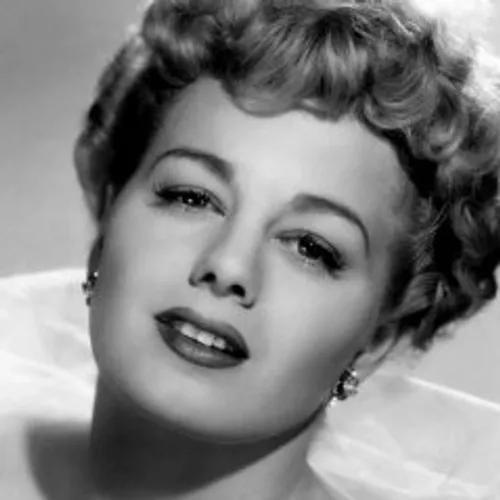
Shelley Winters
Before she became one of Hollywood's most acclaimed actresses, Shelley Winters honed her craft on the airwaves of old-time radio. Born Shirley Schrift on August 18, 1920, in St. Louis, Missouri, Winters' journey from radio performer to two-time Academy Award winner exemplifies the golden age transition from audio entertainment to visual media. Her radio work laid the foundation for a career that would span seven decades and cement her place as one of America's most versatile performers.
From the Midwest to the Microphone
Shelley Winters' early years were marked by the dual influences of her immigrant heritage and the vibrant cultural landscape of Depression-era America. Her father, Jonas Schrift, worked as a designer of men's clothing, while her mother, Rose Winter, was a singer. The family relocated to Brooklyn, New York, when Winters was a child, placing her at the epicenter of American entertainment culture during its most transformative period. Growing up in Brooklyn exposed the young Shirley Schrift to the thriving theater district and the burgeoning radio industry. The daughter of a singer, she inherited her mother's performative instincts and was drawn to the stage from an early age. She began her professional training at the Actors Studio and the New School, institutions that would shape her commitment to method acting and dramatic authenticity. During her formative years, Winters worked various jobs to support herself while pursuing her theatrical ambitions. She modeled, clerked in a department store, and took on numerous odd jobs—experiences that would later inform her ability to portray working-class characters with remarkable authenticity. These struggles shaped her understanding of ordinary people's lives, a quality that would resonate in both her radio performances and her later screen work.
Radio Career and Early Performance Work
Winters' entry into radio came during the medium's golden age, when audio drama was America's primary entertainment source. Like many aspiring actors of her generation, she recognized radio as both a training ground and a legitimate career path. Radio work offered young performers the opportunity to develop their vocal techniques, timing, and character work without the need for physical appearance considerations that dominated film and theater. Her radio appearances provided essential income during her early career while she pursued theatrical opportunities in New York. The medium's demands—conveying emotion, character, and narrative entirely through voice—proved excellent preparation for the intense character work she would later bring to film. Radio also taught her the importance of vocal variety and emotional precision, skills that would distinguish her performances throughout her career. The discipline required for radio performance, where actors had to create complete characters using only their voices, complemented her method acting training. This period of her career, though less documented than her film work, was crucial in developing the technical skills and professional work ethic that would characterize her entire career. The immediacy of radio broadcasting, often performed live, also prepared her for the pressures of film production.
The Transition to Screen and Stage Dominance
By the mid-1940s, Winters began transitioning more fully into film work, making her cinema debut in 1943. Her breakthrough came with A Double Life in 1947, where she demonstrated the dramatic depth she had cultivated through her radio and stage training. This performance opened doors to more substantial roles and established her as a serious dramatic actress. The 1950s proved to be Winters' most critically acclaimed decade. She earned her first Academy Award for Best Supporting Actress for The Diary of Anne Frank in 1959, a role that showcased her ability to bring profound humanity to complex characters. Her performance as the tragic Mrs. Van Daan demonstrated the emotional range and authenticity she had been developing since her earliest radio days. Her second Academy Award came for A Patch of Blue in 1965, further cementing her reputation as one of Hollywood's finest character actresses. Between these triumphs, she appeared in notable films including A Place in the Sun (1951), The Night of the Hunter (1955), and Lolita (1962). Each role revealed different facets of her talent, from vulnerable ingénues to menacing antagonists, proving the versatility that her early radio training had fostered.
Literary Pursuits and Later Career
Beyond her performance work, Winters proved to be a talented writer, publishing two autobiographies that offered candid insights into Hollywood's golden age. Shelley, Also Known as Shirley appeared in 1980, followed by Shelley II: The Middle of My Century in 1989. These books revealed her sharp wit, unflinching honesty, and keen observations about the entertainment industry's evolution from radio's heyday through television's dominance. Her later career included memorable television appearances, including roles in popular series and made-for-TV movies. She appeared on Roseanne, playing the title character's grandmother, introducing her talents to a new generation of viewers. Her continued work in television demonstrated the same commitment to craft that had characterized her radio days—an understanding that regardless of medium, authentic performance remained paramount. Winters remained active in performance and advocacy until late in her life. She taught acting, sharing the techniques and insights she had accumulated across multiple media platforms. Her students benefited from her unique perspective as someone who had mastered radio, stage, film, and television—each requiring distinct skills yet all drawing from the same wells of emotional truth and technical precision.
Legacy Beyond the Airwaves
Shelley Winters passed away on January 14, 2006, in Beverly Hills, California, leaving behind a remarkable body of work across multiple media. While her radio career remains less celebrated than her film achievements, those early experiences in audio performance were instrumental in developing the skills that made her an exceptional actress. Her ability to convey complex emotions and create fully realized characters had roots in radio's demanding vocal work. Her influence extends beyond her performances to her role as a teacher and mentor. The methods she learned and refined from her earliest radio days through her Academy Award-winning film work informed her teaching, creating a direct lineage from radio's golden age to contemporary performance techniques. Her autobiographies serve as invaluable historical documents, preserving insights into the era when radio personalities transitioned to become Hollywood legends. Winters embodied the versatility required of performers during entertainment's most transformative decades. From anonymous radio voices to internationally recognized film star, she navigated each medium with professionalism and artistry, proving that fundamental talent and dedication transcend any single platform.
Works and Appearances
Radio
- Lux Radio - Phone Call from a Stranger Theatre (1953)
Cinema
- What a Woman! (1943) - Film debut
- A Double Life (1947) - Breakthrough role
- A Place in the Sun (1951)
- The Night of the Hunter (1955)
- The Diary of Anne Frank (1959) - Academy Award for Best Supporting Actress as Mrs. Van Daan
- Lolita (1962)
- A Patch of Blue (1965) - Academy Award for Best Supporting Actress
- Numerous additional film appearances throughout her career
Television
- Roseanne - Recurring role as grandmother
- Various made-for-TV movies and guest appearances
Theater
- Trained at the Actors Studio and New School
- Various theatrical productions throughout career
Publications
- Shelley, Also Known as Shirley (1980) - Autobiography
- Shelley II: The Middle of My Century (1989) - Autobiography