Robert Taylor
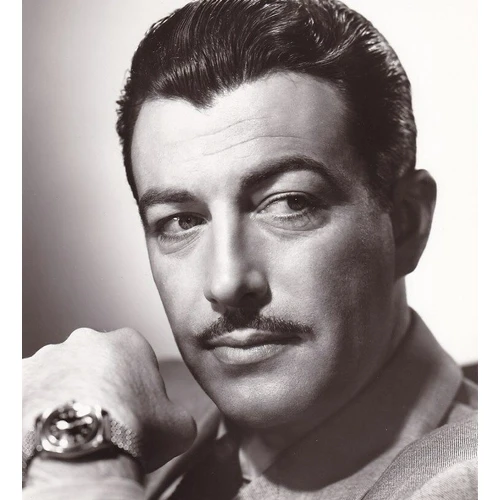
Robert Taylor, born Spangler Arlington Brugh, was one of Hollywood's most iconic leading men during the golden age of cinema. With his chiseled features and commanding screen presence, he became a symbol of masculine elegance and dramatic prowess throughout the 1930s, 1940s, and 1950s.
Early Life and Artistic Beginnings
Born on August 5, 1911, in Filley, Nebraska, Taylor was far more than just a handsome face. As a teenager, he was a multifaceted talent, excelling in track and field while also playing the cello in his high school orchestra. His early intellectual pursuits led him to Doane College and later Pomona College, where he discovered his passion for acting.
Hollywood's Rising Star
In 1932, Taylor was spotted by an MGM talent scout after a theatrical production, launching what would become a remarkable Hollywood career. MGM quickly signed him to a contract, changing his name from Spangler Brugh to Robert Taylor. His breakthrough came accidentally when he substituted for an ill actor in a short film, demonstrating remarkable dramatic skill.
Cinematic Versatility
Throughout his career, Taylor demonstrated remarkable range. Initially typecast as a romantic lead with "the perfect profile", he gradually transitioned to more complex, edgier roles. Notable films included Waterloo Bridge (1940), Quo Vadis (1951), and Ivanhoe (1952). During World War II, he contributed to the war effort both on-screen and as a Naval Air Corps flying instructor.
Personal Life and Political Stance
Taylor was known for his conservative political views and was a "friendly witness" during the House Un-American Activities Committee hearings. He was married twice - first to actress Barbara Stanwyck from 1939 to 1952, and then to Ursula Thiess from 1954 until his death.
Legacy and Final Years
In his later career, Taylor successfully transitioned to television, starring in The Detectives from 1959 to 1962 and hosting Death Valley Days from 1966 to 1969. Tragically, he died of lung cancer on June 8, 1969, at the age of 57.
Works and Appearances
Radio
- The Screen Guild Theater - My Favorite Wife (1942)
- Lux Radio Theatre - The Philadelphia Story (1943)
- Suspense - The Argyle Album (1945)
- The Screen Guild Theater - Waterloo Bridge (1946)
- Suspense - The House in Cypress Canyon (1946)
- Lux Radio Theatre - Westward the Women (1952)
- Theater of Stars - Mail Order (1953)
Film Highlights
- Waterloo Bridge (1940)
- Quo Vadis (1951)
- Ivanhoe (1952)
- Knights of the Round Table (1953)
Television
- The Detectives (1959-1962) - Det. Capt. Matt Holbrook
- Death Valley Days (1966-1969) - Host
Robert Taylor's career spanned over three decades, making him one of Hollywood's most enduring and versatile actors of the mid-20th century.
Heard in