Robert Benchley
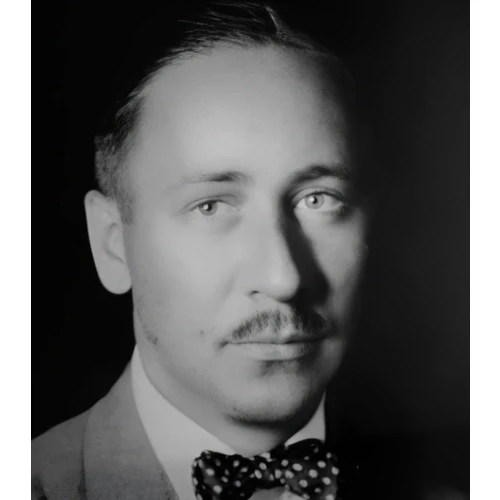
Robert Charles Benchley emerged as one of the most distinctive voices of early 20th-century American humor, seamlessly bridging the worlds of print, radio, and film with his unique comedic style. A master of self-deprecating wit and observational humor, Benchley became a cultural icon who entertained audiences across multiple media platforms.
Early Life and Comedic Beginnings
Born on September 15, 1889, in Worcester, Massachusetts, Robert Benchley came from a family with deep New England roots. His early years were marked by a natural talent for humor and performance that would define his entire career. During his time at Harvard University, Benchley began to develop his comedic skills, becoming a popular entertainer among his fraternity brothers. His impressions of classmates and professors quickly gained him local fame, showcasing the comedic talents that would later make him a national figure. Benchley's professional journey began in journalism, where he worked at various publications and became a key member of the legendary Algonquin Round Table. His wit and writing caught the attention of influential publications, and he soon became a sought-after humorist.
Radio and Performance Career
Benchley's transition to radio was a natural extension of his already established comedic persona. His radio work was characterized by the same self-deprecating humor that made his written work so popular. In 1941, he appeared on several radio shows, including a notable guest spot on Blue Network's top-rated radio series. His final radio appearances included a guest spot on Raleigh Room on October 30, 1945, just weeks before his death. One of his most interesting radio ventures was the program Melody and Madness, which, while not particularly successful, demonstrated Benchley's willingness to experiment with the medium. Despite the show's short run, it highlighted his adaptability as a performer.
Hollywood and Multimedia Success
Benchley's career expanded beyond radio into film, where he became known for his comedic short films and feature roles. His screen persona was that of a befuddled, neurotic character trying to explain complex topics, which became his trademark. He appeared in numerous films throughout the 1930s and early 1940s, working with major studios like Paramount and MGM. His film work was particularly notable for its innovative comedy shorts. Benchley was a pioneer in talking short-subject comedies, helping to establish the genre in its early days. His characters typically represented the everyman, often finding himself comically overwhelmed by everyday situations.
Legacy and Influence
Robert Benchley's impact on American humor cannot be overstated. He influenced numerous later humorists, including James Thurber, who considered Benchley his "idol". His writing for The New Yorker was particularly influential, with the magazine publishing an average of 48 of his columns per year in the early 1930s. Tragically, Benchley's life was cut short by liver disease, and he passed away on November 21, 1945. However, his legacy continued through his son Nathaniel Benchley, who became an accomplished author and published a biography of his father in 1955.
Works and Appearances
Radio
- Melody and Madness (experimental radio program)
- Duffy's Tavern (Guest appearance, November 10, 1944)
- The Blue Network Show (Guest appearance, April 22, 1945)
- Raleigh Room (Final radio appearance, October 30, 1945)
Film
- How to Watch Football (Short film)
- The Sport Parade (1932)
- Dancing Lady (1933)
- Your Technocracy and Mine (Short film, 1933)
- Dancing Co-Ed (1941)
- Playmates (1941)
Publications
- Of All Things (1921)
- Numerous columns in The New Yorker
- Theatre reviews for Life magazine
Robert Benchley's multifaceted career bridged humor writing, radio, and film, making him a true multimedia pioneer of early 20th-century American entertainment.