Otto Kruger
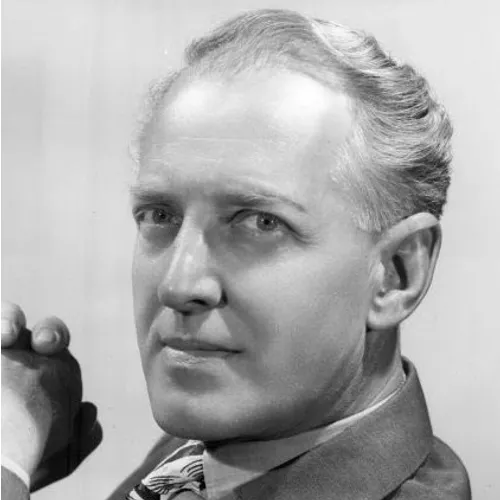
Otto Kruger was a multifaceted performer whose career spanned stage, screen, and radio, making significant contributions to the entertainment industry during the mid-20th century. With his distinctive voice and commanding presence, Kruger became a notable figure in radio broadcasting, bringing depth and nuance to a variety of roles that captivated audiences across the United States.
Early Life and Theatrical Beginnings
Born on September 6, 1885, in Toledo, Ohio, Otto Kruger came from a family with German and Dutch heritage, notably being the grandnephew of South African president Paul Kruger. Initially trained in music, Kruger's career path took an unexpected turn when he transitioned from engineering studies to acting. His early theatrical training would prove instrumental in his later radio and screen performances. Kruger made his Broadway debut in 1915, quickly establishing himself as a talented stage actor. His smooth, sophisticated demeanor and rich vocal qualities made him particularly suited to playing sophisticated characters, often portraying charming villains or complex businessmen. This theatrical background provided an excellent foundation for his future radio work.
Radio Performance and Notable Appearances
Radio became an important medium for Kruger, allowing him to showcase his versatile vocal talents. While specific details about his radio career are limited in the provided context, we know he made significant appearances in various radio programs. One notable example is his role as Mr. Hardecker in the radio program "After Dinner Story," which aired on October 26, 1943, featuring a story by Cornell Woolrich. Kruger's ability to inhabit different characters made him a valuable performer in the radio medium. His deep, resonant voice and precise diction allowed him to bring nuanced performances to life, creating vivid audio landscapes for listeners across the country.
Transition to Television and Film
As radio evolved, Kruger seamlessly transitioned to television, making numerous guest appearances. He appeared in shows like Perry Mason, where he played multiple roles including Judge Norris and various character parts. His television work demonstrated his continued versatility and adaptability as a performer. Simultaneously, Kruger maintained a successful film career, appearing in over 120 film, television, and stage roles between 1915 and 1965. Notable film appearances included Alfred Hitchcock's Saboteur (1942) and Fred Zinnemann's High Noon (1952), where he played memorable supporting roles.
Later Career and Legacy
In 1960, Kruger suffered a health setback but continued performing for another four years before retiring. His enduring career was recognized with two stars on the Hollywood Walk of Fame - one for television and one for film. Kruger's legacy extends beyond his performances. He represented a generation of performers who seamlessly navigated multiple entertainment mediums, bringing professionalism and artistry to radio, television, and film. His ability to portray complex characters with depth and nuance made him a respected figure in the entertainment industry.
Works and Appearances
Radio
- "After Dinner Story" (1943) - Mr. Hardecker
Television
- Perry Mason (1961-1964) - Multiple roles including Judge Norris
- The Rebel (1959) - Ben Tully
- The Law and Mr. Jones (1961) - Franklyn Malleson Ghent
Film
- Saboteur (1942) - Charles Tobin
- High Noon (1952) - Judge Percy Mettrick
- Magnificent Obsession (1954) - Edward Randolph
Theater
- Broadway debut (1915)
- Multiple stage productions throughout his career
Otto Kruger passed away on his 89th birthday, September 6, 1974, in Woodland Hills, California, leaving behind a rich and diverse entertainment legacy.
Heard in