Mercedes McCambridge
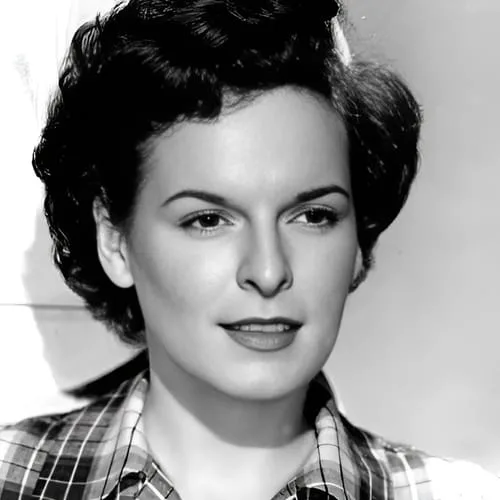
In the pantheon of mid-20th century performers, Mercedes McCambridge stands as a towering figure whose voice became synonymous with the golden era of radio drama. Her distinctive vocal talents and remarkable range would carry her from the airwaves to Hollywood, making her one of the most versatile performers of her generation.
Early Life and Dramatic Beginnings
Born Carlotta Mercedes Agnes McCambridge on March 16, 1916, in Joliet, Illinois, she emerged from a Catholic family with a passion for performance. Growing up in Chicago, McCambridge discovered her love for acting early, graduating from Mundelein College with dreams of becoming a performer. Her natural talent and distinctive voice would soon become her greatest assets in the competitive world of entertainment. McCambridge's entry into radio was not a calculated career move, but a passionate pursuit of her craft. Beginning in 1938, she quickly established herself as a dynamic radio actress, demonstrating an extraordinary ability to transform her voice to suit multiple characters and dramatic scenarios. Her early work was characterized by an intense, powerful delivery that set her apart from her contemporaries.
The Radio Years: A Vocal Chameleon
During radio's golden age, McCambridge became a prolific performer across numerous programs. She appeared in landmark shows like Inner Sanctum and Suspense, creating memorable characters with her incredible vocal range. Her performances were not just roles, but complete transformations, where she could embody characters through voice alone. One of her most notable radio achievements was her title role in Defense Attorney, a crime drama broadcast from 1951 to 1952. She played Martha Ellis Bryan, showcasing her ability to anchor an entire series with her compelling vocal performance. Her work on radio was so exceptional that she was often called "the world's greatest living radio actress" - a testament to her extraordinary talent.
Transition to Screen and Stage
McCambridge's radio success naturally led her to film and television. Her screen debut in All the King's Men (1949) was nothing short of spectacular, winning her an Academy Award for Best Supporting Actress. This breakthrough demonstrated that her powerful performance style translated brilliantly to visual media. Her film career continued with notable roles in classics like Johnny Guitar (1954) and Giant (1956), for which she received another Academy Award nomination. Interestingly, she maintained her radio work even as her film career flourished, showing her commitment to multiple performance mediums.
Personal Struggles and Resilience
Behind her professional success, McCambridge battled personal challenges, particularly with alcoholism. Her journey of recovery became a significant part of her later life, as she became an advocate for addiction treatment. From 1975 to 1982, she served as president and CEO of the Livengrin Foundation, a rehabilitation center, using her public profile to destigmatize addiction.
Legacy and Impact
Mercedes McCambridge's legacy extends far beyond her numerous awards. She was a pioneering performer who demonstrated the incredible power of voice in storytelling. Her ability to create entire worlds through sound, whether on radio, film, or television, made her a unique and unforgettable artist. She passed away on March 2, 2004, in San Diego, California, leaving behind a remarkable body of work that continues to inspire performers and storytellers.
Works and Appearances
Radio
- Inner Sanctum (Various episodes, 1938-1952)
- Defense Attorney (1951-1952) - Title role as Martha Ellis Bryan
- Suspense (Multiple episodes)
Film
- All the King's Men (1949) - Sadie Burke
- Johnny Guitar (1954) - Emma Small
- Giant (1956) - Luz Benedict
- Touch of Evil (1958) - Gang leader
- The Exorcist (1973) - Voice of Pazuzu
Television
- Wire Service (1956-1957) - Katherine Wells
- Lost in Space (1966) - Sybilla
- Bewitched (1968) - Carlotta
Theater
- Various stage productions throughout her career, including college theater workshops
Mercedes McCambridge's multifaceted career serves as a powerful reminder of the transformative potential of performance and the enduring magic of storytelling.
Heard in