Martha Tilton
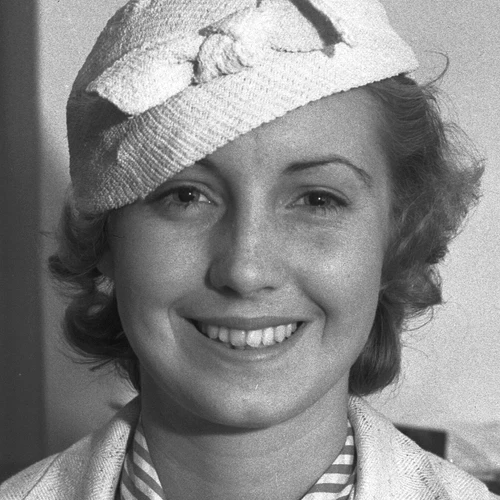
Martha Tilton emerged as one of the most captivating vocalists of the swing music era, whose melodious voice and dynamic performances made her a standout radio and recording artist of the 1930s and 1940s. Her journey from a young Texas girl to a nationally recognized entertainer epitomizes the golden age of American popular music and broadcasting.
Early Life and Musical Beginnings
Born on November 14, 1915, in Corpus Christi, Texas, Martha Ellen Tilton discovered her musical talents early. Her family relocated to Los Angeles when she was just three months old, setting the stage for her future in entertainment. While attending high school in Los Angeles, Tilton began singing on a small local radio station, where her exceptional vocal abilities caught the attention of a talent agent. Her passion for music led her to make a bold decision, dropping out of school in the eleventh grade to pursue her musical career. This pivotal moment would prove transformative, as she soon joined Benny Goodman's band, becoming a prominent vocalist in the swing music scene.
Rise to Prominence with Benny Goodman
Goodman hired Tilton as a vocalist in August 1937, and she quickly became a star attraction. Her performances with the band were electrifying, including a memorable rendition of "Loch Lomond" at the legendary 1938 Carnegie Hall Concert. By January 1938, she was a key member of Goodman's ensemble, helping to define the sound of the swing era. Her collaboration with Goodman produced numerous hit records. In 1939, she scored a No. 1 hit with "And the Angels Sing," solidifying her status as a premier vocalist of her time. Throughout her tenure with Goodman, she recorded multiple chart-topping singles, demonstrating her remarkable vocal range and interpretive skills.
Radio and Multimedia Career
Tilton's talents extended beyond musical performance into the broader world of entertainment. In the early 1940s, she became a prominent radio personality, appearing on various popular programs. She starred on Fibber McGee and Molly and collaborated with Curt Massey on multiple radio series, including a show sponsored by a local product that ran from 1949 to 1953. Her versatility allowed her to transition seamlessly between music and other media. Tilton appeared in several musical films during the 1940s and later ventured into television. In 1960 and 1961, she won Southland Emmy Awards for her outstanding work, highlighting her continued relevance in the entertainment industry.
Later Career and Personal Life
After her initial success with Benny Goodman, Tilton continued to record and perform. She was one of the first artists to record for Capitol Records, releasing hits like "I'll Walk Alone" in 1944 and "How Are Things in Glocca Morra" in 1947. Her solo career demonstrated her ability to adapt to changing musical landscapes. Personally, Tilton was married twice - first to Benny Goodman's manager Leonard Vannerson, with whom she had two sons, and later to test pilot James Brooks, with whom she had a daughter. She remained active in entertainment until her later years.
Legacy and Impact
Martha Tilton passed away on December 8, 2006, in Brentwood, Los Angeles, leaving behind a remarkable legacy. She was more than just a singer; she was a quintessential voice of the swing era who helped define the sound of mid-20th century American popular music. Her ability to navigate multiple entertainment mediums - from big band performances to radio and film - made her a true multimedia star.
Works and Appearances
Radio
- Fibber McGee and Molly (1941-1944)
- Curt Massey Time (1949-1953)
- Various musical radio programs
Films
- Priorities on Parade (1941)
- Presenting Lily Mars (1943)
- Two Girls and a Sailor (1944)
- Week-End at the Waldorf (1945)
- Two Smart People (1956)
Television
- Curt Massey Show (Late 1950s-Early 1960s)
- Guest appearances on various programs
Recordings
- Multiple hit singles with Benny Goodman (1937-1939)
- Solo recordings for Capitol Records (1942-1949)
- Albums with various labels including Coral and Tops