Madeleine Carroll
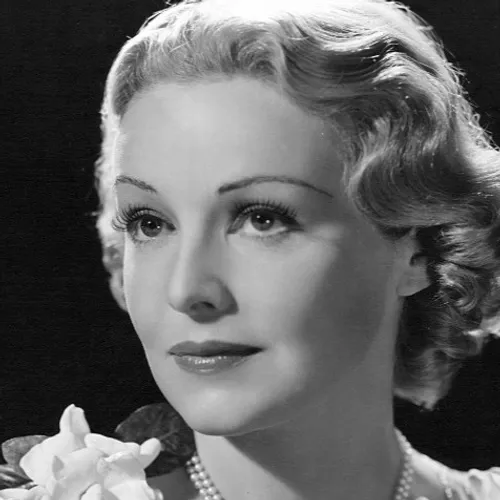
Madeleine Carroll was far more than just a Hollywood actress of the 1930s and 1940s; she was a multifaceted performer whose radio career reflected her extraordinary life of talent, service, and humanitarian dedication. From the silver screen to the airwaves, Carroll emerged as a compelling voice that captivated audiences during radio's golden age.
Early Life and Theatrical Beginnings
Born Edith Madeleine Carroll on February 26, 1906, in West Bromwich, Staffordshire, she came from a multicultural background. Her father, John O'Carroll, was an Irish professor of languages, while her mother was French. Carroll's academic prowess was evident early on, graduating from the University of Birmingham with a B.A. in languages. Initially working as a French mistress at a girls' school, she soon discovered her true calling in performance. Against her father's wishes but with her mother's support, Carroll ventured to London to pursue acting. Her beauty and talent quickly opened doors, winning a beauty contest and securing her first stage roles. By 1927, she had made her stage debut in The Lash, marking the beginning of a remarkable career that would soon extend to radio and film.
Radio Performance and Storytelling
Carroll's radio career was as diverse as her acting portfolio. In 1939, she became a participant in The Circle on NBC, a program discussing current events, literature, and drama. Her eloquence and intellectual depth made her a natural fit for such engaging broadcasts. In 1944, she hosted This Is the Story, an innovative anthology series that dramatized famous novels, showcasing her ability to bring literary narratives to life through sound. Her most significant radio achievement came with her starring role in the NBC soap opera The Affairs of Dr. Gentry from 1957 to 1959. During the twilight of radio's golden age, Carroll was part of a rotating group of stars in The NBC Radio Theater, demonstrating her continued relevance and adaptability in the medium.
Wartime Service and Humanitarian Efforts
What set Carroll apart was her extraordinary commitment to humanitarian causes. During World War II, she made a radical career shift, transforming from a Hollywood actress to a dedicated nurse. After losing her sister Marguerite in a German air raid, Carroll became an American citizen and served with the American Army Air Force's 61st Station Hospital in Italy. Her radio work during this period was not just entertainment but a platform for fostering understanding. She conducted a radio program promoting French-American friendship and helped rehabilitate war victims. Her documentary Children's Republic, which she produced and which was widely shown in Canada, became a crucial fundraising tool for providing artificial limbs to wounded children.
Later Career and Legacy
After the war, Carroll's radio and performance career continued to evolve. She appeared in various radio programs like the Lux Radio Theater and Philip Morris Playhouse, maintaining her connection with audiences. Though she gradually retired from active acting, her occasional television and radio appearances continued until the mid-1960s. Carroll's legacy extends far beyond her entertainment career. She was awarded the Legion of Honour by France for her wartime efforts and was inducted into the Hollywood Walk of Fame in 1960. Her life exemplified a rare combination of artistic talent, intellectual depth, and humanitarian commitment.
Conclusion
Madeleine Carroll was not just a radio personality but a renaissance woman who used her platforms—stage, screen, and airwaves—to entertain, educate, and inspire. Her journey from a Birmingham graduate to an international star and humanitarian remains a testament to the transformative power of talent, courage, and compassion.
Works and Appearances
Radio
- The Circle (1939) - Participant
- This Is the Story (1944) - Host
- The Affairs of Dr. Gentry (1957-1959) - Lead
- The NBC Radio Theater (1959) - Rotating Lead
- Lux Radio Theater (Multiple years) - Various roles
- Philip Morris Playhouse (Multiple years) - Various roles
Television
- Occasional appearances (mid-1960s)
Film
- Over 30 films between 1928-1949, including The 39 Steps, Northwest Mounted Police
Theater
- The Roof (1929)
- Mr. Pickwick
- Broadway debut in Goodbye, My Fancy (1948)
Heard in