Louis Armstrong
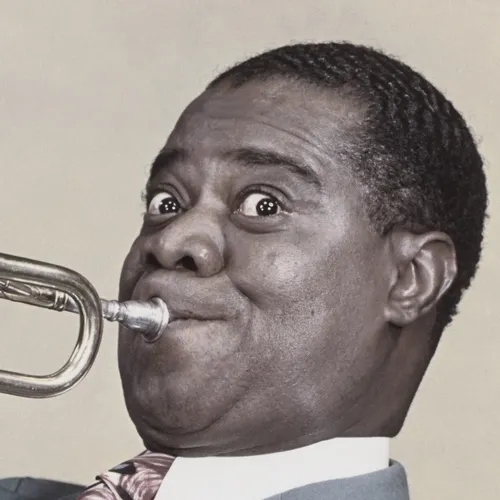
Louis Armstrong, a pioneering jazz musician and entertainer, revolutionized not just music but also the landscape of radio broadcasting during the mid-20th century. His charismatic personality, groundbreaking musical innovations, and unique vocal style made him a transformative figure in American media and entertainment.
Early Life and Musical Beginnings
Born in New Orleans on August 4, 1901, Louis Daniel Armstrong emerged from poverty in a neighborhood known as The Battlefield. His early life was marked by hardship, but music would become his pathway to extraordinary success. Armstrong's musical journey began in his youth, influenced by the vibrant musical culture of New Orleans, where he was exposed to early jazz sounds in brothels and dance halls. A pivotal moment in Armstrong's early life was his relationship with the Karnoffsky family, Jewish immigrants who showed him kindness and support. Morris Karnoffsky even helped Armstrong purchase his first musical instrument, demonstrating the cross-cultural connections that would define Armstrong's career.
Breaking Barriers in Radio and Broadcasting
In 1937, Armstrong achieved a groundbreaking milestone by becoming the first African American to host a sponsored national broadcast on the CBS radio network. This achievement was remarkable during an era of significant racial segregation and limited opportunities for Black performers. Throughout the late 1930s and 1940s, Armstrong became a frequent radio personality. He appeared on programs like The Story of Swing (1937) and This Is Jazz (1947). His radio performances were not just musical showcases but cultural events that helped bridge racial divides and introduce jazz to broader audiences.
Musical Innovation and Radio Performance
Armstrong's radio performances were revolutionary. He wasn't just a musician but an entertainer who transformed how music was presented. His unique vocal style, including pioneering scat singing, became a signature element of his radio appearances. Armstrong could take popular tunes and reimagine them, making them more compelling for listeners. His improvisational techniques, both in trumpet playing and vocal performance, made his radio appearances unpredictable and exciting. Armstrong would often rework pop tunes, adding variations that captivated jazz enthusiasts.
Cultural Impact and Media Presence
Beyond radio, Armstrong expanded his media presence through multiple channels. He appeared in over 30 films, including notable movies like High Society (1956) and Hello, Dolly! (1969). His television appearances in the 1950s and 1960s further solidified his status as a multimedia icon. Armstrong's ability to navigate different media platforms while maintaining his artistic integrity was extraordinary. He was beloved by audiences across racial lines, a significant achievement during the mid-20th century.
Legacy in Broadcasting and Music
By the time of his later years, Armstrong had become more than a musician—he was a cultural ambassador. Renowned figures like Duke Ellington proclaimed him the "embodiment of jazz". His influence extended far beyond music, touching radio, film, and broader American culture. In 2023, Rolling Stone recognized his enduring significance by ranking him No. 39 on their list of the 200 Greatest Singers of All Time, a testament to his lasting impact.
Works and Appearances
Radio
- The Story of Swing (1937)
- This Is Jazz (1947)
- First African American to host a sponsored national broadcast (CBS, 1937)
Television
- Multiple appearances during 1950s and 1960s
- Various entertainment programs
Films
- High Society (1956)
- Hello, Dolly! (1969)
- Jazz on a Summer's Day (1959)
- Over 30 film appearances total
Notable Recordings
- "What a Wonderful World"
- "Hello, Dolly!"
- Multiple jazz and pop standards
Louis Armstrong's journey from New Orleans to becoming a global media icon represents a remarkable story of artistic innovation, cultural bridging, and persistent excellence in entertainment.