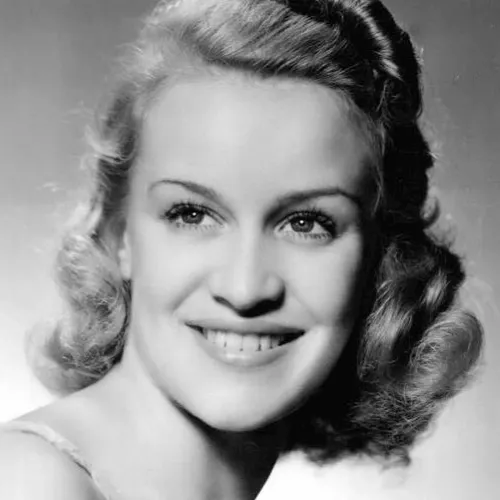
In the vibrant landscape of mid-20th century broadcasting, Joan Banks emerged as a versatile and dynamic performer who left an indelible mark on radio, television, and film. Her career spanned nearly two decades, showcasing remarkable talent and adaptability in an era of rapid media transformation.
Early Beginnings and Artistic Foundations
Born on October 30, 1918, in Petersburg, West Virginia, Joan Banks displayed artistic promise from an early age. As a young girl, she trained in Russian ballet, demonstrating her early inclination towards performance arts. Her talents extended beyond dance, as she excelled as a swimmer during her high school years, earning her a scholarship to the prestigious American Academy of Dramatic Art. Banks' journey into entertainment was not a mere coincidence but a carefully cultivated path. Her natural performance abilities and formal training provided the perfect foundation for her future career in broadcasting. The scholarship to the dramatic arts academy was a pivotal moment, signaling her potential and commitment to performance.
Radio: The Crucible of Her Career
Radio became Banks' primary medium of artistic expression. She made her radio debut in 1936 at the remarkable age of 18, quickly establishing herself as a versatile performer. Notably, she became the first "feminine stooge" for a radio show, breaking ground in a male-dominated industry. Throughout her radio career, Banks appeared in numerous popular programs, demonstrating her remarkable range. Her roles spanned various genres and characters, from Roberta Lansing in John's Other Wife to Jane Stacy in My Friend Irma. Her ability to inhabit diverse characters made her a sought-after radio performer.
Expanding Horizons: Television and Film
As radio's prominence began to wane, Banks seamlessly transitioned to television and film. Her television career was particularly notable, with multiple appearances on popular shows of the era. She became especially recognized for her recurring roles on Perry Mason, where she portrayed different characters in five separate episodes. Her film career, though not as extensive, included memorable roles in movies like Cry Danger (1951) and Return to Peyton Place (1961). Banks demonstrated her versatility by appearing in various genres, from dramas to comedies.
Personal Life and Legacy
In 1940, Banks married fellow actor Frank Lovejoy, whom she met while working on the radio soap opera This Day Is Ours. Their personal and professional partnership was a hallmark of her career. Together, they had two children, Judy and Steve, and continued to collaborate in various productions. Banks' career was cut short by her passing on January 18, 1998, in Los Angeles, California. However, her contributions to entertainment remain significant. She represented a generation of performers who navigated the complex transitions of mid-20th century media, moving fluidly between radio, television, and film.
Works and Appearances
Radio
- Bringing Up Father - Nora
- John's Other Wife - Roberta Lansing
- My Friend Irma - Jane Stacy
- This Day Is Ours - Eleanor MacDonald
Television
- Perry Mason (1957-1964) - Multiple roles
- Meet McGraw (1957-1958)
- Hazel (1961-1962)
- National Velvet (1961-1962)
- Bewitched (1967)
Film
- Cry Danger (1951) - Alice Fletcher
- Bright Victory (1951) - Janet Grayson
- Return to Peyton Place (1961) - Mrs. Humphries
Joan Banks exemplified the adaptability and talent of performers during radio's golden age, successfully bridging multiple entertainment mediums and leaving an enduring legacy in American broadcasting history.