Jim Jordan
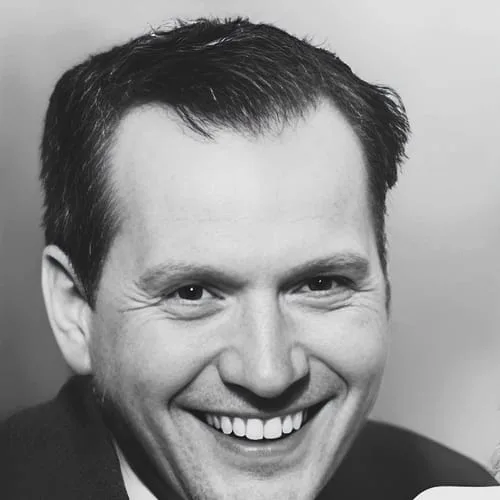
In the golden age of radio comedy, few performers captured the hearts of American audiences quite like Jim Jordan. A master of comedic timing and vocal versatility, Jordan became an iconic figure in entertainment, best known for his legendary role in the beloved radio show Fibber McGee and Molly. His career spanned several decades, bridging the gap between radio's heyday and the emerging television era.
Early Life and Roots in Performance
Born James Edward Jordan on November 16, 1896, in rural Peoria, Illinois, Jim's journey into entertainment began in humble surroundings. Growing up on a family farm, he discovered his passion for performance through church choir, where he would meet a pivotal figure in his life and career - Marian Jordan - whom he married on August 31, 1918. The early years of Jim and Marian's partnership were marked by financial struggle and artistic determination. They toured the vaudeville circuit as a performing duo, experiencing significant hardships that tested their resolve. In 1923, they were so financially depleted that they required money from their parents to return home to Peoria.
Breaking into Radio Comedy
Their breakthrough came dramatically in 1924 during a performance in Chicago. After Jim claimed he could outperform the radio singers they were hearing, his brother Byron challenged him to prove it - wagering $10. By evening's end, Jim and Marian had secured their first radio contract, performing as The O'Henry Twins for $10 per show. The Jordans developed a unique comedic partnership where Jim played the comic foil and Marian served as the straight character. From 1931 to 1935, they produced low-budget sitcoms, eventually creating their most famous work - Fibber McGee and Molly - which would become a landmark radio comedy.
The Golden Age of Fibber McGee and Molly
Fibber McGee and Molly became a cultural phenomenon, running as a weekly series until 1953. The show's popularity was immense, with the Jordans portraying semi-fictional versions of themselves and numerous other characters. Their comedic chemistry and relatable storytelling made them national favorites. The radio show's success continued even as the medium began declining, transitioning to pre-recorded daily and then weekly formats. When television finally beckoned in 1959, Marian's declining health prevented their direct involvement, and the TV adaptation ultimately failed.
Life After Marian
Following Marian's death in April 1961, Jim married Gretchen Stewart in 1962. He remained largely in semi-retirement, with brief comebacks including voice work for The Rescuers and occasional television appearances. Tragically, in March 1988, Jordan suffered a fall that left him comatose, and he passed away on April 1st of that year.
Legacy and Impact
Jim Jordan represented the quintessential radio comedian - versatile, innovative, and deeply connected with his audience. His work with Marian transformed radio comedy, creating characters and narratives that resonated with millions of Americans during radio's golden era.
Works and Appearances
Radio
- The O'Henry Twins (1924-1931)
- Fibber McGee and Molly (1935-1959)
- Just Molly and Me (1957-1959)
Film
- Look Who's Laughing (1937) - as Fibber McGee
- Fibber McGee and Molly (1941) - as Fibber McGee
- The Bashful Bachelor (1942) - as Fibber McGee
- Around the World (1944) - as Fibber McGee/Ghost of Fife Player
- The Rescuers (1977) - as Orville (voice)
Jim Jordan's remarkable journey from a rural Illinois farm to national radio stardom exemplifies the transformative power of talent, perseverance, and comedic brilliance.
Heard in