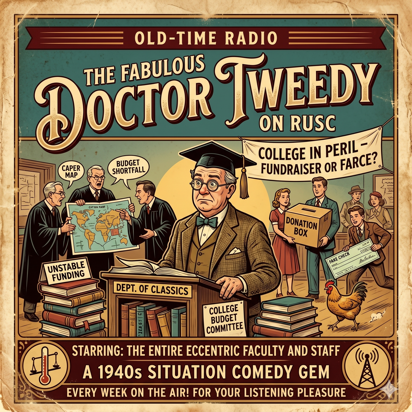
The Fabulous Dr. Tweedy was an American radio situation comedy that brought laughter and chaos to the airwaves from June 2, 1946, to March 26, 1947. This short-lived but memorable series aired on NBC, offering listeners a weekly dose of academic misadventures and domestic mayhem.
At the heart of the show was Dr. Thaddeus Q. Tweedy, the absent-minded dean of men at the fictional Potts College. Described in the show’s opening narration as a man “who is always eager to help, but whose advice is often not helpful,” Dr. Tweedy had a knack for turning simple situations into comedic catastrophes.
The series followed Dr. Tweedy’s escapades both on campus and at home, where he lived with his adopted son, Sidney, and their peculiar manservant, Welby, a former hobo. Each episode typically revolved around Dr. Tweedy’s well-intentioned but misguided attempts to solve problems or offer advice, which invariably led to hilarious complications and misunderstandings.
The Fabulous Dr. Tweedy blended elements of academic satire with domestic comedy, creating a unique flavor that set it apart from other sitcoms of its era. The show’s humor often stemmed from the contrast between Dr. Tweedy’s lofty position as a college dean and his comical ineptitude in practical matters.
The Stars
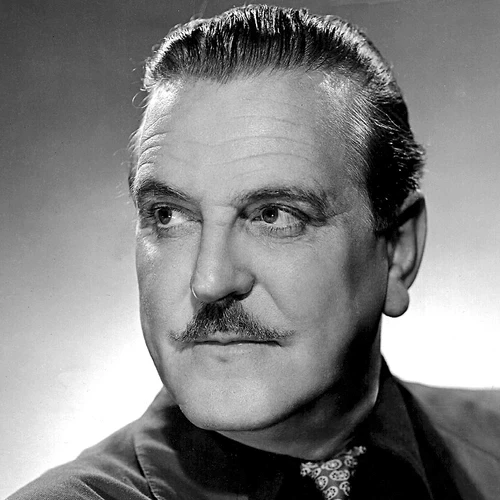
The titular role of Dr. Thaddeus Q. Tweedy was brought to life by the talented Frank Morgan, best known for his portrayal of the Wizard in the classic film “The Wizard of Oz.” Morgan’s distinctive voice and comedic timing were integral to the character’s charm and bumbling nature.
Supporting Morgan was a cast of skilled radio performers who helped bring the world of Potts College to life:
Harlan Stone Jr. played Sidney, Dr. Tweedy’s adopted son, while Janet Waldo (later famous as the voice of Judy Jetson) portrayed Mary Potts, Sidney’s fiancée and daughter of the college’s board chairman.
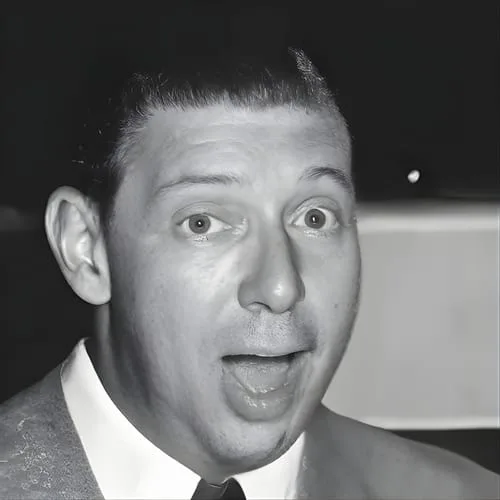
Harry von Zell, a well-known announcer and comedian, took on the role of Welby, the Tweedys’ former hobo turned manservant, adding an extra layer of quirkiness to the household.
Nana Bryant played Miss Tilsey, the formidable head of the school, while Gale Gordon (later a regular on Lucille Ball’s television shows) portrayed Alexander Potts, the chairman of the board at Potts College.
Rounding out the main cast were Will Wright as Colonel Beauregard Jackson, Dr. Tweedy’s neighbor, and Sara Berner as Kitty Bell Jackson, the colonel’s sister.
This ensemble cast brought a wealth of radio experience to the show, creating a rich tapestry of characters that populated Dr. Tweedy’s world and fueled the weekly comedic scenarios.
Key Dates
- June 2, 1946: The Fabulous Dr. Tweedy made its debut on NBC, airing on Sundays at 7 p.m. Eastern Time as a summer replacement for the popular The Jack Benny Program.
- September 22, 1946: The show moved to its regular time slot on Wednesdays at 10 p.m. Eastern Time, where it would remain for the rest of its run.
- March 26, 1947: The final episode of The Fabulous Dr. Tweedy was broadcast, bringing the series to a close after less than a year on the air.
- These dates mark the brief but eventful lifespan of the series, which managed to make an impression on listeners and critics alike during its short time on the airwaves.
Other Information
The Fabulous Dr. Tweedy had the distinction of being sponsored by two different cigarette brands during its run. Lucky Strike was the sponsor for the summer episodes, while Pall Mall took over sponsorship for the fall series. This change in sponsorship coincided with the show’s move from its summer replacement slot to its regular time period.
The show’s production was helmed by Z. Wayne Griffin, with music direction by Eliot Daniel. The writing team, led by Robert Riley Crutcher, worked to create the weekly misadventures of Dr. Tweedy and his cohorts.
Interestingly, The Fabulous Dr. Tweedy was part of a programming shift that affected other popular radio shows of the time. Its move to Wednesday nights at 10 p.m. resulted in the shortening of Kay Kyser’s Kollege of Musical Knowledge from an hour to 30 minutes, with The Fabulous Dr. Tweedy taking over the first half of Kyser’s former time slot.
Critical reception of the show was mixed. Jack Gould, writing for The New York Times, was particularly harsh in his assessment, describing the show as “a sad item if ever there was one.” Gould criticized the scripts for their silliness and superficiality, noting that they resulted in “a half-hour of obvious confusion.” He also took issue with Frank Morgan’s performance, suggesting that the actor relied too heavily on his familiar “old-wolf” characterization and that his “forced laughter… proves wearing even under the best of circumstances.”
Paul Ackerman, reviewing for Billboard magazine, echoed some of these sentiments. In his critique of the October 16, 1946 episode, Ackerman noted a “singularly lacking” amount of laughs and pointed to a “basic lack of strong comedy material” in the script.
A review in Variety suggested that writer Robert Riley Crutcher seemed to be continuing the style he had used on a previous program starring Eddie Bracken, but with less success in The Fabulous Dr. Tweedy. The review also noted that the scripts appeared to have “gone overboard” in their use of double entendre, a comedic device that may have been pushing the boundaries of what was considered acceptable for radio at the time.
Despite these critical misgivings, The Fabulous Dr. Tweedy remains an interesting example of the situation comedies that were popular on radio in the immediate post-World War II era. Its academic setting, coupled with the domestic complications of its main character, provided a unique backdrop for comedy that set it apart from other shows of its time.
The series also serves as a noteworthy entry in the careers of its cast members, particularly Frank Morgan, who was trying to translate his film success to the radio medium. For radio historians and enthusiasts, The Fabulous Dr. Tweedy offers a glimpse into the evolving landscape of radio entertainment in the late 1940s, as the medium faced increasing competition from television and sought new ways to engage audiences.
While The Fabulous Dr. Tweedy may not have achieved the long-running success or lasting fame of some of its contemporaries, it remains a fascinating chapter in the history of American radio comedy. Its blend of academic satire and domestic farce, brought to life by a talented cast, continues to offer insights into the tastes, humor, and social dynamics of post-war America.