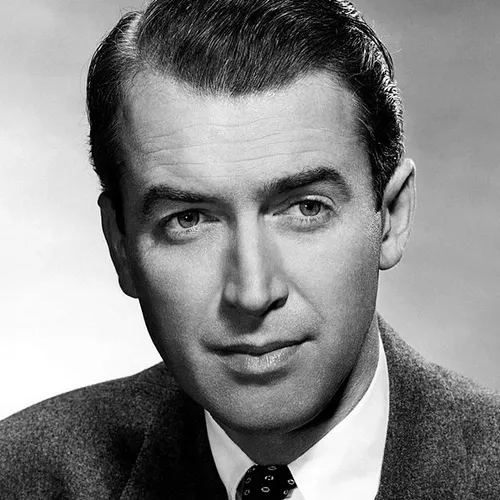
James Stewart, a legendary actor whose distinctive voice and unparalleled charm captivated audiences across multiple media platforms, was also a significant figure in the golden age of radio broadcasting. Beyond his celebrated film career, Stewart was a prolific radio performer who brought his unique storytelling abilities to the airwaves, entertaining millions during the medium's most vibrant era.
Early Life and Radio Beginnings
Born in Indiana, Pennsylvania, on May 20, 1908, James Maitland Stewart discovered his passion for performance early in life. Though primarily known for his Hollywood career, Stewart's radio work was equally impressive. His early experiences with music and performance, including playing the accordion and participating in school theatrical productions, laid the groundwork for his future broadcasting career. Stewart's transition into radio was a natural progression from his stage and film work. His distinctive hesitant drawl and everyman persona made him perfectly suited to the intimate medium of radio. During the 1930s and 1940s, he became a frequent and beloved participant in various radio programs, bringing his unique acting style to audio performances.
Notable Radio Performances and Programs
Stewart's radio career was remarkably diverse, featuring appearances on numerous prestigious programs. The Lux Radio Theatre was particularly significant in his radio repertoire. Between 1937 and 1951, he appeared in multiple adaptations of his films, including The Philadelphia Story, It's a Wonderful Life, and Winchester '73. His radio work wasn't limited to adaptations of his films. Stewart also participated in anthology series like Screen Guild Theater and Theater of Romance, showcasing his versatility as a performer. These appearances allowed him to reach audiences who might not have seen his films, further expanding his popularity.
War Years and Radio's Patriotic Role
During World War II, Stewart's radio performances took on a patriotic dimension. While serving in the Army Air Forces, he continued to make radio appearances that supported the war effort. He participated in network radio programs celebrating military achievements and even appeared in recruitment shorts. His military service and radio work became intertwined, with Stewart using his platform to inspire and inform the public about the ongoing conflict. This period demonstrated his commitment not just as an entertainer, but as a citizen dedicated to national service.
Legacy in Broadcasting
Stewart's radio career was more than just a side pursuit; it was an integral part of his artistic expression. Film scholars have noted that radio allowed Stewart to explore emotional depths that complemented his on-screen performances. His radio work helped solidify his reputation as the quintessential "everyman" of American entertainment.
Conclusion
James Stewart's radio legacy is a testament to his extraordinary versatility as a performer. From dramatic adaptations to patriotic broadcasts, he brought authenticity, warmth, and humanity to the airwaves. His radio performances were not mere supplements to his film career, but vital artistic expressions that connected him intimately with audiences across the nation.
Works and Appearances
Radio Performances
- Lux Radio Theatre: Multiple appearances between 1937-1951
- Madame X (June 14, 1937)
- The Philadelphia Story (July 20, 1942, March 17, 1947)
- It's A Wonderful Life (March 10, 1947)
Screen Guild Theater: Numerous appearances 1939-1951The Shop Around the CornerTailored By ToniGoing My WayOther Radio ProgramsTheater of RomanceSuspenseVictory TheaterFamily TheaterOther Media Appearances
- Film: Active from 1932-1991
- Television: Limited appearances
- Stage: Early career with University Players