Hugh Studebaker
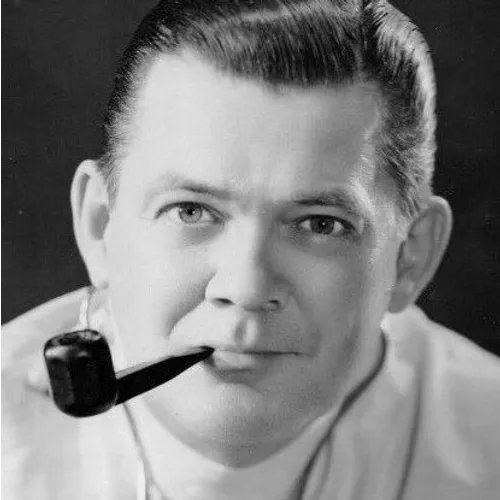
In the vibrant landscape of early 20th-century radio broadcasting, Hugh Studebaker emerged as a versatile and beloved performer who brought countless characters to life through the power of his voice. From humble beginnings in rural Indiana to becoming a staple of network radio programming, Studebaker's career spanned five remarkable decades, making him a quintessential figure of the golden age of radio.
Early Years and Musical Beginnings
Born on May 31, 1900, in Ridgeville, Indiana, Hugh Studebaker showed an early aptitude for performance. As a high school student, he took center stage as the male lead in the opera "King Hal" . His musical talents would prove to be a crucial foundation for his future career. After serving in the military and being discharged at a young age, Studebaker pursued his passion for music with determination. Studebaker's early professional journey was marked by diverse experiences. He worked various jobs - as a blacksmith, salesman, and postal clerk - while simultaneously honing his musical skills. As a member of the Night Hawks quartet, he sang in night clubs and theaters across the United States. Later, he became part of The Marion Quartette, which toured under the auspices of the Redpath-Horner institute, connecting him to the broader cultural movements of his time.
Entry into Radio Broadcasting
Studebaker's radio career began in 1927 when he first performed as part of "Georgie and Porgie, the Breakfast Food Boys" . His breakthrough came with a job at a local radio station, where he secured a daily fifteen-minute piano and conversational spot. In 1929, he was hired as an organist at KMBC in Kansas City, quickly expanding his role to include acting in radio dramas. By 1933, Studebaker had established himself sufficiently to have his own program carried on CBS - the "Hugh Studebaker's One Man Show". His versatility became his greatest asset, as he seamlessly transitioned between roles of announcer, disc jockey, and dramatic actor.
Notable Radio Roles and Characters
Studebaker's career was defined by his remarkable range of characters across numerous popular radio programs. He became a familiar voice in beloved shows like Bachelor's Children, where he played Dr. Bob, and Beulah, portraying Harry Henderson. His repertoire included roles in Captain Midnight, Fibber McGee and Molly, Guiding Light, and The Road of Life. His performances were noted not just for their vocal skill, but for the unique mannerisms he brought to each character. A 1937 commentary about his role in Fibber McGee and Molly highlighted how his portrayal of Silly Watson was so naturally comedic that it elicited genuine laughter from both the cast and audience.
Personal Life and Legacy
In 1934, Studebaker married Bertina Congdon, who had previously been his boss at KMBC. He maintained close ties with his family, including two brothers, Joseph W. and A.A. Studebaker, and a sister, Mrs. Paul Holbrook. Studebaker's contribution to radio extended beyond performance. He was among the founders of a professional organization, though the specific details are not provided in the available context. His career spanned an impressive five decades, from 1927 to 1978, during which he became a respected and versatile radio performer. On May 26, 1978, following a long illness, Hugh Studebaker passed away in Encino, California, leaving behind a rich legacy in radio broadcasting.
Works and Appearances
Radio Shows
- Bachelor's Children - Dr. Bob
- Beulah - Harry Henderson
- Captain Midnight - Ichabod Mudd
- Fibber McGee and Molly - Silly Watson
- Guiding Light - Dr. Matthews
- Midstream - Charles Meredith
- Right to Happiness - Fred Minturn
- The Road of Life - Grandpa Sutter
- The Story of Mary Marlin - Jonathon
- That Brewster Boy - Joey Brewster's father
- Whispering Smith - Whispering Smith
Other Performances
- A Christmas Carol - Scrooge
- Knickerbocker Playhouse - Various roles
- Performed in multiple other unspecified radio programs