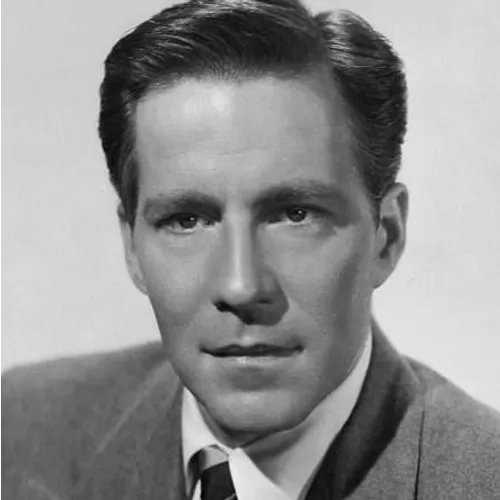
Hugh Marlowe was a versatile actor whose career spanned radio, stage, film, and television, making significant contributions to the entertainment landscape of mid-20th century America. Born Hugh Herbert Hipple on January 30, 1911, in Philadelphia, Pennsylvania, Marlowe would become a recognizable voice and face across multiple media platforms, particularly distinguished in the world of radio and dramatic performances.
Early Life and Theatrical Beginnings
Marlowe's roots were deeply embedded in American colonial history. He came from a primarily English ancestry, with several ancestors who had arrived on the Mayflower. His family lineage included connections to notable historical figures like Myles Standish, suggesting a rich heritage that would later inform his artistic sensibilities. In the 1930s, Marlowe began his stage career, initially performing under his birth name before settling on Hugh Marlowe as his professional moniker. His first appearance on the New York stage was in the production Arrest That Woman in 1936, marking the beginning of what would become a multifaceted performance career.
Radio: The Golden Age of Broadcasting
Marlowe's radio career flourished during the medium's golden age. In 1939 and 1940, he became a prominent voice actor, taking on significant roles in network radio programs. He portrayed Jim Curtis in a soap opera and notably played the title character in the first radio version of a popular series. His vocal talents and ability to embody diverse characters made him a sought-after radio performer. Marlowe's clear diction and versatile range allowed him to transition seamlessly between dramatic and comedic roles, a skill that was highly prized in the era of audio storytelling.
Expanding into Film and Television
While radio was his initial platform, Marlowe successfully transitioned into film and television. He was typically cast in secondary lead or supporting roles, appearing in numerous productions throughout the 1940s and 1950s. His filmography included notable works like All About Eve (1950), where he gained significant recognition. Television became another important medium for Marlowe. He made multiple guest appearances on popular shows of the era, including Perry Mason, where he played various roles such as district attorneys and murder victims. His most consistent television role was as Jim Matthews on the long-running soap opera Another World, a part he played from 1969 until his death in 1982.
Personal Life and Legacy
Marlowe's personal life was as dynamic as his professional career. He was married three times, each time to an actress. His marriages included unions with Edith Atwater (1941-1946), K.T. Stevens (1946-1968), with whom he had two sons, and Rosemary Torri (1968-1982), with whom he had a third son. On May 2, 1982, Marlowe passed away in New York City at the age of 71, leaving behind a rich legacy of performances across radio, stage, film, and television. His ability to adapt to changing media landscapes and consistently deliver compelling performances made him a respected figure in mid-century American entertainment.
Works and Appearances
Radio
- Soap Opera (1939-1940) - Jim Curtis
- First radio version of - Title Character
Film
- Brilliant Marriage (1936)
- All About Eve (1950)
- Earth vs. the Flying Saucers (1956)
Television
- Perry Mason - Multiple roles (1959-1965)
- Another World - Jim Matthews (1969-1982)
Stage
- Arrest That Woman (1936)
- Kiss the Boys Goodbye
- Laura
- Duet for Two Hands
Marlowe's diverse career exemplified the versatility required of performers in the mid-20th century, seamlessly moving between radio, stage, film, and television with remarkable skill and adaptability.