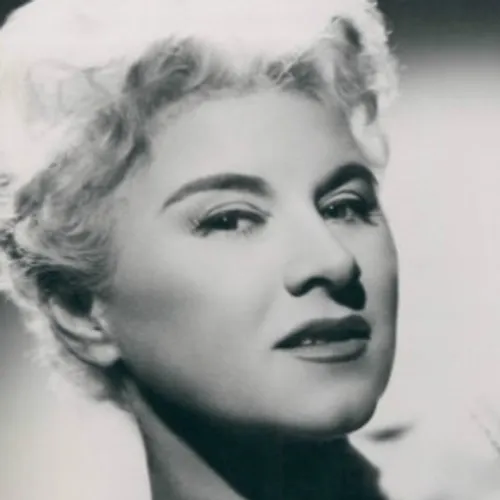
In the glittering world of mid-20th-century entertainment, few performers captured the hearts of audiences quite like Hildegarde Loretta Sell, known simply as Hildegarde. A cabaret singer who transcended the boundaries of traditional performance, she became a radio and supper club icon whose career spanned an remarkable seven decades.
Early Life and Musical Beginnings
Born on February 1, 1906, in Adell, Wisconsin, Hildegarde emerged from a Roman Catholic family of German extraction. Her musical journey began in the 1920s when she trained at a local college of music, laying the foundation for what would become an extraordinary career. From these humble Midwestern roots, she would soon transform herself into a sophisticated entertainer who would captivate audiences across the United States and Europe.
The Rise of a Cabaret Sensation
Hildegarde's breakthrough came through vaudeville and traveling shows, where she quickly distinguished herself as a unique performer. Dubbed "The Incomparable Hildegarde" by a prominent columnist and nicknamed the "First Lady of the Supper Clubs", she became a sensation. During the peak of her popularity in the 1930s and 1940s, she was booked in cabarets and venues for at least 45 weeks annually, a testament to her extraordinary appeal. Her performances were more than mere musical acts; they were carefully crafted experiences. Wearing elegant gowns and long gloves - a style she claimed Marlene Dietrich later imitated - Hildegarde was known for her flirtatious stage presence. She would entertain audiences with risqué anecdotes and dramatically present long-stemmed roses to men in the audience, creating an interactive and memorable show.
Radio and Media Presence
Hildegarde's media presence extended beyond live performances. During most of the 1940s, she appeared on the Raleigh Room, a popular radio program. Her recordings sold hundreds of thousands of copies, and her fan base was remarkably diverse - ranging from World War II soldiers to European royalty. Her television debut came on The Blue Angel on September 28, 1954. She even ventured into political entertainment, singing a campaign song for a presidential nomination. Her versatility and charm made her a media darling, capable of transitioning seamlessly between different entertainment platforms.
Personal Life and Legacy
Despite her glamorous public persona, Hildegarde's personal life remained relatively private. She never married, once remarking, "I traveled all my life, met a lot of men, had a lot of romances, but it never worked out. It was always 'hello and goodbye'". Her autobiography, Over 50... So What!, published in 1961, offered glimpses into her remarkable life. Hildegarde passed away on July 29, 2005, at the age of 99 in a Manhattan hospital, leaving behind a legacy as a pioneering entertainer who helped define mid-20th-century American popular culture.
Works and Appearances
Radio
Television
Live Performances
- Supper clubs and cabarets across the United States and Europe (1930s-1940s)
Publications
- Over 50... So What! (Autobiography, 1961)
Notable Achievements
- Nicknamed "The Incomparable Hildegarde"
- "First Lady of the Supper Clubs"
- Performed for diverse audiences including soldiers and European royalty