Harry Babbitt
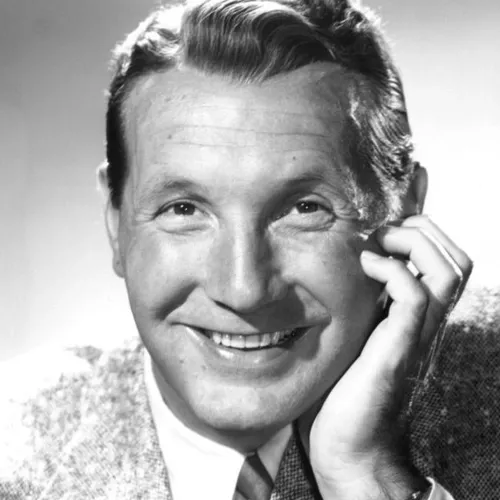
In the vibrant landscape of mid-20th century American entertainment, few performers captured the spirit of the era quite like Harry Babbitt. A versatile singer, radio personality, and entertainer, Babbitt became a beloved figure during the golden age of big band music and radio broadcasting. His distinctive voice and charismatic performances made him a standout member of Kay Kyser's Orchestra, and his career spanned multiple decades of entertainment innovation.
Early Years and Musical Beginnings
Born on November 2, 1913, in St. Louis, Missouri, Harry Babbitt showed an early aptitude for music and performance. After graduating from high school, he took an ambitious step by organizing his own band, where he not only sang but also played saxophone and drums. This early entrepreneurial spirit would become a hallmark of his professional approach. Babbitt's initial breakthrough came through his work as a radio announcer and soloist in St. Louis. His talents caught the attention of bandleader Kay Kyser, who would become the most significant collaborator of Babbitt's career. In the winter of 1936, Babbitt joined Kyser's band, marking the beginning of a remarkable musical partnership.
Rise to Prominence with Kay Kyser
With Kay Kyser's Orchestra, Babbitt quickly became a star performer. He was known for his rich baritone voice and his ability to adapt to various musical styles. On novelty tunes, he would often adopt a high-pitched vocal approach that delighted audiences. His repertoire included numerous hit songs that became classics of the era, such as "Three Little Fishies," "Jingle, Jangle, Jingle," and a memorable cover of "The White Cliffs of Dover". One of Babbitt's most iconic contributions was his laugh on the famous "Woody Woodpecker Song," which became instantly recognizable to radio listeners nationwide. His versatility was further demonstrated by his regular appearances on Kyser's radio program, Kay Kyser's Kollege of Musical Knowledge, and his roles in seven movies featuring the band.
Expanding into Radio and Television
Beyond his musical performances, Babbitt proved to be a multifaceted entertainer. In the 1940s and 1950s, he hosted The Second Cup of Coffee Club, a popular early morning radio show that ran for an impressive 10 years. He also co-starred on By Popular Demand, a weekly program in 1945-1946. Babbitt was considered a television pioneer, hosting two long-running musical shows on KTLA-TV in Los Angeles: Bandstand Review and Hollywood Opportunity. He even hosted an NBC program called Glamour Girl, which provided fashion and beauty advice to women.
Later Career and Legacy
After serving in the military from 1944 to 1946, Babbitt returned to Kyser's band before ultimately leaving in 1949. In his later years, he remained connected to the entertainment world, occasionally touring with a band using Kyser's name and music. He retired from showbusiness in 1964 and pursued various business ventures, including managing the Newport Tennis Club and working in public relations. Harry Babbitt passed away on April 9, 2004, in Aliso Viejo, California, at the age of 90. He was survived by his wife Betty, to whom he was married for an impressive 69 years, along with three sons, six grandchildren, and two great-grandchildren.
Works and Appearances
Radio
- Kay Kyser's Kollege of Musical Knowledge (1936-1949)
- The Second Cup of Coffee Club (1940s-1950s)
- By Popular Demand (1945-1946)
Television
- Bandstand Review (KTLA-TV)
- Hollywood Opportunity (KTLA-TV)
- Glamour Girl (NBC, 1953-1954)
Cinema
- That's Right - You're Wrong (1939)
- Playmates (1943)
- Around the World (1944)
Notable Musical Recordings
- "Three Little Fishies"
- "Jingle, Jangle, Jingle"
- "The White Cliffs of Dover"
- "Woody Woodpecker Song"
Harry Babbitt's career exemplified the dynamic and innovative spirit of mid-20th century American entertainment, bridging music, radio, and television with remarkable skill and charm.