Frankie Thomas
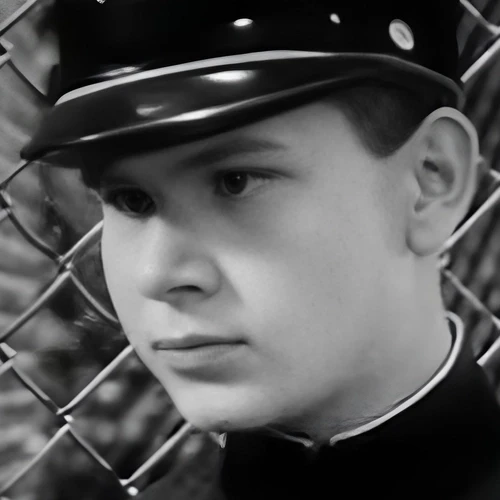
An American actor, author and bridge-strategy expert who played both lead and supporting roles on Broadway, in films, in post-World War II radio, and in early television. He was best known for his starring role in Tom Corbett, Space Cadet.
Franklin Pierce Adams, better known by his initials F.P.A., was a quintessential American wordsmith whose razor-sharp wit and literary talents made him a beloved figure in early 20th-century media. A columnist, poet, and radio personality, Adams became a cultural icon who bridged the worlds of print journalism and broadcasting with remarkable charm and intelligence.
Early Life and Literary Beginnings
Born on November 15, 1881, in Chicago to Jewish immigrants Moses and Clara Schlossberg Adams, Franklin Leopold Adams began his journey as a writer early in life. After graduating from Armour Scientific Academy in 1899, he worked in insurance for three years before discovering his true calling in writing. His early career took flight in 1903 when he signed on with a newspaper, initially writing sports columns and humor pieces that showcased his emerging comedic talents.
By 1914, Adams had established his legendary column "The Conning Tower" in the New York Tribune, which would become the pinnacle of verbal wit in American journalism. The column was more than just a publication; it was a cultural institution that launched the careers of numerous writers, including the famous Dorothy Parker, who famously quipped that Adams "raised her from a couplet" .
Radio Stardom and the Information Please Era
Adams' transition to radio solidified his reputation as a national intellectual entertainer. As a regular panelist on the popular quiz show Information Please from 1938 to 1948, he became known as the designated expert on poetry, old barroom songs, and Gilbert and Sullivan. His encyclopedic knowledge and quick wit made him a fan favorite, with a running joke being that when asked about an unknown quotation, he would invariably suggest Shakespeare.
His radio persona was characterized by an urbane, sophisticated humor that reflected the intellectual circles of New York's literary scene. Adams was a key member of the legendary Algonquin Round Table, a group of writers and wits who defined the cultural landscape of the 1920s and 1930s.
Literary Contributions and Satirical Genius
Beyond radio and journalism, Adams was a prolific writer of light verse and satire. He published several books of poetry and humor, including Tobogganning on Parnassus (1911) and Something Else Again (1920). His satirical skills were legendary, often manifesting in clever parodies and witty commentary that captured the spirit of his era.
One of his most memorable contributions was coining the term "aptronym" - a name that humorously fits a person's profession or characteristics. This linguistic playfulness was characteristic of his approach to language and humor.
Legacy and Cultural Impact
Franklin P. Adams was more than just a writer or radio personality; he was a cultural bridge who connected different forms of media and intellectual expression. His work in newspapers, radio, and literature helped shape the American literary and entertainment landscape of the early 20th century. Writers like Dorothy Parker credited him with launching their careers, and his column was a launching pad for numerous literary talents.
Adams passed away on March 23, 1960, in Manhattan, leaving behind a rich legacy of wit, words, and cultural commentary. His ability to blend intellectual humor with accessible storytelling made him a unique figure in American media history.
Works and Appearances
Radio
- Information Please (1938-1948) - Regular Panelist
Books
- In Cupid's Court (1902)
- Tobogganning on Parnassus (1911)
- In Other Words (1912)
- Something Else Again (1920)
- The Diary of Our Own Samuel Pepys (1935)
Columns
- "The Conning Tower" - New York Tribune (1914-1937)
- "Always in Good Humor" - Evening Mail (1904-1913)
Notable Quotes
- "I find that a great part of the information I have was acquired by looking up something and finding something else on the way."
- "To err is human; to forgive, infrequent."