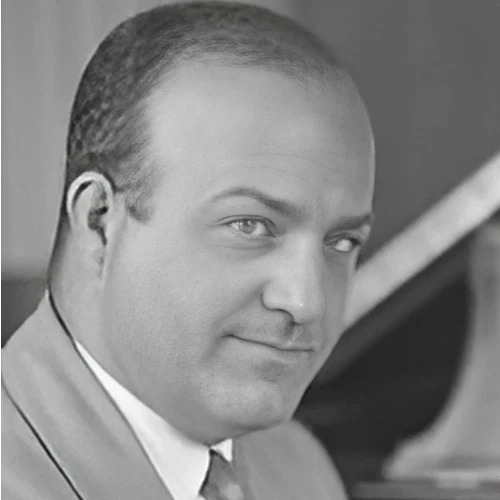
Ferde Grofe
An American composer, arranger and pianist. During the 1920s and 1930s, he went by the name Ferdie Grofé.
In the vibrant landscape of early 20th-century American music, Ferde Grofé emerged as a pivotal figure whose innovative compositions and arrangements would reshape the soundscape of radio and popular music. A versatile musician, composer, and arranger, Grofé's contributions extended far beyond traditional boundaries, making him a true pioneer of symphonic jazz and musical storytelling.
Musical Roots and Early Beginnings
Born Ferdinand Rudolph von Grofé on March 27, 1892, in New York City, Ferde came from a family deeply rooted in musical tradition. His mother, Elsa Johanna Bierlich von Grofé, was a professional cellist and music teacher who introduced young Ferde to multiple instruments, including violin and piano. This early musical education would prove instrumental in shaping his future career. Grofé's musical journey was anything but conventional. Leaving home at 14, he worked a remarkable array of jobs—from milkman to truck driver, and even playing in dance bands for two dollars a night. These diverse experiences would later inform his unique musical perspective, allowing him to blend various musical styles with remarkable creativity.
The Paul Whiteman Years and Jazz Transformation
In 1920, Grofé joined Paul Whiteman's orchestra, quickly becoming its chief arranger—a role that would define his early professional career. His most legendary contribution during this period was his arrangement of George Gershwin'sRhapsody in Blue. Grofé transformed Gershwin's original two-piano composition into a full orchestral masterpiece that would become a defining work of American musical culture. Whiteman himself dubbed Grofé the "Prime Minister of Jazz" in 1932, highlighting the musician's significant influence in the emerging jazz landscape. Grofé's arrangements were not just technical translations but creative reinterpretations that added depth and complexity to popular music.
Compositional Genius and Landmark Works
Grofé was more than an arranger; he was a composer of remarkable range. His most famous composition, the Grand Canyon Suite (1931), became a landmark in American classical and jazz music. The suite captured the landscape and spirit of the American West, demonstrating Grofé's ability to translate visual and emotional experiences into musical narratives. His other notable works included the Death Valley Suite and various commissioned pieces for events like the World's Fair. In 1940, he was even honored with "Ferde Grofé Day" at the American pavilion of the World's Fair, testament to his growing national reputation.
Radio, Film, and Broader Musical Contributions
Beyond concert halls, Grofé was a significant figure in radio broadcasting. During the 1930s, he led orchestras for multiple radio programs, including his own The Ferde Grofé Show. His music became ubiquitous, with segments like "On the Trail" from the Grand Canyon Suite serving as musical signatures for various radio and television programs. Grofé also ventured into film scoring, working on movies throughout the 1930s and 1940s. His musical versatility allowed him to excel in multiple domains, from concert performances to radio broadcasts and cinema.
Legacy and Impact
Ferde Grofé passed away on April 3, 1972, leaving behind a rich musical legacy. He was not just a composer or arranger but a true musical storyteller who helped define the sound of mid-20th century American music. His ability to blend classical techniques with jazz improvisation created a unique musical language that influenced generations of musicians.
Works and Appearances
Radio
- The Ferde Grofé Show (1930s)
- Paul Whiteman Radio Programs (1920-1932)
Orchestral Compositions
- Grand Canyon Suite (1931)
- Death Valley Suite (1949)
- World's Fair Suite (1964)
Film Scores
- Rhapsody of the Rockies (1930)
- Time Out of Mind (1947)
- Quicksand (1950)
Notable Recordings
- Numerous recordings with Paul Whiteman Orchestra
- Multiple recordings of Grand Canyon Suite with various orchestras
Ferde Grofé's journey from a young multi-instrumentalist to a celebrated composer represents the quintessential American musical story—one of innovation, versatility, and boundless creativity.