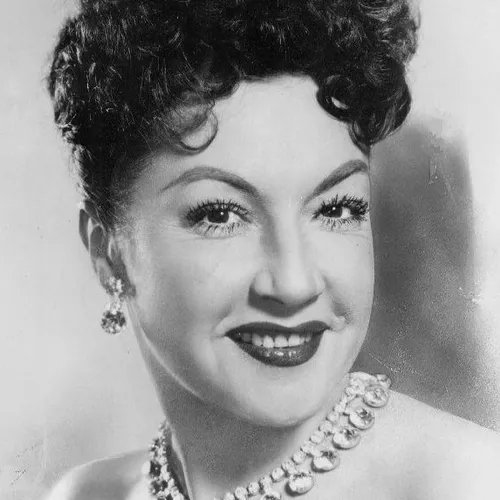
Ethel Merman
Ethel Merman was a legendary Broadway performer whose powerful voice and dynamic stage presence revolutionized musical theater in the 20th century. With her distinctive trumpet-like vocals and commanding presence, she became an iconic figure who defined the golden age of American musical comedy.
Early Life and Theatrical Roots
Born Ethel Agnes Zimmermann on January 16, 1908, in Astoria, New York, Merman was an only child of Edward Zimmermann, an accountant, and Agnes Gardner Zimmermann, a schoolteacher. Her parents were strict about church attendance and education, insisting she develop practical skills alongside her entertainment aspirations. Merman attended Bryant High School, where she was active in extracurricular activities and developed a passion for music. During her teenage years, she would frequent local music stores, exploring new sheet music and dreaming of a performance career. Her early exposure to vaudeville shows at the Palace Theatre sparked her love for entertainment, where she saw performers like Al Jolson and Eddie Cantor who would later become her colleagues.
Breaking into Show Business
Initially working as a secretary, Merman began performing in local clubs and revues. Her big break came when she met agent Lou Irwin, who arranged her first significant audition. In 1930, she was cast in the George and Ira Gershwin musical Girl Crazy, where she introduced the now-famous song "I Got Rhythm". Her performance was electrifying. The New York Times noted she sang "with dash, authority, good voice and just the right knowing style," while The New Yorker declared her "imitative of no one". This marked the beginning of her legendary Broadway career.
Signature Performance Style
Merman was renowned for her extraordinary vocal capabilities. Without formal vocal training, she possessed a powerful, pitch-perfect voice that could fill a theater without amplification. Brooks Atkinson, a prominent theater critic, praised her unique talent, stating she "makes a song seem like a spontaneous expression of her personality". Her performance style was distinctive - she rarely looked her fellow actors in the eye, instead focusing entirely on the audience. This unconventional approach might have scandalized acting teachers, but it delighted audiences and made her a Broadway sensation.
Broadway and Hollywood Legacy
Throughout her career, Merman starred in numerous iconic musicals, including Anything Goes, Call Me Madam, and Gypsy. She introduced many now-classic Broadway songs and was equally successful in film, appearing in movies like Mad About Music (1938) and It's a Mad, Mad, Mad, Mad World (1963). Her final Broadway performance was in Hello, Dolly! in 1970, where critics unanimously praised her enduring vocal power and comic timing. Even in her later years, she continued to captivate audiences with her inimitable style.
Conclusion
Ethel Merman was more than a performer; she was a cultural icon who transformed musical theater. Her powerful voice, dynamic personality, and unparalleled stage presence made her the undisputed "First Lady of Musical Comedy." She inspired generations of performers and left an indelible mark on American entertainment.
Works and Appearances
Radio
- Various musical revues and performances (1930s)
Broadway Musicals
- Girl Crazy (1930)
- Anything Goes (1934)
- Red, Hot and Blue (1936)
- DuBarry Was a Lady (1939)
- Panama Hattie (1940)
- Call Me Madam (1950)
- Gypsy (1959)
- Hello, Dolly! (1970)
Films
- Mad About Music (1938)
- Alexander's Ragtime Band (1938)
- It's a Mad, Mad, Mad, Mad World (1963)
Television
- Guest appearances on various talk shows and variety programs (1970s-1980s)
- The Love Boat (multiple episodes)
Ethel Merman passed away on February 15, 1984, leaving behind a legacy that continues to inspire performers worldwide.