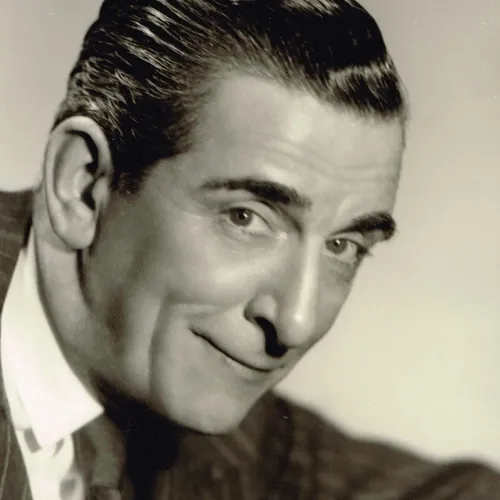
Edward Everett Horton
Edward Everett Horton was a versatile entertainer whose remarkable career spanned multiple decades and media platforms, making him one of the most recognizable character actors and radio personalities of the mid-20th century. With his distinctive voice and impeccable comedic timing, Horton became a beloved figure in American entertainment, leaving an indelible mark on radio, film, and television.
Early Life and Theatrical Beginnings
Born on March 18, 1886, in New York City, Edward Everett Horton Jr. was destined for a career in entertainment. His early education was somewhat unconventional, with brief stints at Oberlin College and Columbia University, where his theatrical inclinations often overshadowed his academic pursuits. His father played a pivotal role in his professional identity, convincing him to use his full name professionally, believing it would make him more distinctive. Horton's stage career began at the young age of 20 in 1906, where he initially sang, danced, and performed in small theatrical productions. His father's advice to use his full name proved prophetic, as Edward Everett Horton soon became a recognizable name in entertainment circles.
Transition to Radio and Broader Media
In 1945, Horton expanded his entertainment repertoire by hosting radio's Musical Comedy Theater, demonstrating his versatility as a performer. However, his most memorable radio work came through The Adventures of Rocky and Bullwinkle and Friends, where he became the iconic narrator of the Fractured Fairy Tales segment from 1959 to 1964. His distinctive narrative style and comedic sensibilities made him perfect for these whimsical retellings, introducing generations of children to reimagined classic stories. Horton's ability to infuse humor and personality into his narration made these segments particularly memorable.
Radio and Television Performances
Beyond his narrative work, Horton was a frequent presence on television. He appeared in numerous shows, including memorable guest spots on I Love Lucy, The Real McCoys, and F Troop, where he played the comedic character Roaring Chicken. His television appearances were characterized by his unique comedic style - often playing characters who were initially mild-mannered but would eventually reveal unexpected depths of humor. This approach made him a favorite among producers and audiences alike.
Legacy and Later Career
Despite never marrying, Horton remained a beloved figure in entertainment. He continued working until near the end of his life, with his final film role being a non-speaking part in Cold Turkey (1971), released posthumously. Horton passed away on September 29, 1970, in Los Angeles, leaving behind a remarkable legacy. His contributions were recognized with a star on the Hollywood Walk of Fame, cementing his place in entertainment history.
Conclusion
Edward Everett Horton was more than just an actor - he was a quintessential entertainer who bridged multiple media platforms. His ability to bring humor, charm, and humanity to his performances made him a unique talent of his generation.
Works and Appearances
Radio
- Musical Comedy Theater (1945-1947)
- Narrator, Fractured Fairy Tales on The Adventures of Rocky and Bullwinkle and Friends (1959-1964)
Television
- I Love Lucy (1952)
- The Real McCoys (1960)
- F Troop (1965-1966) as Roaring Chicken
- Batman (1966) as Chief Screaming Chicken
Film
- Too Much Business (1922) - Film Debut
- Lost Horizon (1937)
- Here Comes Mr. Jordan (1941)
- Arsenic and Old Lace (1944)
- Cold Turkey (1971) - Final Film Role
Theater
- Numerous stage productions throughout his career, including summer stock performances